
/Assets/arrow-facing-left--black-01.svg)
/Assets/navigation-global--close-symbol-black-01-1.svg)

/Assets/Icon%20Library/social/facebook-logo.svg)

/Assets/Icon%20Library/social/instagram-logo.svg)
/Assets/Icon%20Library/social/youtube-logo.svg)





Most companies think they already have sales enablement content. Because well, they've got blog posts, PDFs, and maybe even a few videos.
Unfortunately, the sales team still repeats the same talking points on every single call, deals keep stalling, prospects go quiet, and close rates stay flat.
The gap between "having content" and "having content that helps sales close deals" is wider than most leaders think. And that gap is costing you revenue every quarter.
Real sales enablement content optimizes a sales process, shortens sales cycles, removes friction, and answers the questions buyers are already looking into before they ever talk to a rep.
This approach sits at the heart of the Endless Customers System™. It teaches companies how to get marketing and sales aligned, and turns buyer questions into assets that drive revenue.
FREE BOOK PREVIEW
Endless Customers Special Preview Edition
Get a taste of the book that brings you a proven system to build trust, drive sales, and become the market leader. This special preview edition has select chapters and The Four Pillars of a Known and Trusted Brand, resources to accelerate your success, and more.
So if your content isn't helping sales move deals forward, it’s just noise in a very crowded market.
What Is Sales Enablement Content?
Sales enablement content is content built to help prospects make choices and help your sales team close deals. 
It's used before, during, and after sales calls, and it answers the questions most companies are either too cautious or too scattered to tackle head-on: How much does this cost? What could go wrong? How do you compare to the other options out there? Are we even a good fit?
Sounds simple enough, but here's where most companies run into trouble.
Unfortunately, a lot of marketing and sales teams work in silos.
Marketing creates content to drive traffic to the site, so they put out trendy social posts, fluffy statistics pulled from other sources, and high-level blogs while sales scrambles to explain the same pricing, process, and "why us" details on every single call. That gap is costly, and it is far more common than most leaders think.
When you are doing this the right way, marketing isn’t guessing what to create. Instead, marketing is building sales enablement content with stories from real sales calls, content rooted in actual objections, practical pricing concerns, and real buyer fears. Sales shapes the direction, marketing creates the assets, and the whole team benefits from working together.
When sales enablement content is working well, prospects show up to calls already informed, the conversation goes deeper, and objections shrink before they're ever raised.
Why Sales Enablement Content Matters More Than Ever
Buyers today are in control of how they research in ways they simply were not a decade ago.
They look up pricing before booking a call, compare their options before talking to sales, and hunt for proof before trusting your claims.
Without strong enablement content, you end up with the same sales calls over and over, long buying cycles, poor-fit prospects, and stalled deals. With it, you see shorter sales cycles, higher close rates, better leads, and more useful conversations.
But it’s easier said than done.
According to LinkedIn, 87% of sales and marketing leaders say collaboration between sales and marketing enables critical business growth, while 85% of those same leaders say that sales and marketing alignment is the largest opportunity for improving business performance today.
Content either speeds up revenue or slows it down, and no amount of hustle makes up for content that is missing or out of step with what buyers need.
How to Create Sales Enablement Content (5 Steps)
The process for building great sales enablement content is simpler than most companies expect. The follow-through, however, is what sets high performers apart from everyone else.
Step 1: Start with the Questions Buyers Ask
Your sales team already knows what content you need. Every day they hear things like: "Why is your price higher than the others?" and "What is the downside of going with you?" and "How are you different from X?" and "What happens after we sign?"
Those questions are your roadmap, and most companies already have the answers. They are just living in your sales team's heads instead of on your website.
There’s a key angle that most companies miss here.
Gathering this input should not just be a sales task OR a marketing task. It should be a Revenue Team effort.
A Revenue Team brings sales, marketing, and leadership into one group focused on growth. Instead of marketing planning content on its own and sales reacting in the field, the Revenue Team meets on a regular basis to review pipeline trends, stalled deals, objections, and buyer behavior. When set up this way, content stops being a marketing project and becomes a revenue driver.
In practice, this means holding weekly Revenue Team meetings with a clear agenda:
-
What questions slowed deals this week?
-
What objections came up more than once?
-
Where are prospects getting stuck?
-
What content would have moved a deal forward faster?
Write all of it down. When marketing builds content from these talks, sales enablement stops being just an idea and starts becoming part of how your team actually sells.
The guiding rule is simple: if buyers are asking a question, the answer belongs on your website. That single standard can reshape your entire content strategy.
Step 2: Focus on the Big 5 Content Topics
Not all content topics drive buying choices the same way. Inside the Endless Customers System™, we teach what we call The Big 5, the five content types that move revenue faster than anything else.
-
Cost & Price: Everyone wants to know what they can expect to pay. They also want to understand what constitutes “value.” Such behavior is universal amongst all buyers.
-
Problems: A desire to buy something is often accompanied by fears and worries. What are the drawbacks? How could this purchase go wrong?
-
Versus & Comparisons: As humans, we love to compare. It’s how we make informed decisions, stacking one option against another to find the best solution for our needs.
-
Reviews: Buyers want the good, the bad, and the ugly. And, importantly, they want to know who a product or service is and is not a good fit for.
-
Best in Class: Everyone searches for the “best,” “most,” “top,” or whatever extreme they can find. Even if they don’t end up choosing the top-rated option, they want to clearly understand all the possibilities available to them.
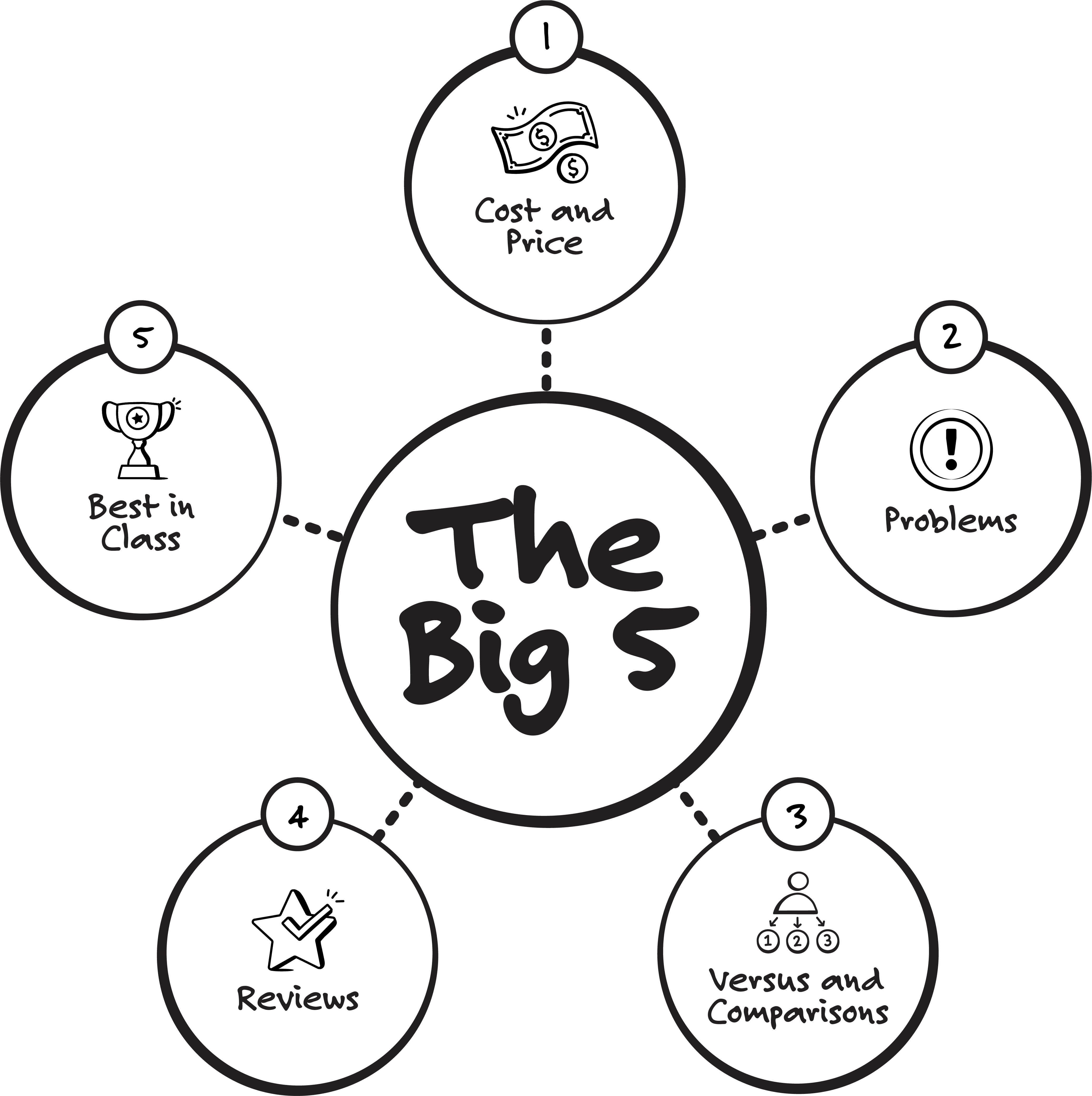
These five content types drive traffic, trust, and sales conversations again and again. Think of The Big 5 as the base of your content strategy. Without it, everything else you build will fall short.
Step 3: Make Your Content Assignment-Friendly
Content only works if sales actually uses it, and that is where Assignment Selling comes in.
Assignment Selling is the practice of giving prospects specific content to review before a sales call. Instead of showing up to a meeting cold, the buyer reviews targeted articles or videos in advance and agrees to do so before the meeting is set.
Assignment-friendly content is clear, direct, and focused on one core question. It's easy to scan and navigate, paired with related videos or tools where it makes sense, and built around real buying choices rather than broad topics.
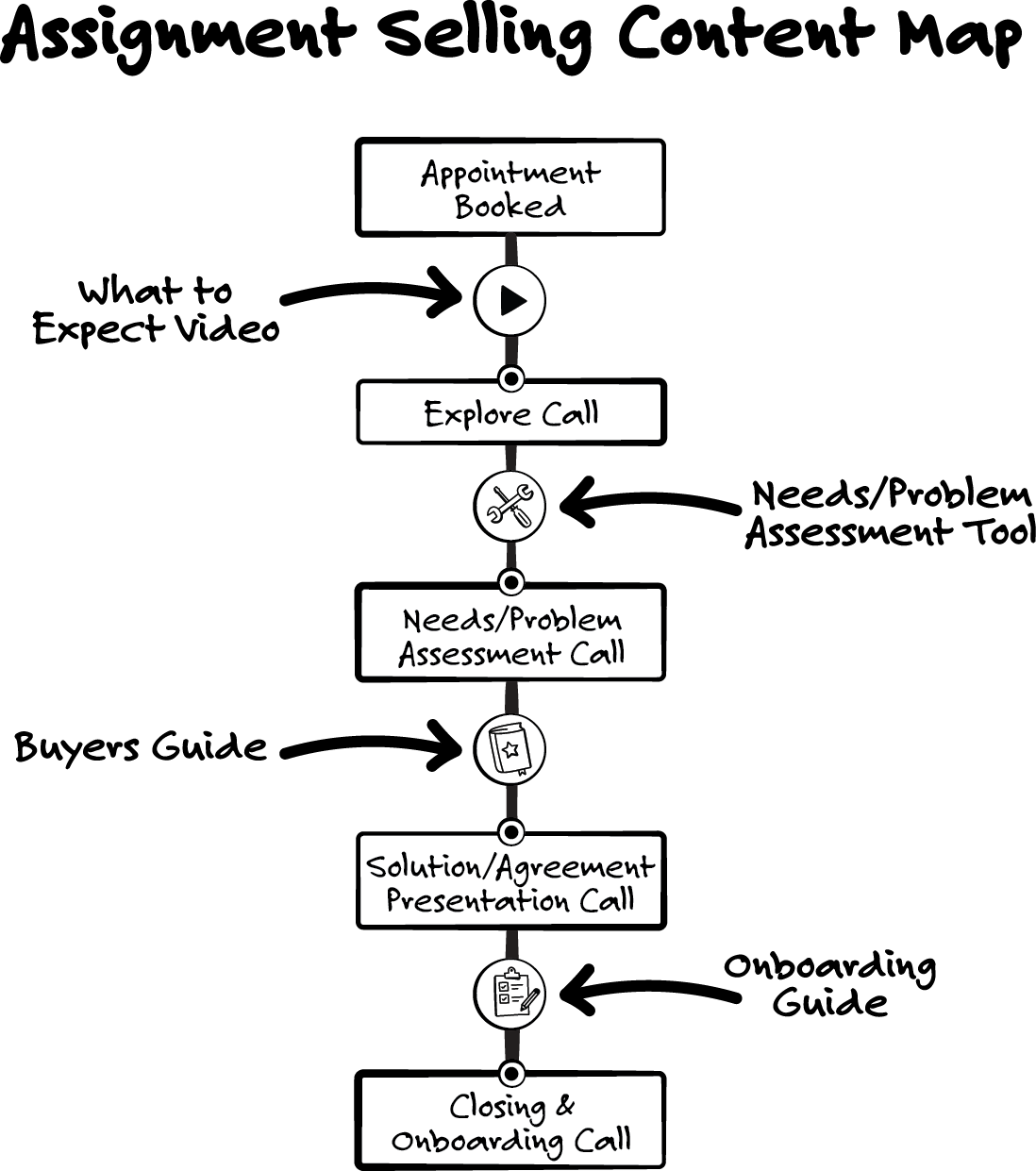
In practice, a rep might send something like this before a call:
"Before we meet, please read this pricing guide and watch this short video. It will answer most of the questions we usually cover in a first conversation. After you have reviewed it, reply to confirm and then we will make the most of our time together."
Two things happen when this is done well.
First, the buyer learns the basics before the conversation starts. Second, the buyer makes a small commitment that shows real interest. If they review the content, they show up more prepared. If they do not, you have learned early on that urgency may not be there, before putting a lot of time into the relationship. Either way, you gain useful clarity.
Assignment Selling helps decrease no-shows, improves call quality, and cuts down the time spent going over basics.
Sales calls shift from surface-level details to deeper talks about fit, priorities, and next steps. When buyers go through this material ahead of time, trust starts to build before the first call even happens.
Step 4: Involve Sales in Content Creation
If marketing creates content on its own, without input from the people who live in sales calls every day, it will keep missing what buyers actually need. Sales must take part in content creation, and this is very different from just tossing out topic ideas in Revenue Team meetings.
Your salespeople are the real experts.
They handle objections and pricing talks daily, explain trade-offs in real time, and have built up language that works because they have tested it in hundreds of calls. That know-how should show up in your content.
The key is making it easy for them to take part.
Do not ask sales reps to write blog posts between calls. Instead, sit down with them and have your content manager turn those chats into articles. Record short video answers to common objections. Pull real stories from sales calls and use their natural way of explaining things as the base of your content.
This helps the content get better because it mirrors real conversations rather than marketing guesses. In addition, your sales reps are far more likely to use it in the field, because they see their own words and insights right there on the page.
Video is especially useful here. Inside The Selling 7 framework, sales reps serve as subject matter experts for cost and pricing videos, the 80% video that answers the questions every buyer asks, product and service walkthrough videos, bio videos that put a face to each rep, and claims-based videos that back up your boldest statements with real proof.
When prospects see your salespeople on video before a call, they feel a sense of comfort and trust before the conversation even starts, and that changes the entire dynamic of the first meeting.
Step 5: Build a Content Library Your Reps Can Actually Use
Making content is only half the job. Setting it up so your sales team can find and use it quickly is the other half. Sales teams need a simple, searchable library that does not take a manual to figure out.
This often lives inside a Learning Center on your website, set up by buyer stage, product or service type, objection type, and topic area. You can also add self-service tools like pricing calculators, assessments, and configurators that let buyers check fit on their own terms and timeline.
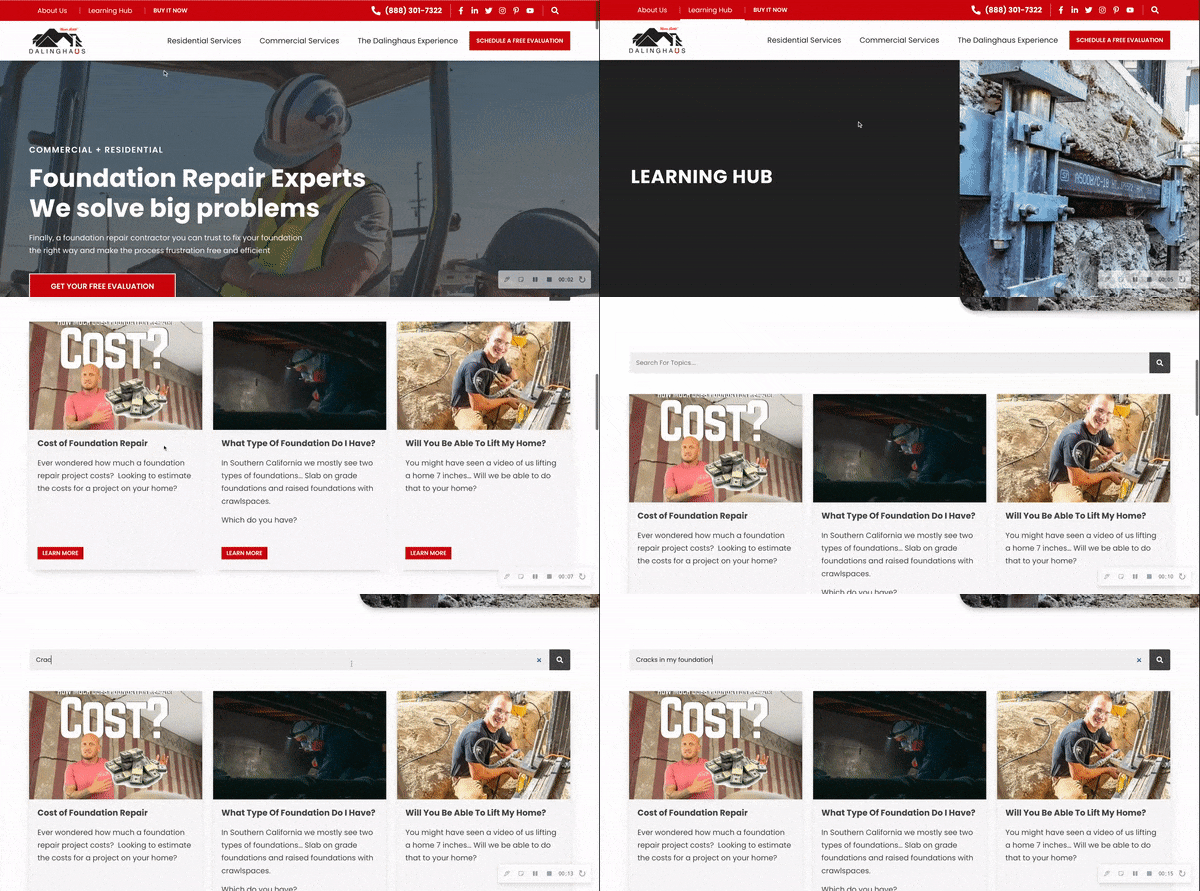
When this is built well, your website becomes your best sales assistant, one that guides, teaches, and qualifies buyers long before a human gets involved.
Sales Enablement Content Is a System, Not a Project
Building sales enablement content that works takes buy-in from leadership, sales, and marketing. It takes steady follow-through. And it takes the courage to talk about pricing, problems, and comparisons in the open, which is exactly what most companies in your market are not willing to do.
The companies that are willing to say what others avoid become the most trusted brand in their space. And trust is the base that every sales and marketing strategy is built on.
The Endless Customers System™ gives you the structure to build this approach in-house, from content creation to website improvements to sales adoption. When done right, the results build on each other over time as opportunities, conversations, and revenue all grow together.
How Can I Start Creating Sales Enablement Content?
If you want to create sales enablement content that actually moves deals forward, you need more than a content calendar. You need a system that your entire team knows and owns.
That’s exactly why we built the Endless Customers Coaching Program.
We get excited to help teams learn how to find the questions that drive revenue, create content on a regular basis, produce videos in-house, roll out Assignment Selling across your sales team, and turn your website into a 24/7 sales engine.
Most of all, this system helps your team own the strategy rather than leaning on outside vendors to run it for you.
When you commit to teaching, being open, and showing up with the same message over time, customers come to you. Over and over again.
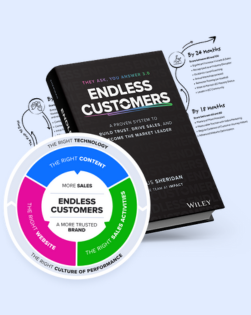
Learn How to Make It Happen
The Endless Customers Coaching Program
If your marketing isn’t delivering and you’re ready for a proven, future-ready system built for the age of AI (one your team can run in-house) check out our coaching program.

Written By
Austin Mock is a Coach at IMPACT who teaches clients the why behind the Endless Customers System so their teams can build a solid foundation and eventually run the system themselves. Austin has done hands-on video and content work at IMPACT since 2022 and began coaching clients in 2026. He has coached 21 client organizations across home services, manufacturing, insurance, construction, transportation, technology, real estate, and education, from small teams to organizations with more than $100 million in revenue. His clients include BuildX, Grimes Insurance, Oasis Turf and Tree, Options for Learning, Premier Home Team, ProjectLine Solutions, Shugarman's Bath, TLC Incorporated, Happy Roofing, Mazzella, Eco Plumbers, and Floor Concepts. His coaching builds fundamentals and repeatable systems before optimizing anything. Austin helps clients see how their whole marketing and sales system fits together so they can solve problems on their own, and because he did the work himself first, he coaches from experience. Before stepping into coaching, Austin spent over a decade working in professional video and content production across corporate and nonprofit environments, including producing documentary work for PBS. He has written and produced buyer-focused content that answers tough questions, addresses concerns openly, and supports sales teams without relying on pressure tactics.
Austin Mock is a Coach at IMPACT who teaches clients the why behind the Endless Customers System so their teams can build a solid foundation and eventually run the system themselves. Austin has done hands-on video and content work at IMPACT since 2022 and began coaching clients in 2026. He has coached 21 client organizations across home services, manufacturing, insurance, construction, transportation, technology, real estate, and education, from small teams to organizations with more than $100 million in revenue. His clients include BuildX, Grimes Insurance, Oasis Turf and Tree, Options for Learning, Premier Home Team, ProjectLine Solutions, Shugarman's Bath, TLC Incorporated, Happy Roofing, Mazzella, Eco Plumbers, and Floor Concepts. His coaching builds fundamentals and repeatable systems before optimizing anything. Austin helps clients see how their whole marketing and sales system fits together so they can solve problems on their own, and because he did the work himself first, he coaches from experience. Before stepping into coaching, Austin spent over a decade working in professional video and content production across corporate and nonprofit environments, including producing documentary work for PBS. He has written and produced buyer-focused content that answers tough questions, addresses concerns openly, and supports sales teams without relying on pressure tactics.
/Assets/Icon%20Library/social/linkedin-logo.svg)
Share
/Assets/Icon%20Library/social/x%20corp.svg)
/Assets/Icon%20Library/social/mail-to.svg)
/Assets/base/Learning%20Center%20Resource%20Category%20Icons/Website%20link.svg)
NEED HELP WITH YOUR SALES PROCESS?
If you’re looking to improve your sales process and not sure where to start, IMPACT can help. We’ll guide you on how to structure the right team, use strategic content to build trust, and drive real results.
NEED HELP WITH YOUR SALES PROCESS?
If you’re looking to improve your sales process and not sure where to start, IMPACT can help. We’ll guide you on how to structure the right team, use strategic content to build trust, and drive real results.