
/Assets/arrow-facing-left--black-01.svg)
/Assets/navigation-global--close-symbol-black-01-1.svg)

/Assets/Icon%20Library/social/facebook-logo.svg)

/Assets/Icon%20Library/social/instagram-logo.svg)
/Assets/Icon%20Library/social/youtube-logo.svg)






If there's one thing modern consumers have too much of it's options.
Whether it's what store to shop at, which smartphone to buy, which roofing company to hire, or even what business methodology to follow, there are a plethora of options and alternatives at our fingertips and it's difficult to decide amongst them.
It's only natural to want to compare and contrast these options, which makes comparison articles and content such a sought-after and effective piece of a successful content marketing strategy.
Creating comparison content as a business may look like comparing your company to a competitor, contrasting two potential solutions to a common problem faced by your buyer, or even a mix of the two.
Either way, embracing the modern buyer's need for comparisons will help you get in front of your target audience when they're weighing their options, guide the conversation surrounding the comparison, and build trust as the expert who provided the answer your buyer was looking for.
Once people understand the problem they’re trying to solve, these educational pieces help them evaluate their options and make their decisions more confidently.
IMPACT has helped thousands of businesses around the world create successful, traffic and lead-driving comparison content. In this article, we will guide you to do the same. We will:
- Explain what comparison articles are
- Discuss how to write comparison articles and content
- Share 10 examples of comparison content done right
What are comparison articles?
Comparison articles are articles that directly compare alternative products, services, or solutions to help potential customers understand the differences and similarities and make the best decision possible for their needs. Ultimately, they help consumers avoid buyers’ remorse.
They are also one of what we call “The Big 5,” which are the five content topics that customers always research before they commit to a purchase. If you answer these questions clearly and honestly on your website, you build trust faster and shorten the path to “yes.” This is a core part of the Endless Customers System™.
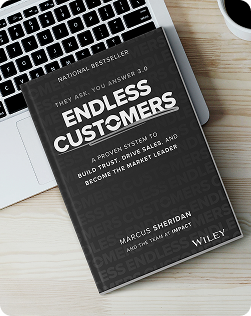
FREE BOOK PREVIEW
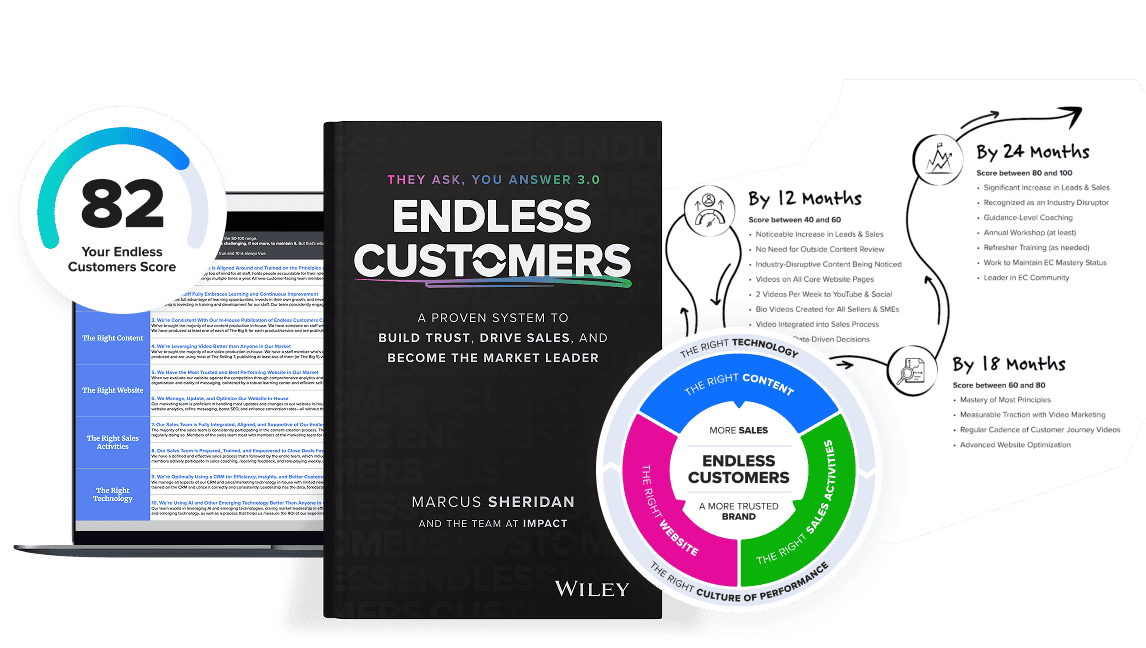
Endless Customers Special Preview Edition
Get a taste of the book that brings you a proven system to build trust, drive sales, and become the market leader. This special preview edition has select chapters and The Four Pillars of a Known and Trusted Brand, resources to accelerate your success, and more.
Because buyers are already searching for this information, we don’t have to wonder if it’s worth writing. It is. Now let’s look at how to create a comparison article of your own.
How to write comparison articles
The most difficult part for marketers and content creators when tackling comparison articles is not fully grasping how we should be writing them.
What should we include? How should we structure the article? What does success look like?
In a nutshell, great comparison content should accomplish three things:
- Be honest and unbiased
- Provide clear comparison criteria
- Leave the reader understanding which option is right for them
Remember, your comparison content doesn't have to be limited to just written articles. It can expand to include other mediums like videos, tools, or even website pages.
Examples of great comparison articles and content
If you’re the kind of person who needs to see it done well before you can confidently create your own, this article is for you. At IMPACT, we’ve found that reviewing real examples can help teams avoid the common traps that make comparison content feel vague or salesy.
Below, we’ve organized strong comparison content into four approaches:
- Pro and con comparison articles
- Category comparison articles
- Competitor comparison articles
- Other comparison tools
These examples come from all kinds of industries, B2B and B2C. As you read, you’ll start to recognize the format that makes the most sense for what you sell and how your buyers shop.
Pro and con comparison articles
Pro and con comparison articles are where you share all the potential positives and negatives of a product, service, or solution you (or your competitor) provide. Doing it as honestly and transparently as possible.
By providing as much objective information as you can, your customers will be educated enough to decide which choice is right for them. This will help your buyers feel more comfortable purchasing from you because they know what to expect.
Here are some articles that do this well:
1. What is the Best Insulation for an Attic? (Spray Foam vs Fiberglass vs Cellulose) — RetroFoam of Michigan
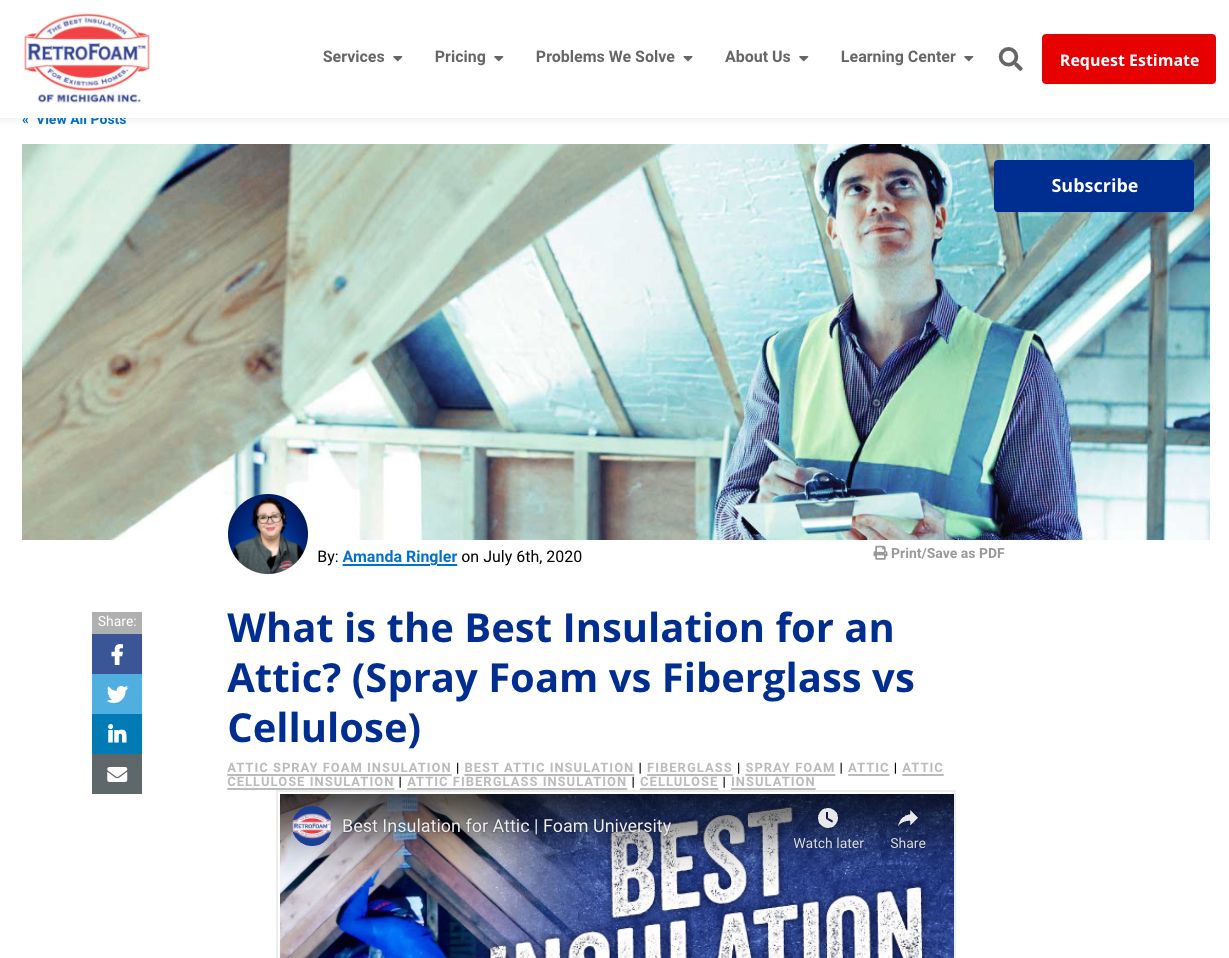
A perfect example of this type of pro and con comparison article is from IMPACT client RetroFoam of Michigan.
In this article, the company explains the pluses and minuses of different home insulation materials. Should you choose spray foam, fiberglass, or cellulose? What’s the difference?
What we like about this article:
- The pros and cons are listed clearly and succinctly as bullet points.
- It’s easy to read and scan to quickly get the information you’re looking for.
- The article is honest about what might go wrong with cellulose insulation, such as potentially leading to higher energy bills or circulating more dust.
The article is helpful, honest, and educational, and after reading it, you should have a better idea of what type of insulation you’d buy for your attic.
2. Metal Roofing vs. Shingle Roofing: Which Material Should You Choose? — Sheffield Metals
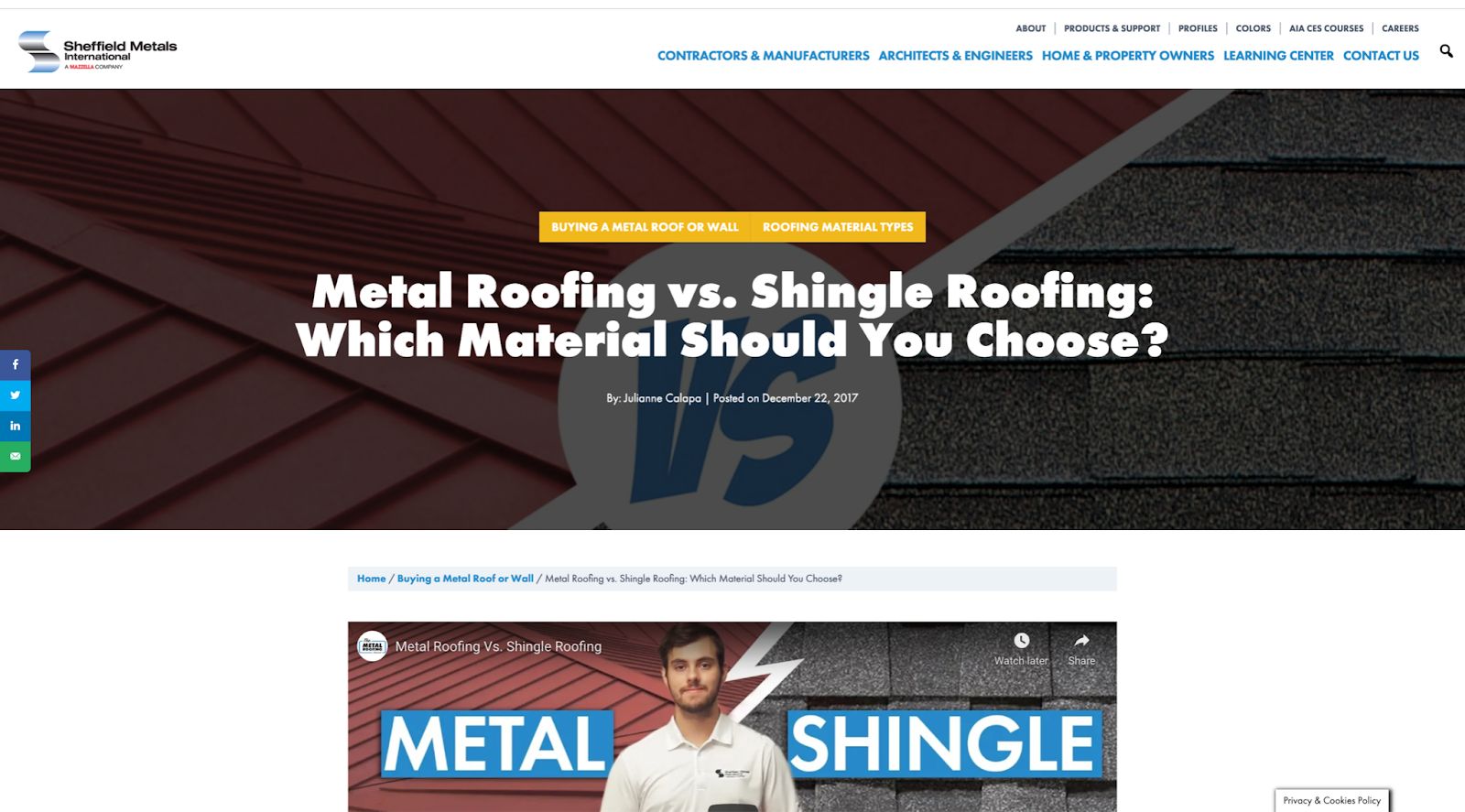
In this pro and con comparison article, another IMPACT client, Sheffield Metals, shares everything you need to know about the benefits and drawbacks of metal roofing (which they sell) or asphalt shingle roofing (which their competitors sell).
Instead of trying to convince you that metal is the best, they thoroughly lay out all the best and worst characteristics of both options.
What we like about this article:
- Lots of large, clear photos
- Easy-to-digest with scannable bullet points
- In-depth pros and cons
- Helpful calculations detailing the lifecycle of the different options
But the best part is where they conclude that both options are great (even the shingles!), and that it just depends on your needs as the customer.
Don’t we all want to be treated like that as consumers?
3. Speed Ovens vs. Steam Ovens: Which Should You Buy? — Yale Appliance
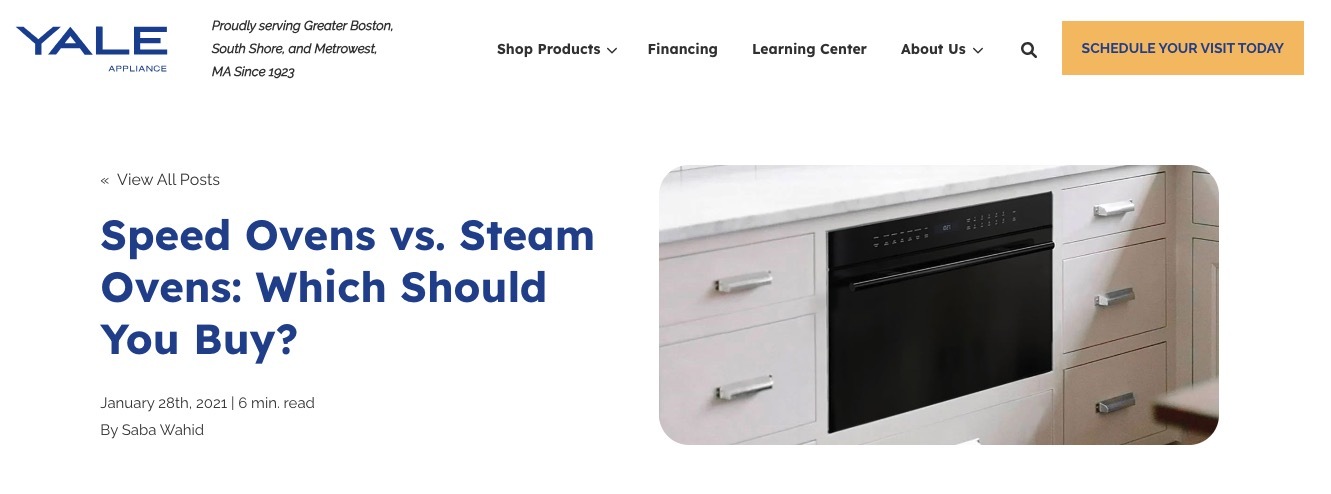
As an appliance retailer, Yale Appliance helps buyers understand the real trade-offs between steam convection ovens and speed convection ovens, so they can pick the right upgrade based on how they actually cook (weeknight speed vs. food quality + moisture).
They even run side-by-side cooking tests to show the differences, not just talk about them.
What we like about this article:
-
Defines each oven type
-
Breaks out clear pros and cons for both, including the practical limitations
-
Explains the overlap
-
Uses a real cooking test so readers can “see” performance differences in texture, moisture, and timing.
-
Ends with decision questions that map to lifestyle
-
Includes an FAQ section that tackles common objections like “can it replace my microwave?” and “can I use it like a normal oven?”
4. Paylocity vs. Whirks: What’s the Difference? — Whirks
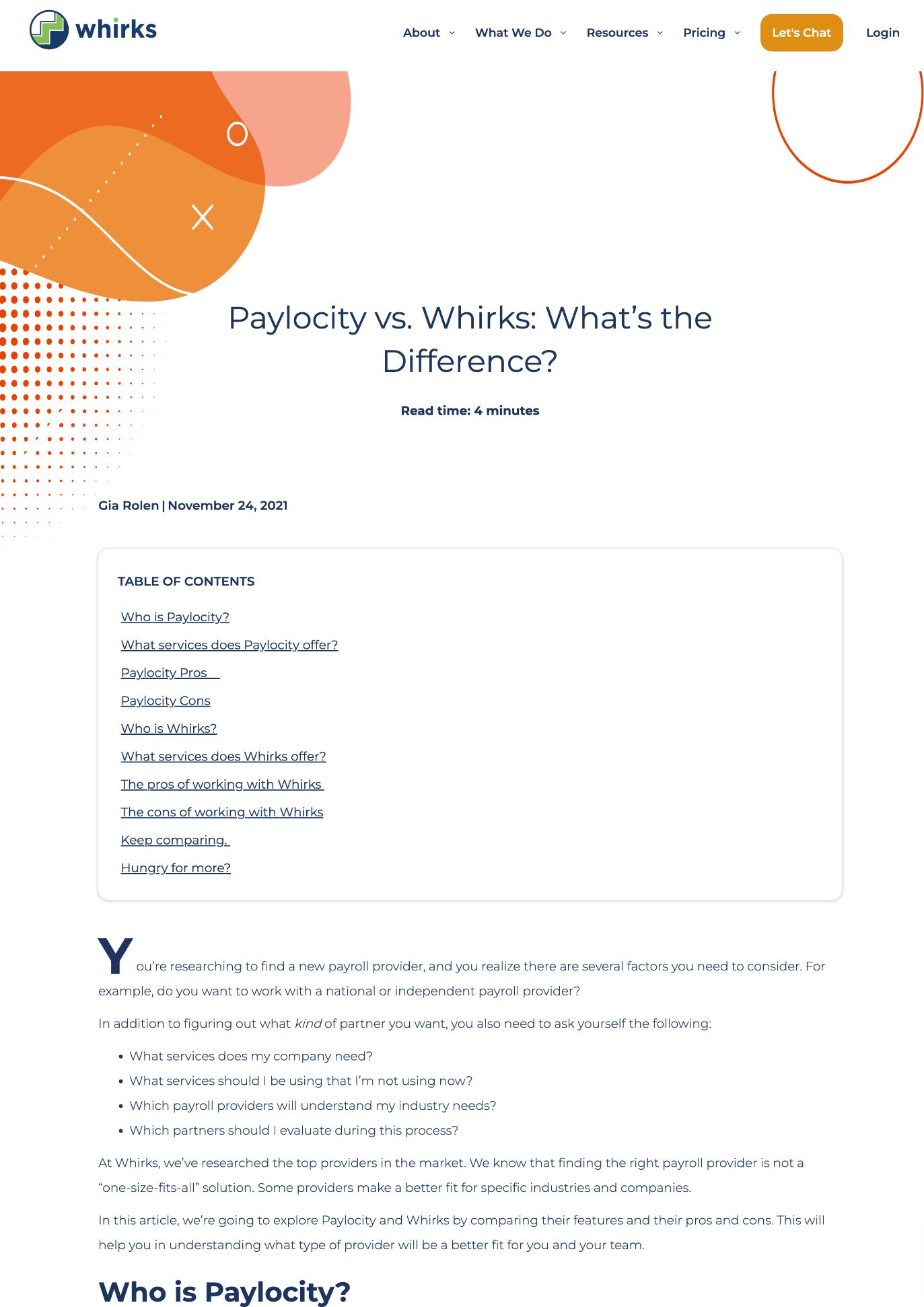
Here, IMPACT client Whirks combines the pros and cons approach with another approach we'll discuss later — competitor comparison.
They use a table of contents to neatly organize a head-to-head comparison of their offering against competitor Paylocity starting with pros and cons.
Category comparison articles
Category comparison articles are similar to the pro and con articles, but instead of discussing the benefits and drawbacks of two products or services, you’re comparing similarities and differences by category or feature.
For example, instead of listing out the pros and cons of purchasing a glass and wood greenhouse versus metal and plastic, you would compare each feature head-to-head and discuss the similarities and differences.
This type of article is useful for prospects seeking a specific use or benefit and who will likely make a decision based on which performs best in that area.
5. Vinyl Liner Pools vs. Fiberglass Pools: An Honest Comparison — River Pools
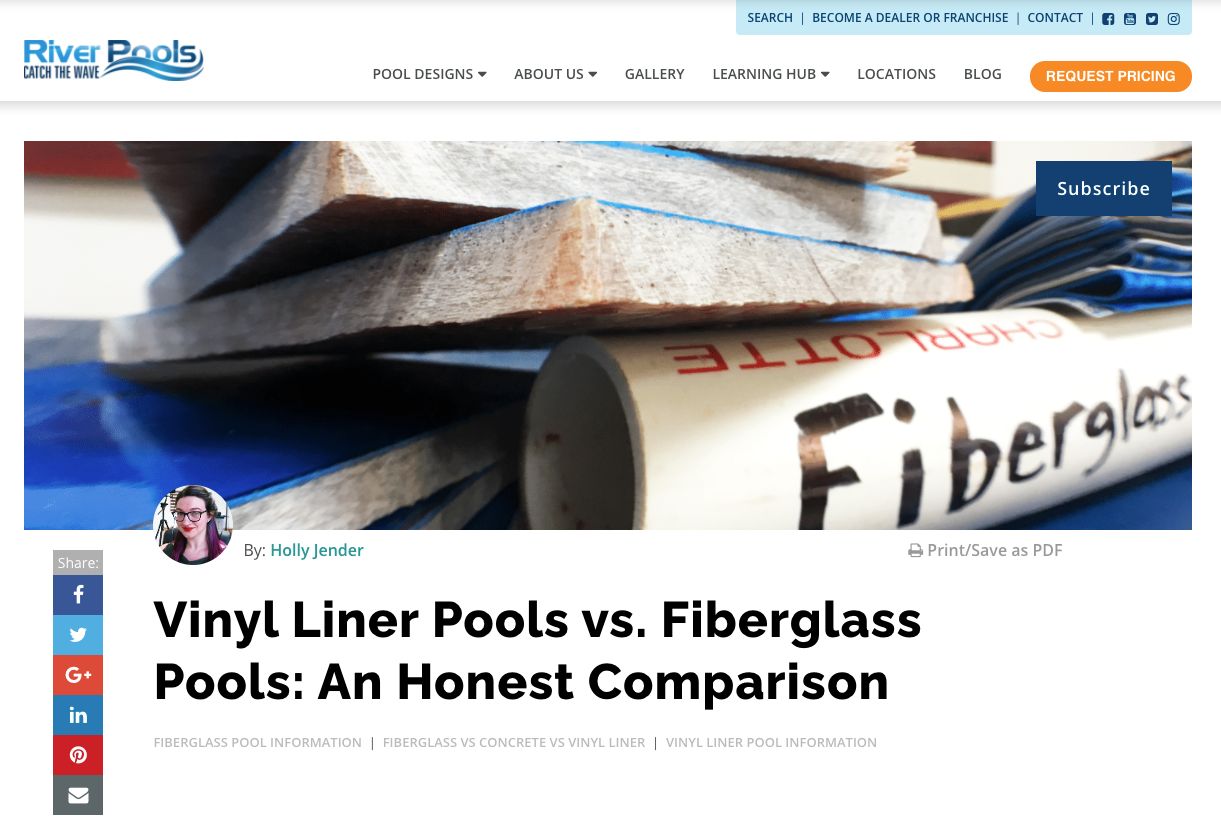
Which kind of pool works best for your needs? River Pools has the answer.
The comparison categories in this article are whether or not the pool can be customized, how long it takes to install, cost up front and over time, etc. — cover every angle as honestly and thoroughly as possible.
What we like about this article:
- Short but clear descriptions about the differences
- A conclusion under each category lists the “winner”
- Lots of photos to illustrate the point
- An easy-to-scan chart summing up the article
The article concludes with a strong, related call-to-action that basically says if you’re interested in learning more, download a handy comparison guide.
This keeps people learning and engaged with the content, which search engines notice (and love!).
6. Full-Service vs. Self-Service Payroll: How to Choose the Right Payroll Solution — Paragon Payroll
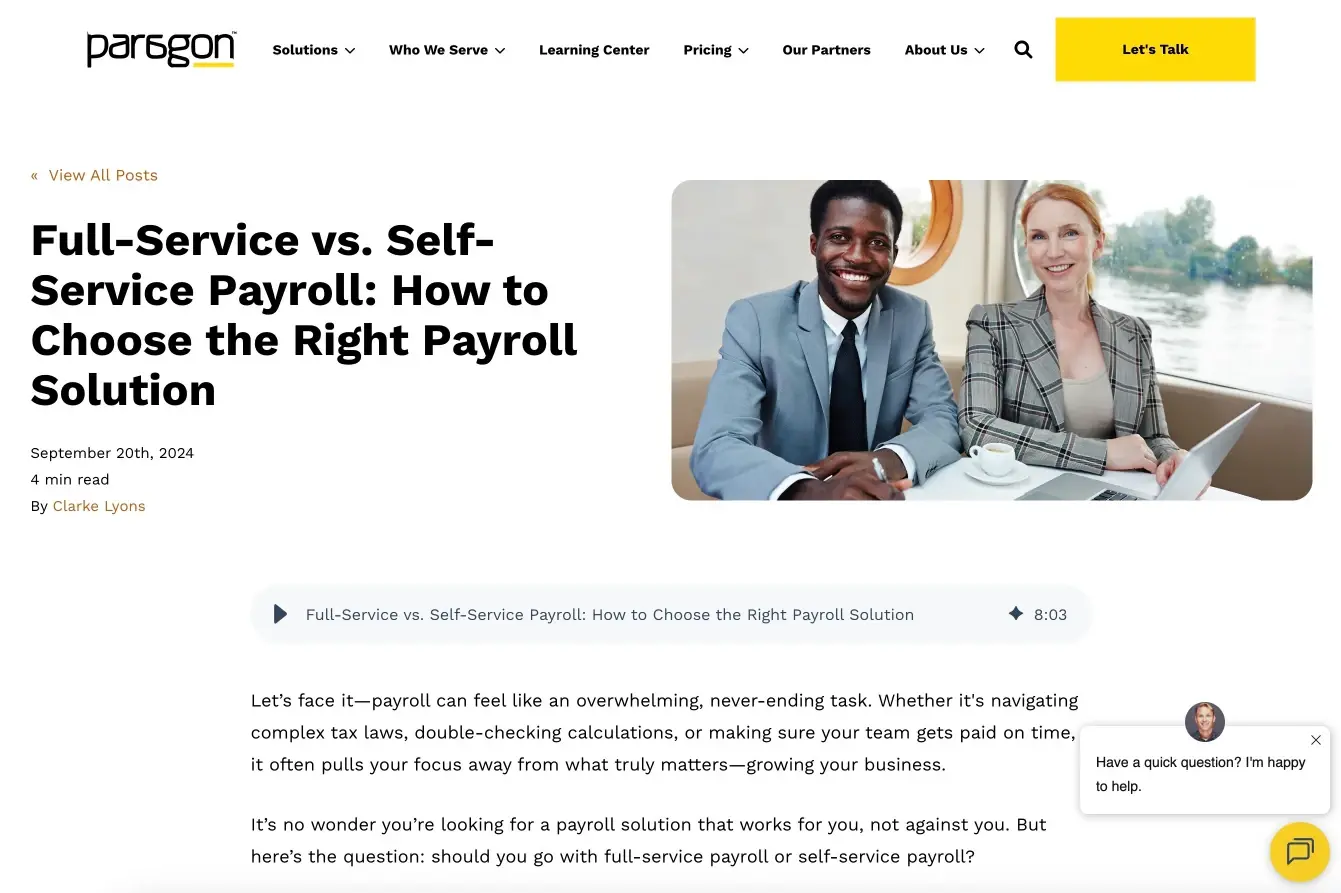
As a payroll and HR provider, IMPACT client Paragon Payroll wants to help business owners understand the real trade-offs between full-service payroll and self-service payroll, so they can choose the right level of support for their team (without guessing or learning the hard way).
Paragon Payroll works within the cannabis industry, so their approach is especially useful for companies that are growing quickly or operating in more complex, regulated environments where payroll mistakes get expensive fast.
What we like about this article:
-
Starts by clearly defining both options (so there’s no confusion on terminology)
-
Includes “key benefits” lists for each option, making it easy to scan and compare
-
Uses simple, real-world scenarios to help readers self-identify which path fits best
-
Adds a set of “key questions to ask yourself” that guides the decision (instead of pushing one option)
-
Ends with a quick recap section that summarizes who each option is best for, plus clear next steps
7. Which Short-Term Help Do I Need? Temporary Employee vs. Contractor — CSI Accounting & Payroll
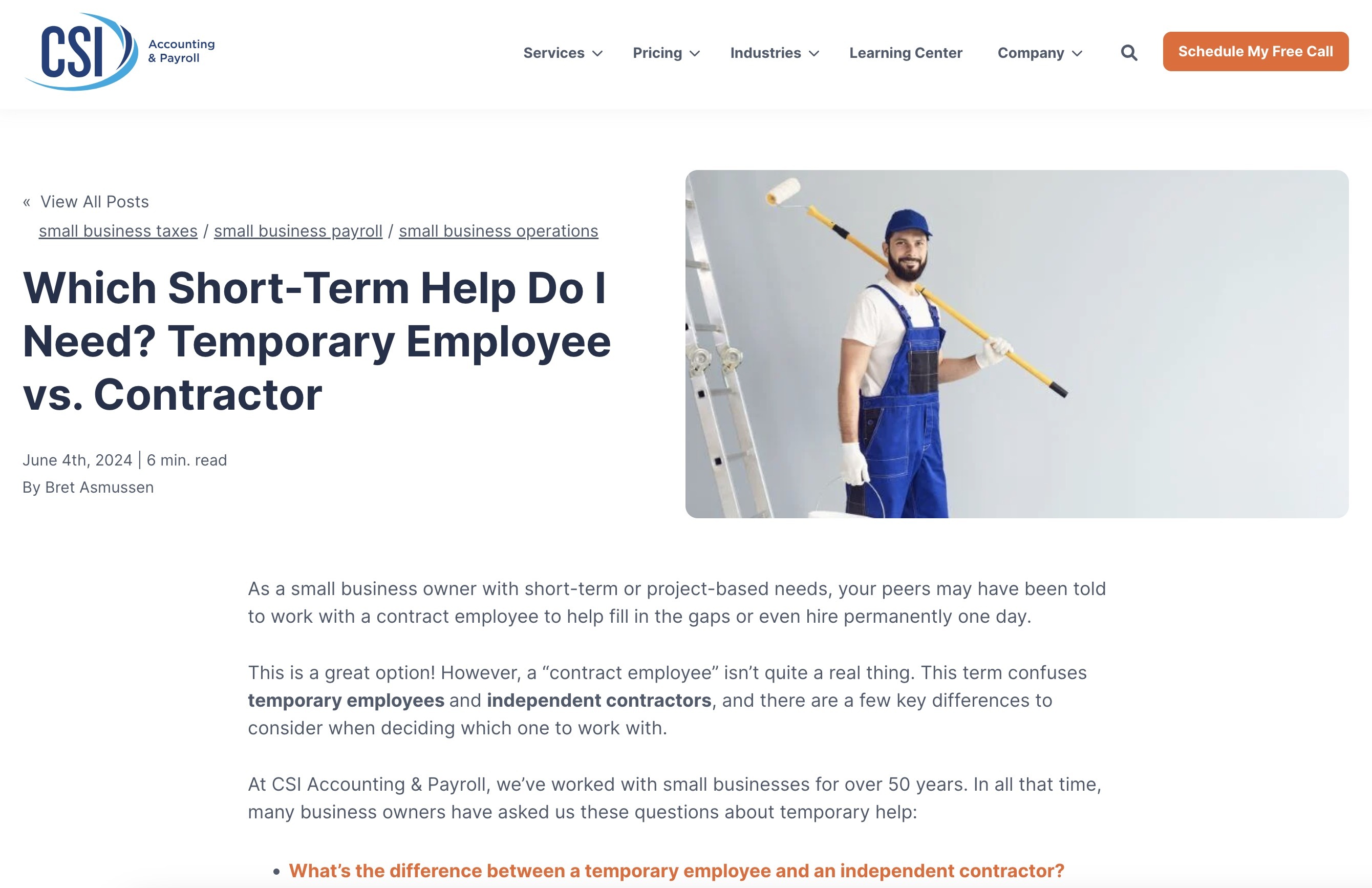
As an accounting/payroll/HR advisory firm, IMPACT client CSI Accounting & Payroll helps small business owners understand the real differences between hiring a temporary employee (through an agency) vs. an independent contractor (1099), so they can get short-term help without creating compliance issues, losing control of the work, or overpaying for the wrong option.
What we like about this article:
-
Kicks off by clearing up a super common confusion
-
Uses a clear category comparison framework with 4 decision factors that mirror how owners actually think: industry/job type, control, hiring process, and ongoing employment.
-
Explains the practical difference in control you have
-
Addresses the “could this become permanent?” question
-
Breaks down cost drivers for each category
-
Ends with a simple next-step CTA that fits the reader’s moment: “now that you understand the differences and costs, here’s how to think about payroll support.”
Competitor comparisons
Competitor-comparison articles can be the most difficult to wrap your head around. Many companies stop and say, “But why would I want to talk about my competitors? Won’t I be sending my customers away?”
But in reality, doing so will cause your customers to see you as honest and transparent. It shows them you value what’s best for them and often makes them feel grateful you’re trying to help, rather than hammer away at a hard sell.
With these examples, you’ll see the lists share competitors and talk about what they offer — in a positive light to maintain your company’s integrity.
8. La-Z-Boy vs Ashley Furniture: 7 Differences You Should Know in 2026 — La-Z-Boy
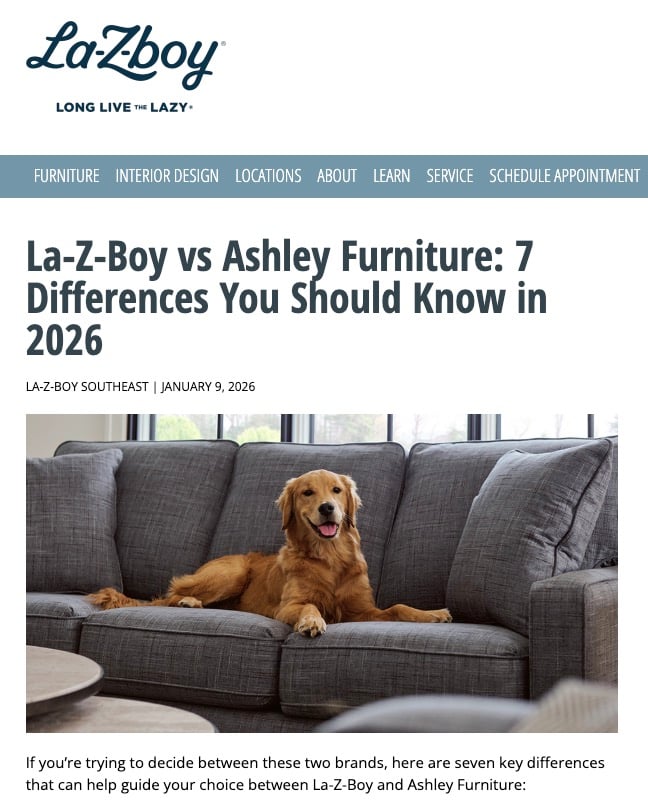
La-Z-Boy Southeast compares La-Z-Boy vs. Ashley Furniture in a buyer-friendly way, helping shoppers decide which brand fits their needs based on price, quality, design help, customization, delivery, warranty, and where the furniture is made.
What makes it work is that it doesn’t try to “win” the comparison. It acknowledges that these brands often attract different buyers (and budgets), then walks readers through the specific differences that actually impact the buying decision, so shoppers can confidently choose the best fit for their home and timeline.
What we like about this article:
-
It’s a true competitor comparison (names the competitor, doesn’t dance around it).
-
Leads with the real decision drivers buyers care about, like cost, quality, and service.
-
Uses a simple “7 differences” structure that’s easy to scan, skim, and share in a sales process.
-
Gets specific on differentiators buyers rarely see explained clearly (ex: design services, full-service delivery details, and warranty coverage differences).
-
Includes practical “what this means for you” context, like trade-offs between custom wait times and quality testing.
-
Adds an explicit disclosure about being an independent dealer and not affiliated with Ashley, which builds trust.
9. Custom Electric vs. Integra Electrical: Finding the Right Electrician — Integra Electrical
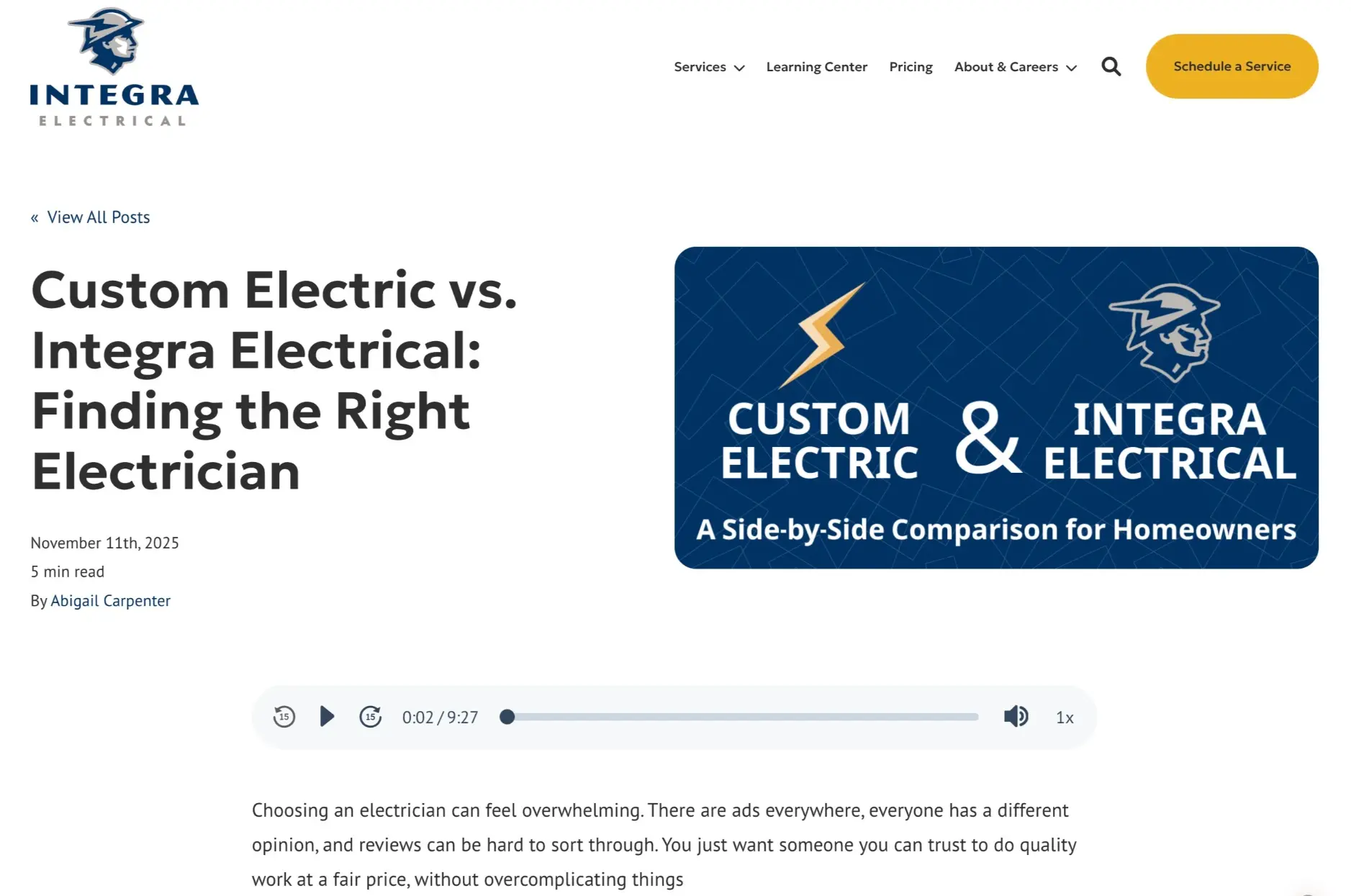
As a residential electrical company in Central Iowa, Integra Electrical uses this article to compare themselves directly against Custom Electric, so homeowners can understand the real differences in service focus, pricing approach, and what it’s like to work with each company. It gives the information needed to ultimately pick the best fit for their specific project.
What makes this a strong competitor comparison is the tone: they’re upfront that they have a bias, but they also say the goal isn’t to “convince you,” it’s to help the reader figure out who’s right and who’s wrong for their needs. That framing lowers defensiveness and builds trust fast.
What we like about this article:
-
It clearly defines each company’s core focus (Custom: broad residential + commercial/industrial; Integra: residential-only service work).
-
It compares pricing models transparently, including dispatch fee vs. no dispatch fee and how quotes are delivered.
-
It explains the customer experience difference (contractor-style vs. homeowner-first process, communication, cleanliness standards).
-
It includes a practical “Which company is right for you?” chart with side-by-side criteria (services, evaluation, generators, project types, etc.).
-
It calls out specialization honestly (older-home expertise, residential diagnostics, commercial/mixed-use projects) without trashing the competitor.
-
It ends with clear next steps for both types of readers (learn more vs. schedule), which keeps it helpful instead of pushy.
Other comparison tools
Comparisons shouldn't be limited to your blog articles.
Yes, these are likely the easiest to put together, but different mediums may be more effective and engaging at communicating the same information to your potential buyers.
10. Fertility Assessment — Illume Fertility
Sometimes the best “comparison” content isn’t option A vs. option B. Sometimes it’s helping buyers compare where they are today vs. what they actually need next.
That’s where self-assessment tools shine. They let someone answer a few questions privately, at their own pace, and get a clear, personalized direction. All without the pressure of “book a call” as step one.

A best-in-class example is Illume Fertility’s 3-minute Fertility Assessment. Illume knows that for many patients, taking the first step toward fertility treatment can feel overwhelming. So instead of forcing anxious prospective patients to call for a consultation right away, they give them a simple assessment that helps them understand their situation first.
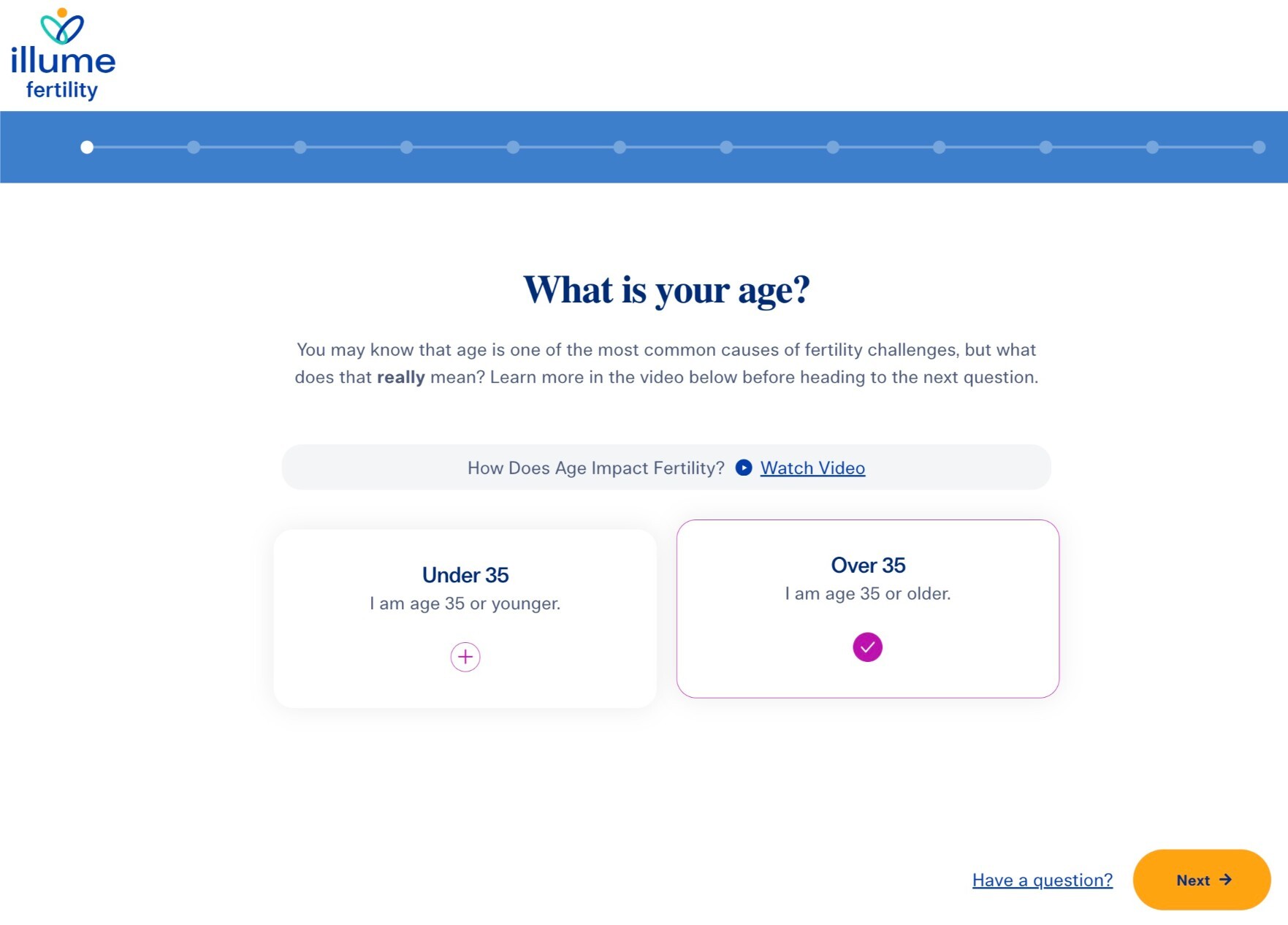
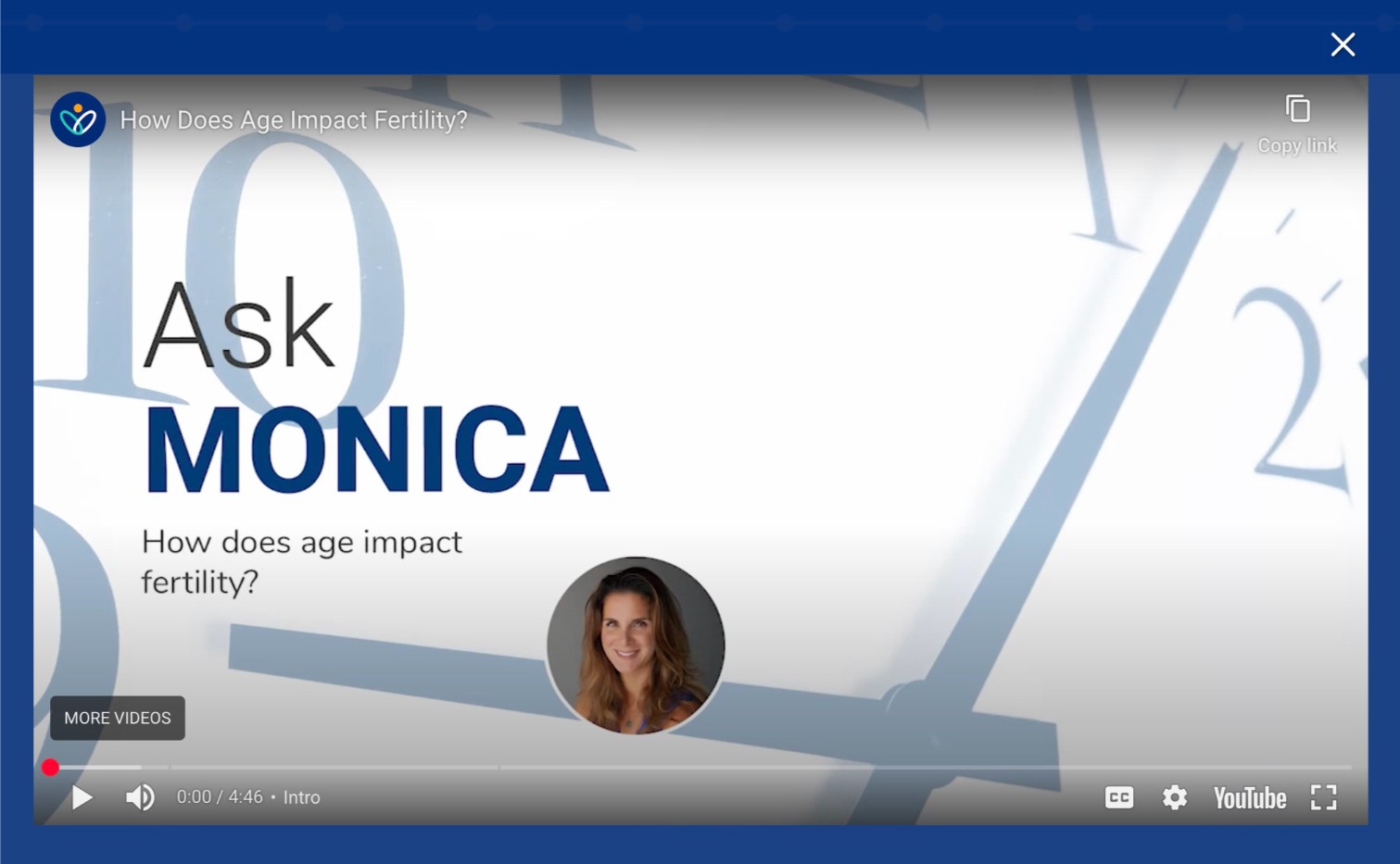
What makes the tool especially strong is that it educates while it collects information. For example, when it asks about age, it doesn’t just capture a number—it includes a short video explaining how age can impact fertility. That immediately answers the question every user is thinking: “Why are you asking me this?”
By the end, the patient receives a personalized report via email outlining possible paths forward (like ovulation induction, IVF, or other options). The result is a prospect who feels seen and supported before they ever walk in the door, and a patient services team that can start the first conversation with far more empathy and context.
Now, go write those comparison articles for your business!
Now that you’ve seen these great examples of comparison articles, we hope you find it easier to write your own.
And if you need a team of experts in your corner to help your team create content that actually moves the needle, that's exactly what the Endless Customers Coaching Program was built for. This program gives your team the tools, training, and guidance to build an in-house marketing engine, align leadership, and unify sales and marketing.

Written By
Austin Mock is a Coach at IMPACT who teaches clients the why behind the Endless Customers System so their teams can build a solid foundation and eventually run the system themselves. Austin has done hands-on video and content work at IMPACT since 2022 and began coaching clients in 2026. He has coached 21 client organizations across home services, manufacturing, insurance, construction, transportation, technology, real estate, and education, from small teams to organizations with more than $100 million in revenue. His clients include BuildX, Grimes Insurance, Oasis Turf and Tree, Options for Learning, Premier Home Team, ProjectLine Solutions, Shugarman's Bath, TLC Incorporated, Happy Roofing, Mazzella, Eco Plumbers, and Floor Concepts. His coaching builds fundamentals and repeatable systems before optimizing anything. Austin helps clients see how their whole marketing and sales system fits together so they can solve problems on their own, and because he did the work himself first, he coaches from experience. Before stepping into coaching, Austin spent over a decade working in professional video and content production across corporate and nonprofit environments, including producing documentary work for PBS. He has written and produced buyer-focused content that answers tough questions, addresses concerns openly, and supports sales teams without relying on pressure tactics.
Austin Mock is a Coach at IMPACT who teaches clients the why behind the Endless Customers System so their teams can build a solid foundation and eventually run the system themselves. Austin has done hands-on video and content work at IMPACT since 2022 and began coaching clients in 2026. He has coached 21 client organizations across home services, manufacturing, insurance, construction, transportation, technology, real estate, and education, from small teams to organizations with more than $100 million in revenue. His clients include BuildX, Grimes Insurance, Oasis Turf and Tree, Options for Learning, Premier Home Team, ProjectLine Solutions, Shugarman's Bath, TLC Incorporated, Happy Roofing, Mazzella, Eco Plumbers, and Floor Concepts. His coaching builds fundamentals and repeatable systems before optimizing anything. Austin helps clients see how their whole marketing and sales system fits together so they can solve problems on their own, and because he did the work himself first, he coaches from experience. Before stepping into coaching, Austin spent over a decade working in professional video and content production across corporate and nonprofit environments, including producing documentary work for PBS. He has written and produced buyer-focused content that answers tough questions, addresses concerns openly, and supports sales teams without relying on pressure tactics.
/Assets/Icon%20Library/social/linkedin-logo.svg)
Share
/Assets/Icon%20Library/social/x%20corp.svg)
/Assets/Icon%20Library/social/mail-to.svg)
/Assets/base/Learning%20Center%20Resource%20Category%20Icons/Website%20link.svg)
NEED HELP WITH CONTENT MARKETING?
If you’re looking to take control of your sales and marketing using content as a key driver, IMPACT can help. We can guide you on how to build your internal team, stop relying on agencies, and become the most known and trusted brand in your market.
NEED HELP WITH CONTENT MARKETING?
If you’re looking to take control of your sales and marketing using content as a key driver, IMPACT can help. We can guide you on how to build your internal team, stop relying on agencies, and become the most known and trusted brand in your market.