
/Assets/arrow-facing-left--black-01.svg)
/Assets/navigation-global--close-symbol-black-01-1.svg)

/Assets/Icon%20Library/social/facebook-logo.svg)

/Assets/Icon%20Library/social/instagram-logo.svg)
/Assets/Icon%20Library/social/youtube-logo.svg)






As much as every business would like to believe it's a unique snowflake in its market, it almost always has competitors. Prospective buyers want to know how those competitors stack up.
Rather than run from the comparisons, confronting your competition head on should be an integral part of your content marketing strategy.
You might be thinking: "Why would I ever talk about my competitors? I want people focused on my options, not theirs."
Well, for one, people are going to think about your competitors whether you like it or not.
Embracing this buyer behavior will help you get in front of your target audience when they're weighing their options, guide the conversation surrounding the comparison, and build trust as the expert who provided the answer your buyer was looking for.
This is why the Endless Customers System™ teaches that content discussing competitors is some of the most influential content a business can add to their digital marketing strategy.
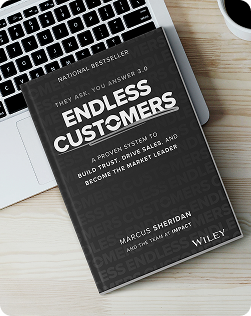
FREE BOOK PREVIEW
Endless Customers Special Preview Edition
Get a taste of the book that brings you a proven system to build trust, drive sales, and become the market leader. This special preview edition has select chapters and The Four Pillars of a Known and Trusted Brand, resources to accelerate your success, and more.
Why write about the competition?
At first glance, talking about your competitors might seem counterintuitive, but over the years, we've found the companies that recognize and acknowledge their competition ultimately fare better than those that don't.
Here's why.
1. You'll build trust with your audience
No business exists in a silo. Creating content about your competitors shows prospective buyers that you are aware of your surroundings and recognize what's going on in a buyer's head.
You're not naive. You're not ignoring the fact that buyers have other options and will wonder about them. You're actually acknowledging these natural thoughts and helping resolve them.

Now, this doesn't mean you have a license to bash your competition. Buyers can see right through that.
The key is to deliver the facts about your competition. Use documented facts about their products, services, weaknesses, and strengths.
Most consumers have never had a company inform them honestly about their other options, much less offer transparency into their own competitive analysis.
Doing so shows integrity. It shows that they can trust you have your buyer's best interests in mind. You're not simply trying to sell anyone you can.
2. You'll expand your organic reach and show up in AI search
By addressing your competition directly, you can capture high-intent traffic from keywords and queries that usually lead exclusively to your competitors’ websites or third-party review platforms.
When a prospect searches for a competitor’s pricing, features, or reviews, they are often ready to buy and are looking for validation.
By providing those answers on your own site, you introduce your brand at the exact moment a potential customer is weighing their options. This allows you to expand your search visibility to an audience that may not have previously known you existed, effectively pulling qualified prospects into your own sales pipeline.
Answering questions around competitors and having prospects come to your site gives you a chance to introduce your product or service as an option. This helps you expand your reach and perhaps even get some new people in your pipeline.
3. You get to control the conversation
Addressing how other businesses could potentially help with your buyer's problem too, allows you to control the conversation surrounding them.
Again — this doesn't mean bashing your competitors.
You need to remain fair and unbiased; otherwise prospects will know you’re just trying to persuade them away from the competition otherwise.
However, you can still choose what facts you share and which you don't. Creating content around your competitors also gives you more power to insert yourself into the conversation more naturally for direct comparison.
How to write about competitors on your business blog
1. Pick your approach
There are a few options for creating content around competitors:
-
Best-of competitor lists
-
Direct competitor comparison
Best-of competitor lists
In recent years, searches for "best" products has increased dramatically. That's why the best-of competitor list is so valuable.
With this, you’re targeting searches where people want to see all of their best options for a particular solution. (i.e. The best mid-sized cars, the best Indian restaurants in Phoenix, the best video editing tools). Essentially, you’re performing competitive analysis and then publishing the results.
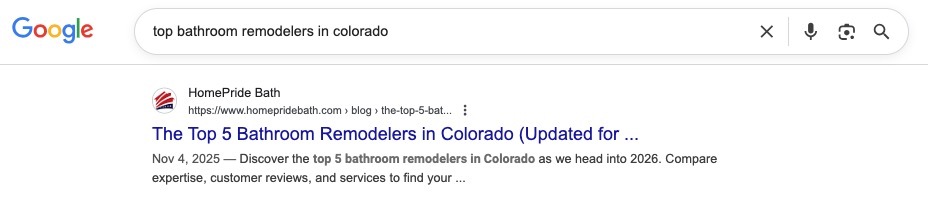
IMPACT client, HomePride, does this well with their article: The Top 5 Bathroom Remodelers in Colorado.
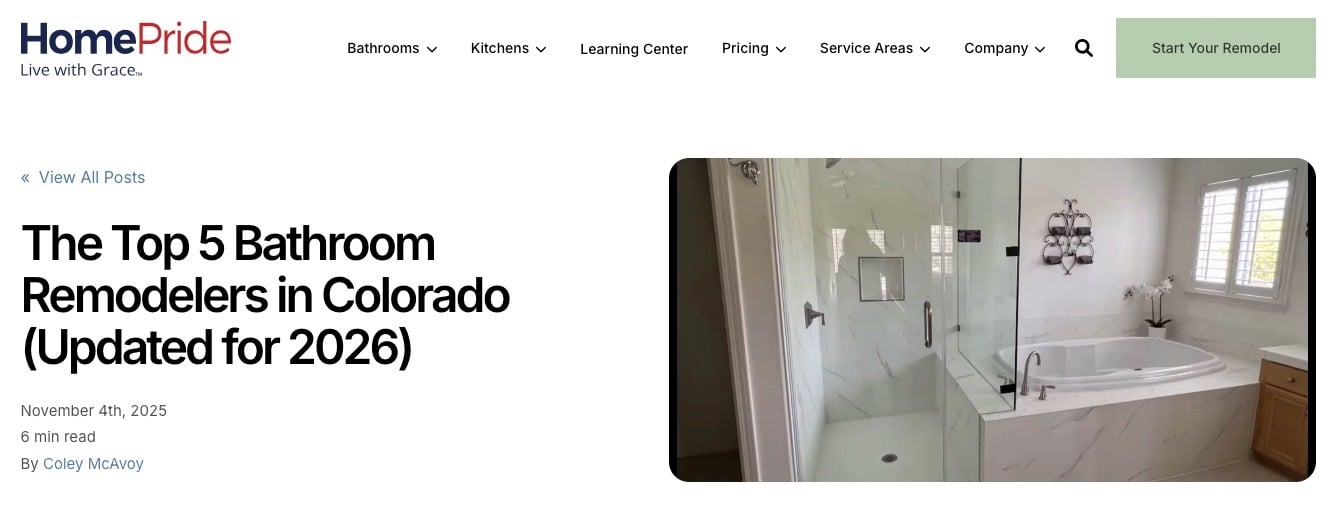
By giving an unbiased list of the top 5 bathroom remodelers in colorado, they were able to secure the number 1 organic ranking on Google search.
Director competitor comparison
Last, the direct competitor comparison is for people who have seriously weighed their options and are struggling to choose between a small handful of choices.
These are likely direct comparisons like IMPACT client, Linta Roofing's, article: Monarch Roofing vs. Linta Roofing: Which Roofer is Right for Me?

Their introduction does a great job at explaining why this article has been created:
In this article, we’ll look at the key qualities that define a great roofing company and compare two of the area’s roofing leaders: Monarch Roofing and Linta Roofing. We’re looking at Monarch Roofing because they are frequently mentioned by homeowners in the area when discussing roofing estimates, making this comparison relevant for those who want to understand the differences between two well-known options.
To ensure an unbiased perspective, we’ve relied on public information, including Google reviews, to provide a transparent and comprehensive overview of Monarch Roofing and Linta Roofing.
Our goal is simple: to empower you with the knowledge to make an informed decision. Whether you choose Linta Roofing – or not! This article will help you confidently select the roofer that best fits your needs.
We’ll look at:
- Services
- Customer Reputation & Reviews
- Warranties
- Pricing
- OwnershipWe’ll use the same criteria to compare Monarch Roofing and Linta Roofing that we share with our potential customers when they’re indecisive about which company they’ll choose for their roofing project.
Let’s get into it!
This page gives you a head-to-head comparison of the two companies to help you understand the benefits and drawbacks of each as well the similarities and differences between the two.
These pieces are not only useful for being found in search platforms, but they're also valuable assets your sales teams can use when working with leads who ask the question: “What’s the difference between your company and [insert competitor's name] ?”
2. Build trust in your introduction
One of the best ways to build trust with your audience is to explain what makes you an expert early on. In other words, share what makes you credible so your audience understands why they should listen to you.
Let’s take a look at how this is done in our earlier example of HomePride:
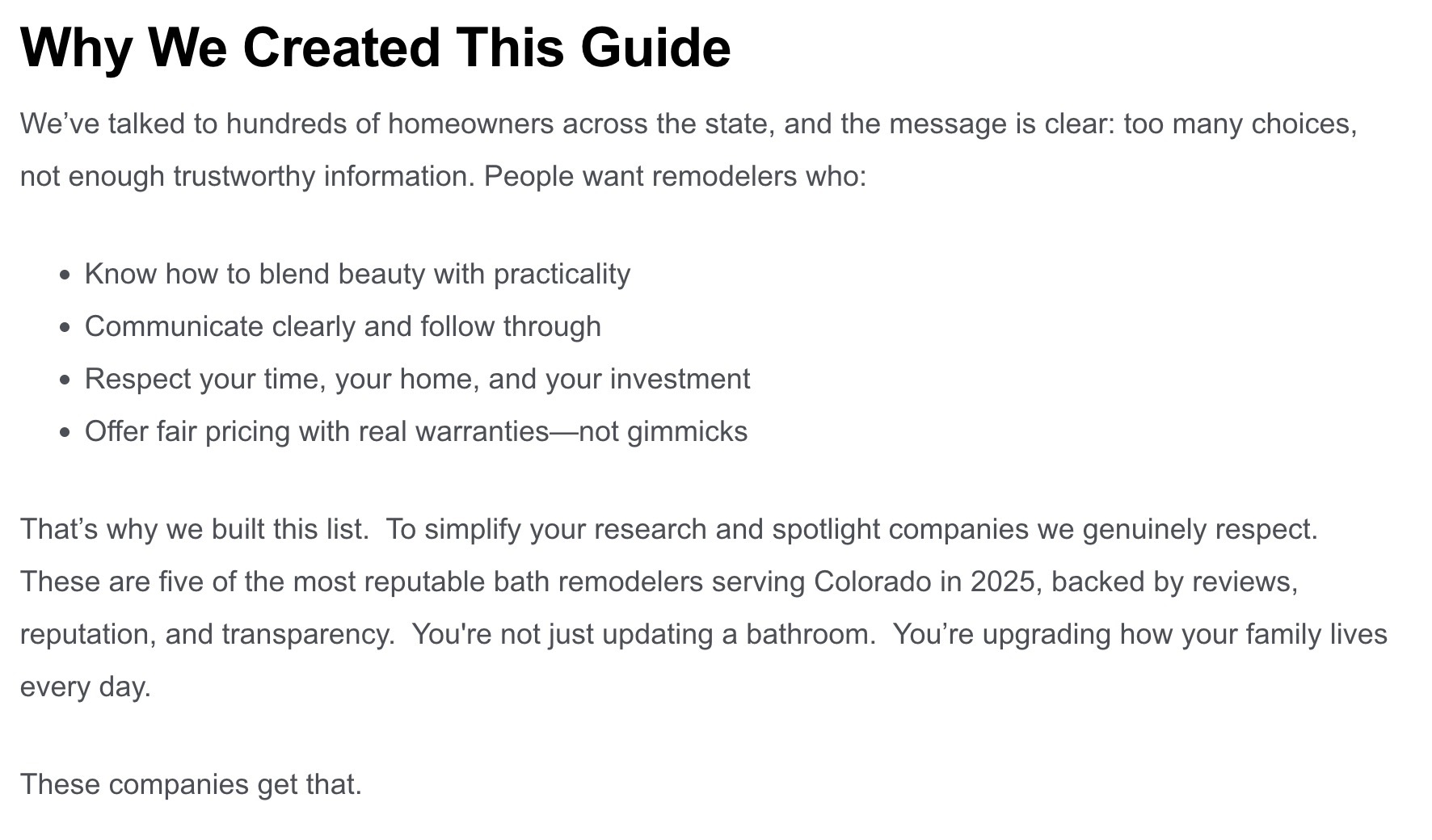
This establishes thought leadership and expertise while also showing it’s written in the best interest of the consumer by being transparent about the other options.
3. Share the facts about your competition — good and bad
Now, we get to the question of the hour: What exactly do we say about our current competitors in our content?
Do we slam them and talk about how their products and services are inferior to our own? Or do we sing praises that make them sound like the perfect fit for any consumer?
The answer is...neither.
We’re not going to trash-talk their business, and we’re also not going to glorify it.
We’re simply going to share the facts:
- Who they are
- How long they’ve been in business
- Any awards/certifications they’ve won or compliances they follow
- Their particular specialties or what they’re known for
- Any benefits and any drawbacks
If you want to compliment a competitor, you’re more than welcome to, but sharing anything derogatory can backfire on you, as the trust you’re trying to establish with prospects could begin to slip.
Also, the information you share about each can be as in-depth or shallow as you like.
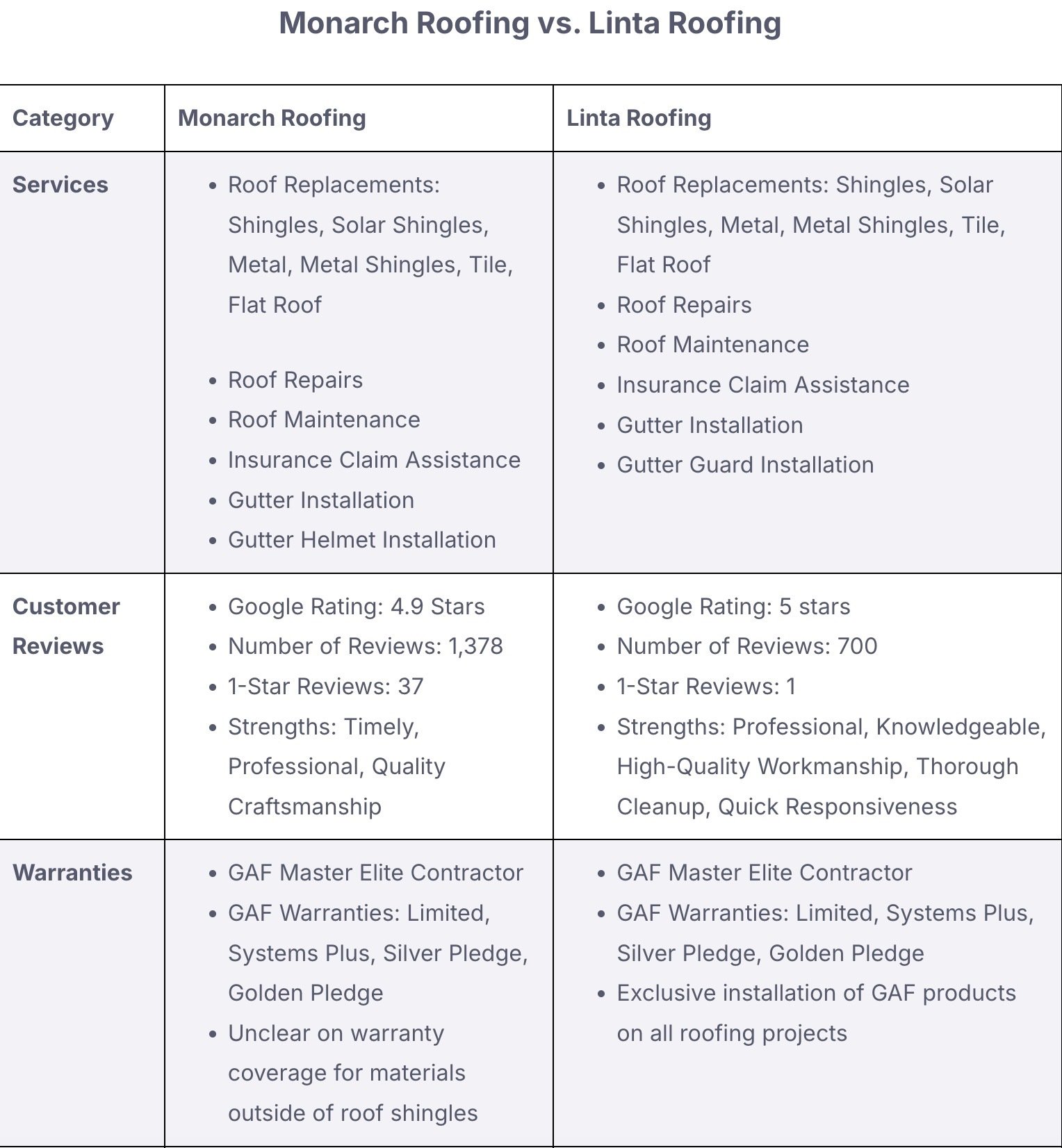
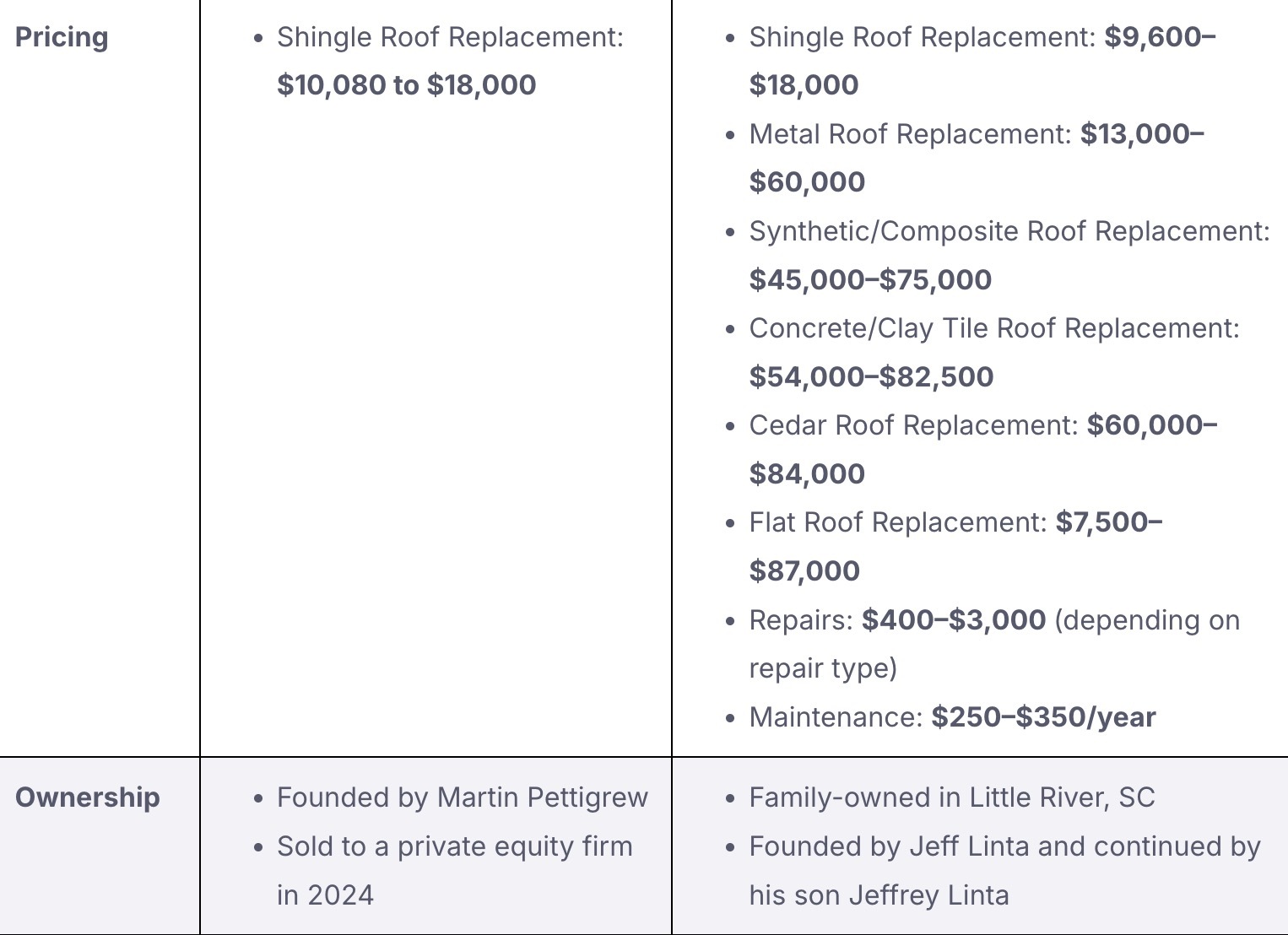
Let's look again at one of the earlier examples, Linta Roofing. In their article they have a table that shares the facts for both businesses:
If you’re really struggling with what to say about your competitors, go to their websites and check out their “About Us” page. This will give you likely all the information you need.
4. Conclude with actionable direction
Your conclusion should reinforce that your company’s primary objective is consumer education. Recap for them considerations they should keep in mind as they find a company that is a good fit for them and perhaps even tell them how you'd tackle the most common situations.
If you're experiencing X, buy Y.
If your problem is A, then go with B.
This is also an opportunity to reintroduce the services you provide and customers that have found you a good fit for their needs.
Check out this example from IMPACT client Fire & Ice Heating & Air Conditioning in their article, Best HVAC Contractors in Columbus, Ohio.
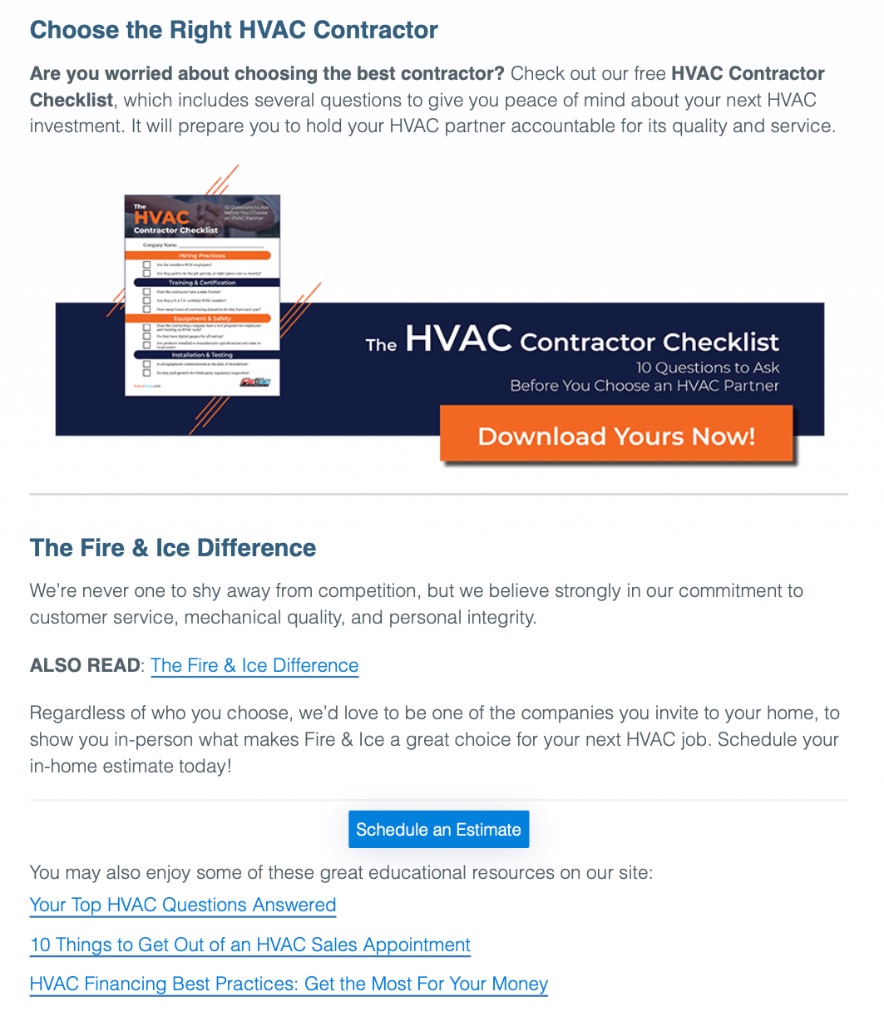
After listing all of the options homeowners have for HVAC companies in Columbus, Ohio, Fire & Ice does a few things:
First, they have a call-to-action for a helpful offer to download a checklist of questions you should ask any contractor. This is not only a valuable offer to the prospect, but it’s also a lead magnet that helps Fire & Ice capture more leads they can nurture.
Then, Fire & Ice throws their hat in the ring by explaining why they feel they’re the best HVAC company in Columbus, giving the reader the opportunity to schedule an estimate right from the page.
Sure, the focus of the article is on the competitors, but at the end of the day, Fire & Ice has come out on top by building trust with their audience through this helpful article.
If there’s any topic that consumers know most companies don’t want to talk about, it’s the fact that there are other companies out there. That’s why this type of article fares so well with consumers and search engines alike.
Should you be worried about legal repercussions from writing about your competitors?
When companies are new to this type of content, they often come to us with the same concern: What if my competitors threaten to sue me over what I write?
Just as with all your content, you should aim to be honest and transparent. When writing about your competition, remove bias and opinion. Just share the facts. Facts are not libel.
This is exactly how one of our clients responded to the threat of a lawsuit.
IMPACT client Yale Appliance is a Massachusetts-based retailer selling direct to consumers, and they've been threatened with lawsuits in the past.
They sell thousands of kitchen appliances every year, and they also perform service calls. They started tracking those service calls and seeing which brands needed to be fixed most often.
Then, Yale published its data in an article titled Most Reliable Appliance Brands, showing which brands were the most and least likely to break down.
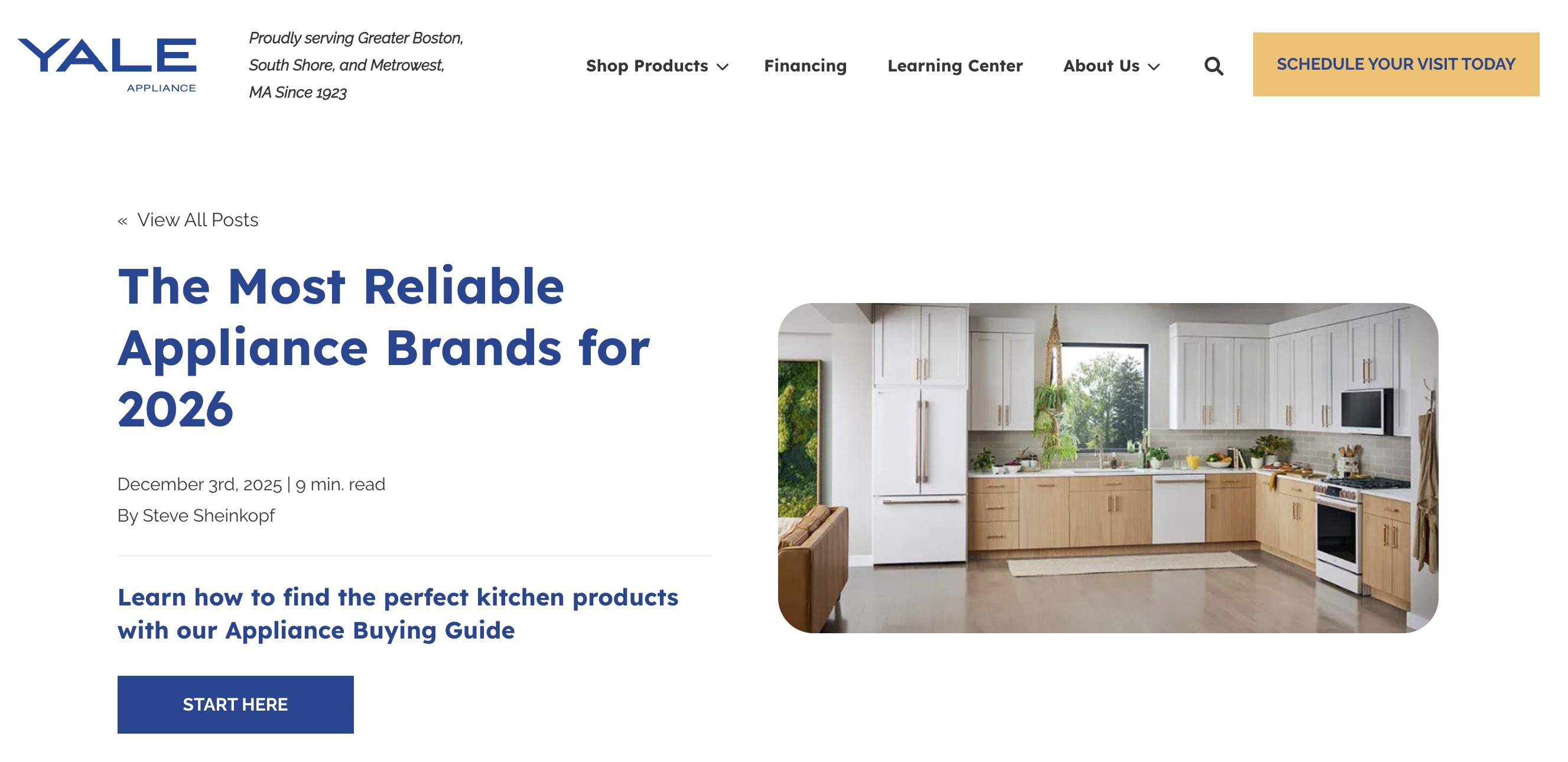
Major manufacturers threatened lawsuits. But Yale stood by its numbers. They were not slandering the brands that didn't make the list, they were just offering facts based off of over 33,000 service calls: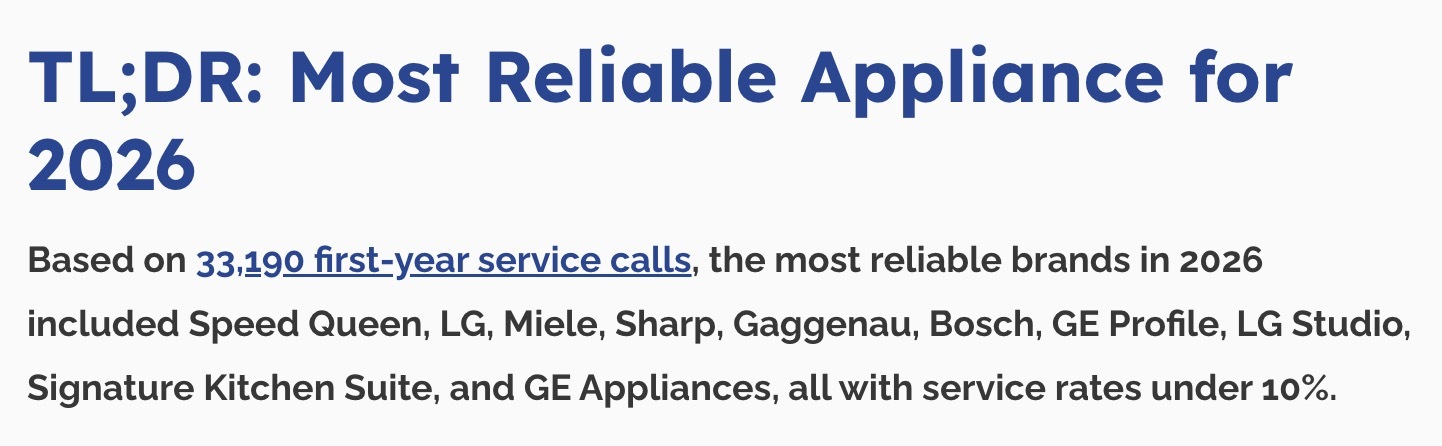
When Yale pointed out they were just reporting facts, the lawsuits were withdrawn.
Each year, Yale updates this list, based on its most recent data, and it’s a good reminder that writing about your competition should be objective and fact-based.
If it gives you peace of mind, check with a legal expert before you publish anything you’re concerned about. See if what you’ve written could be considered libelous. If you’re being factual, you should have nothing to worry about.
Now that that’s out of the way, let’s dive into how you actually write these articles.
So, what’s next?
Writing about your competitors can seem scary, and we would be lying to you if we said it didn't require a bit of finesse, but with the tips above and your audience's best interest in mind, you'll be well on your way to driving recommendations, generating more leads, and most importantly, building more trust.
And if you need a team of experts in your corner to guide you to becoming the most known and trusted brand in your market, that's exactly what the Endless Customers Coaching Program was built for. This program gives your team the tools, training, and guidance to build an in-house marketing engine, align leadership, and unify sales and marketing.
Learn How to Make It Happen
The Endless Customers Coaching Program
If your marketing isn’t delivering and you’re ready for a proven, future-ready system built for the age of AI (one your team can run in-house) check out our coaching program.

Written By
John Becker is a Coach at IMPACT, where he uses the Endless Customers System to help businesses improve how they communicate and go to market by aligning their sales, marketing, and leadership teams. A Connecticut native, John studied at UPenn, Middlebury, and UMass, and has worked in both corporate and nonprofit settings. Every day, he helps businesses improve how they sell, market, and communicate.
John Becker is a Coach at IMPACT, where he uses the Endless Customers System to help businesses improve how they communicate and go to market by aligning their sales, marketing, and leadership teams. A Connecticut native, John studied at UPenn, Middlebury, and UMass, and has worked in both corporate and nonprofit settings. Every day, he helps businesses improve how they sell, market, and communicate.
/Assets/Icon%20Library/social/linkedin-logo.svg)
Share
/Assets/Icon%20Library/social/x%20corp.svg)
/Assets/Icon%20Library/social/mail-to.svg)
/Assets/base/Learning%20Center%20Resource%20Category%20Icons/Website%20link.svg)
NEED HELP WITH CONTENT MARKETING?
If you’re looking to take control of your sales and marketing using content as a key driver, IMPACT can help. We can guide you on how to build your internal team, stop relying on agencies, and become the most known and trusted brand in your market.
NEED HELP WITH CONTENT MARKETING?
If you’re looking to take control of your sales and marketing using content as a key driver, IMPACT can help. We can guide you on how to build your internal team, stop relying on agencies, and become the most known and trusted brand in your market.