
/Assets/arrow-facing-left--black-01.svg)
/Assets/navigation-global--close-symbol-black-01-1.svg)
/Assets/Icon%20Library/social/facebook-logo.svg)

/Assets/Icon%20Library/social/instagram-logo.svg)
/Assets/Icon%20Library/social/youtube-logo.svg)






If your website is managed by an agency, there’s a good chance your team has run into this situation: a simple update needs to be made, but instead of fixing it immediately, someone has to track down the agency and wait.
What should take twenty minutes turns into days or weeks.
Over time, those delays add up. Everything moves slower, your messaging gets stale, and your website stops keeping pace with your business.
What the agency marketed as a partnership starts feeling a lot like dependency. And for the specific tasks we’re going to talk about here, dependency on an outside vendor is costing you more than money. It’s costing you speed, credibility, and control over your own business.
The good news is that these tasks are more manageable in-house than most teams expect. You don’t need a large team or a deep technical background to manage your website successfully. You just need the right people with the right tools, and a clear sense of what to own.
At IMPACT, we coach and equip internal teams to do exactly that. That's the foundation of the Endless Customers System™: building a marketing engine your company owns, controls, and can scale without reliance on an agency.
Here are four website tasks commonly outsourced to agencies that belong inside your organization, and what it looks like to bring them home.
1. Why In-House Content Creation Outperforms Outsourced Writing
Most businesses outsource content because it feels like the path of least resistance. No one has time or knows where to start. After all, the agency already has writers, SEO specialists, and a content calendar ready to go.
What they don't have is your expertise.
No external writer can walk into your business and produce content with the depth and authenticity that comes from actually doing the work. They can research your industry, target keywords, and deliver something that looks polished on the surface.
But SEO has changed. Google and AI search engines are increasingly rewarding content that is genuinely useful and trustworthy, and filtering out content that's generic or surface-level. If an outside writer is producing content without real industry knowledge, it's likely to underperform no matter how good it looks.
When content comes from inside your business, you stop sounding like a vendor and start sounding like an expert. It reflects knowledge buyers can't find anywhere else. It answers the questions your sales team actually hears.
That last one is key. When your content manager is connected to your sales team, the content starts addressing the exact objections and questions buyers have before they ever reach out. That's how content converts, not just ranks.
When buyers can find clear answers to their questions before speaking with sales, deals move faster, and sales teams spend less time explaining the basics.
What this look likes in practice
Who owns it: The content manager is the primary driver, responsible for writing, publishing, and maintaining a consistent cadence. The sales team is a critical collaborator, feeding the content manager the real questions, objections, and conversations happening with prospects.
-
Hire or designate a content manager embedded in your business who can interview your subject matter experts.
-
Build a content calendar around the questions your sales team hears most often.
-
Use AI tools like ChatGPT or Claude to assist with drafts and editing, then layer in internal expertise to keep it specific and credible.
-
Publish through a CMS like HubSpot or WordPress so posting is frictionless.
Start simple. The questions your sales team fields every week are your content roadmap.
2. How to Stop Relying on Your Agency for Every Website Change
If a small change on your website requires submitting a ticket, waiting for a response, and paying for someone else's time, that's worth examining closely.
Some businesses are genuinely stuck. Their site was built years ago on a hardcoded platform with no CMS, no editable templates, and no way for the marketing team to do anything without a developer. Every update goes through the agency.
But that's not always the case. If your site is already built on a platform like HubSpot or WordPress, the problem isn't the platform. It's the training. Agencies often do a single onboarding call and move on, leaving your team feeling like they can't touch anything. And when your team doesn't feel confident making changes, every small request goes back to the agency, and you're left waiting on something that should have taken fifteen minutes.
There's also an uncomfortable reality here: some agencies benefit from keeping clients dependent. When your team can't make changes, every update is billable. It's not always intentional, but the structure works in their favor, not yours.
The goal here is to have the tools and training in place to make website updates fast, frictionless, and easy. Then your website becomes an active tool that supports your business in real time, instead of a cost center.
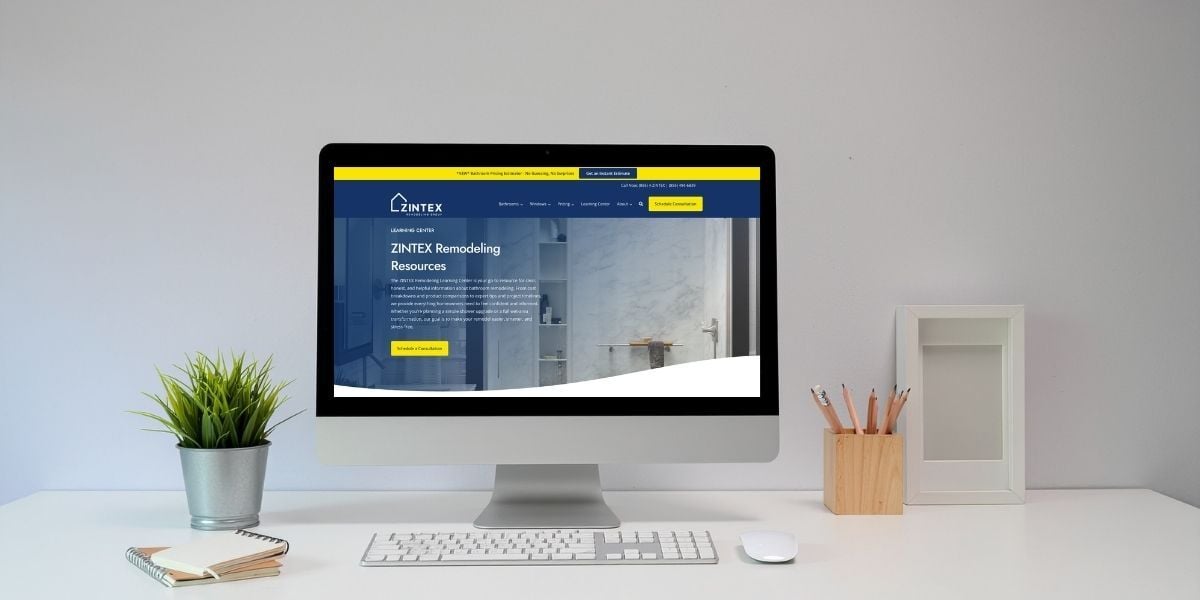
Zintex Remodeling Group Brings Website Management In-House
One IMPACT client, Zintex Remodeling Group, found themselves in this exact situation. Their website was managed by an outside agency and hardcoded, so even simple updates required submitting a request and waiting in a queue. They were essentially “handcuffed” to this agency for anything related to their website.
It made it difficult for their team to experiment with messaging, run A/B tests, or respond to what buyers were doing on the site. They found themselves in a position where they had to decide quickly: pay for another year of hosting? Or bring it all in-house and learn how to manage it?
Zintex ultimately decided to move its site to HubSpot and bring more ownership in-house. They were finally able to execute on all of the marketing and sales initiatives they wanted to. Their team could update pages, test ideas, and analyze user behavior themselves.
Instead of waiting on agency timelines, they could improve their website in real time.
When your marketing team can update a landing page in twenty minutes, the entire operation becomes more agile. You can react to market shifts, test new messaging, and optimize based on what's working without waiting on anyone.
What this looks like in practice
Who owns it: Ideally, a dedicated website manager who keeps an eye on the site day to day. In smaller companies, this often falls to the content manager. Either way, someone specific needs to own it, or it defaults back to the agency.
- If your site is hardcoded, migrating to a modern CMS is the first step. HubSpot, WordPress, and Webflow are the most common options depending on your needs.
- Don't just replicate the old site when you migrate. Build with a better conversion strategy from the ground up.
- If you're already on a user-friendly website platform, invest in proper training for your team. Most modern CMS platforms are drag-and-drop, not code.
- Establish a simple process for who requests and approves changes so nothing gets missed.
3. Own Your Own Website Data: Getting Admin Access to Google Analytics and Search Console
Here's a question worth asking your team today: Do you have admin access to your own Google Analytics and Google Search Console accounts?
You might be surprised how many businesses don't, because an agency set up those accounts and the login lives with them.
This is so much more than a minor inconvenience. It's a loss of visibility into your own business. If you can't see your data, you can't make informed decisions about what's working.
Even when businesses do have access, SEO and analytics reporting often get outsourced because the data feels overwhelming. Businesses end up operating on only the metrics the agency decides to share, which, unfortunately, are usually the ones that make the agency look good. Those metrics don't always connect to what you actually care about: leads, conversions, and revenue.
When you own your analytics, you stop reading someone else's scorecard. You can see which pages are converting visitors into leads, which traffic sources are bringing in real prospects, where visitors are dropping off and why, and what content is driving revenue versus just clicks.
Pair a smart analytics strategy and the agility of managing your website in-house, and now you’re set up to make impactful changes that will drive real change in your business.
What this looks like in practice
Who owns it: The website manager is the primary owner, responsible for tracking performance, pulling insights, and flagging what needs attention. The content manager should be trained on the basics, too, especially for tracking how individual pieces of content are performing.
-
Claim admin access to Google Analytics 4 and Google Search Console right away.
-
Set up conversion tracking beyond page views: form submissions, phone calls, and lead actions all need to be measured.
-
If you're on HubSpot, use the built-in reporting that ties marketing activity directly to CRM data.
-
Build a simple monthly dashboard focused on four or five metrics connected to revenue: leads, conversion rate, traffic sources, and top-performing pages.
-
Train someone internally to act on the data, not just read it.
4. Increase Conversions with Authentic, In-House Video Production
Video has become one of the most valuable assets a website can have. According to Wyzowl's 2026 State of Video Marketing report, 82% of video marketers say video has helped increase web traffic. Pages with embedded video can communicate credibility faster than written copy, hold visitors longer, and help prospects convert on service pages, landing pages, and About sections.
If your team can't produce video without hiring an outside crew, that part of your website is always going to fall short.
Most business leaders assume impactful video content has to look broadcast-ready, otherwise, it reflects poorly on the brand, and that’s simply not true.
Consistent, genuine video from real people in your company can build trust far more effectively than high-end productions that are full of stock images or video. When someone from your team talks through their process on camera, answers common customer questions, or walks through a real project on your site, that creates more credibility than a scripted video with stock footage and a voice-over.
When your team owns your video content, your website stays current as your business grows and changes. That’s the difference between a living website, not a brochure that went live five years ago.
Bonus Tip: Gaining that experience of creating video content in-house can tee your sales team up for success. A short, personalized video sent to a prospect before a call, walking through their situation and addressing common objections, can meaningfully shorten the sales cycle. That kind of video, specific and human, only comes from the real people on your team. No agency can produce it fast enough to matter.
What Does It Take to Bring Website Management In-House?
Less cost and effort than you think, but you need a clear plan and ownership.
You don't need a full marketing department. And you don't need to become a developer, a data analyst, or a video producer. What you need is clarity on how to get these tasks inside your business, and someone willing to own them.
The businesses that figure this out save more than money on agency retainers. They build a marketing operation that gets smarter over time, one they own, control, and can scale on their own terms. Marketing stops being a cost center and starts becoming a competitive advantage.
That's the shift Endless Customers™ is designed to create. The team at IMPACT helps businesses confidently bring marketing in-house with professional coaching for your team to create content, update your website efficiently, and measure performance.

Learn How to Make It Happen
The Endless Customers Coaching Program
If your marketing isn’t delivering and you’re ready for a proven, future-ready system built for the age of AI (one your team can run in-house) check out our coaching program.

Written By
As a Web Strategist, Janet runs hands-on strategy sessions with clients to build easy-to-manage websites that not only align with their business goals but also drive real sales. She empowers her clients with the knowledge and tools they need to take ownership of their websites, ensuring they can manage and optimize them long after the launch. Janet brings a wealth of experience in project management and client relations. Her unique skill set allows her to guide clients through the complexities of web design and marketing, ensuring they achieve bottom-line results.
As a Web Strategist, Janet runs hands-on strategy sessions with clients to build easy-to-manage websites that not only align with their business goals but also drive real sales. She empowers her clients with the knowledge and tools they need to take ownership of their websites, ensuring they can manage and optimize them long after the launch. Janet brings a wealth of experience in project management and client relations. Her unique skill set allows her to guide clients through the complexities of web design and marketing, ensuring they achieve bottom-line results.
/Assets/Icon%20Library/social/linkedin-logo.svg)
Share
/Assets/Icon%20Library/social/x%20corp.svg)
/Assets/Icon%20Library/social/facebook-logo.svg)
/Assets/Icon%20Library/social/mail-to.svg)
/Assets/base/Learning%20Center%20Resource%20Category%20Icons/Website%20link.svg)
READY TO IMPLEMENT ENDLESS CUSTOMERS™ IN YOUR BUSINESS?
You’ve learned the philosophy. Now it’s time to put it into action. Our coaches will help you apply the Endless Customers System™ to your sales and marketing so you can build trust faster, close deals sooner, and create a steady flow of new customers.
READY TO IMPLEMENT ENDLESS CUSTOMERS™ IN YOUR BUSINESS?
You’ve learned the philosophy. Now it’s time to put it into action. Our coaches will help you apply the Endless Customers System™ to your sales and marketing so you can build trust faster, close deals sooner, and create a steady flow of new customers.