
/Assets/arrow-facing-left--black-01.svg)
/Assets/navigation-global--close-symbol-black-01-1.svg)
/Assets/base/Close.svg)

/Assets/Icon%20Library/social/facebook-logo.svg)

/Assets/Icon%20Library/social/instagram-logo.svg)
/Assets/Icon%20Library/social/youtube-logo.svg)





.png?width=768&height=400&name=signs%20its%20time%20to%20bring%20your%20marketing%20in%20house%20(1).png)
You're spending real money on marketing, and somewhere in the back of your mind, you're not sure it's working.
The agency is sending the reports, and the content is going out, so you keep paying high monthly retainers. But when your sales team asks where the better customers are, you don't have a clear answer.
It might not even be the agency’s fault. The agency model is inherently flawed.
The companies that build strong, consistent marketing have one thing in common: people inside the business whose entire job is making sure marketing drives growth.
Not a vendor. Not a contractor.
Someone who knows your buyers, speaks your language, and is as invested in the outcome as you are. That’s when marketing really takes off.
After coaching hundreds of businesses on how to successfully bring their marketing in-house, we’ve seen the signs of a business that’s paying way too much for outside marketing services. In this article, we'll walk you through five main indicators that it's time to stop outsourcing your entire marketing function and start building something you actually own.
Why Outsourcing Your Entire Marketing Function Doesn't Work
The problem is not agencies. Agencies serve a real purpose, and most successful companies use outside specialists for specific functions. The problem is treating an agency as a replacement for internal marketing ownership.
At IMPACT, we know this model from the inside. Before becoming a coaching company, we were your traditional marketing agency that was trying to help everyone with everything.
We made the shift because we kept seeing the same pattern play out for our clients, and honestly, we had lived it ourselves. Here's how our CEO, Bob Ruffolo, describes it:
"We used to be a marketing agency. A pretty strong, reputable one. We were one of HubSpot's top partners, a 40-person team, winning awards. We made the shift away from that model for a reason: agencies systematically and fundamentally have flaws when you're asking them to be your outsourced marketing department."
The reality is that your account is one of many. The person doing the actual work on your content is also doing it for five other clients. They're learning your business from a brief, not from sitting in your sales meetings.
They rotate off accounts, turn over, and get replaced. The institutional knowledge your business needs someone to hold gets rebuilt from scratch every time.
An in-house marketing team has one job: your business. That changes everything about the quality of the work, the speed of execution, and the alignment between marketing and the rest of your team.
So, let's take a look at the most common signs that it’s time to bring marketing in-house and mistakes to avoid when you’re making the move.
Sign 1: You've Burned Through Multiple Agencies and Nothing Has Changed
Bouncing from agency to agency is often the most expensive way to learn that outsourcing your whole marketing function does not work.
Most CEOs in this situation keep thinking the next agency will be different. Better processes, more talented writers, and a sharper strategist. And sometimes the new shop is better. But a year in, the same frustrations come back: content that misses the mark, reporting that doesn't connect to revenue, a team that doesn't understand your buyers.
You’ll probably never find “the right agency” that just gets it. You need someone inside your business who owns this function entirely. The problems start when the agency becomes the whole department with no internal counterpart.
Sign 2: You're Managing Your Agency Instead of Running Your Business
When you have no internal marketing person, every small task becomes a conversation. You want to send an email to a customer segment. You need to update a page on your website. You want a social post about a new service. All of it goes through the agency. And all of it gets billed.
The promise was that outsourcing would free you up. The reality, for most business owners in this situation, is that it creates more work, not less. You become the middle layer between your business and the people doing your marketing. And because the agency does not live inside your company, they will always be waiting on you for direction.
An in-house marketer sees your business every day. They know what's happening in sales, what customers are asking, and what just changed in the product or service. They don't need to be briefed on every task because they already have the context. That independence is one of the biggest value drivers of bringing marketing in-house.
Sign 3: Your Marketing Never Sounds Like You
If you spend a significant portion of your time revising agency deliverables because they don't reflect how you talk, how you think, or how your company actually operates, it’s because no “brief” will replace what it feels like to be inside your business.
Agencies write for a lot of clients at once. Their writers learn your brand through a brief, a style guide, and maybe a few calls a year. But they are not in your sales meetings. They have never heard your team answer a customer's hardest question. They are working from the outside, trying to sound like the inside.
Great marketing is specific. It uses your language, addresses the exact objections your buyers raise, and reflects the way your team actually solves problems. That level of specificity is very hard to get from a vendor relationship. It comes from someone who is embedded in your business.
What to look for in an in-house content hire:
Strong writing fundamentals combined with intellectual curiosity about your industry
- The ability to interview internal subject matter experts and turn those conversations into useful content
- A track record of producing content that moves readers toward a decision, not just content that exists
- Genuine interest in your business outcomes, not just the craft of writing
Sign 4: Your Customer Data Is a Mess and No One Owns It
You might recognize this situation.
You go into your CRM and can’t find what you are looking for. The data is inaccurate, and customer histories have gaps. Key fields are missing, and everything is stale. You can see your pipeline, but you can't trust what's in it. So, you either make decisions without good data or you ask your agency for a report and have to wait.
Marketing goes beyond content deliverables. It is responsible for the critical data and infrastructure that connects your marketing efforts to your sales pipeline. That looks like:
-
CRM setup
-
Contact data
-
Automation
-
Reporting
Without someone internally owning this function, that infrastructure tends to fall apart.
An internal marketer owns this day-to-day. They set the standards, hold the team accountable, and make sure the data you rely on for decision-making is actually accurate. That kind of operational accountability is impossible to outsource effectively.
Sign 5: You Don't Know Enough About Marketing to Evaluate the Work
This one is uncomfortable, but it is one of the most important. If you are spending thousands of dollars a month on an agency and you do not know enough about marketing to evaluate whether the work is any good, you are flying blind. And that is a problem regardless of which agency you hire next.
Bob Ruffolo speaks to this from personal experience:
"I've hired consultants because I didn't know the thing, so I thought, ‘I'll just hire an expert.’ And then I didn't know if they were right or wrong. I wasted a lot of money because a lot of times they were wrong. I just trusted them because they had the label and the price tag."
The solution is not to become a marketing expert before you make your next hire. But every business owner should understand the fundamentals: what good content looks like, what your CRM data should tell you, and how to connect marketing activity to sales outcomes. That foundational knowledge protects your investment no matter which path you take.
Today, Bob's advice is simple: have a conversation with an AI platform. Tell it about your business, what you're trying to accomplish, and ask what a good marketing strategy would look like for a company like yours. Use it as a starting point for education. It takes an hour, and it will change how you evaluate everything your current or future marketing team produces.
If you’re thinking, “How do I know how to hire the right people for my marketing team?” This is where IMPACT coaches come in. They work with business owners to build enough marketing knowledge to spot good work from bad, before you make your next hire.
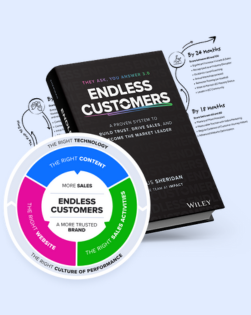
Learn How to Make It Happen
The Endless Customers Coaching Program
If your marketing isn’t delivering and you’re ready for a proven, future-ready system built for the age of AI (one your team can run in-house) check out our coaching program.
What Does It Look Like to Build an In-House Marketing Team?
If you're ready to see what the process looks like in action, check out our guide on How to Build and Scale a High-Performing Marketing Team, where we dive into team size by company revenue, roles and accountability, priority metrics, and more.
When Does It Still Make Sense to Use a Marketing Agency?
Building an in-house team does not mean cutting off all outside support. Most companies, including IMPACT, use external specialists for specific functions. Having an internal marketing team actually helps those agency relationships thrive.
Paid advertising is a good example. It is highly technical, constantly evolving, and a full-time job in its own right. A great paid ads specialist can deliver strong results. But only if someone internally knows what results to ask for, can read the reporting, and can tell the difference between a campaign that is working and one that is generating clicks with no conversions.
Website projects are similar. Most companies do not need a full-time developer. But they do benefit from an internal person who understands enough about their website to manage small updates, own the content side, and know when to bring in outside technical help for larger builds.
The goal is internal ownership, not isolation. When you have someone internally who understands your buyers, your data, and your goals, every outside relationship gets sharper. You know what to ask for and can evaluate the work with confidence.
What Happens When Companies Make the Shift
The companies that make this transition and do it right almost always report the same thing: the quality of what they produce goes up, the sales team actually uses the content, and the connection between marketing activity and closed business gets clearer.
ZINTEX Remodeling Group had worked with agencies for years before shifting to an in-house model. They decided to make this change when they looked at their marketing and realized the only thing they truly “owned” was their URL. With plans for growth across several markets, not being able to make critical marketing decisions quickly was a huge obstacle.
In the first year, they saw a 42% decrease in the volume of incoming sales opportunities year-over-year, while revenue increased across all areas of the business.
What changed was the quality of the buyers coming in. With better content educating prospects before they ever reach out to the sales team, fewer unqualified people were filling the pipeline, and the sales team closed more sales despite fewer leads.
You Know What Needs to Change, Let’s Build the Plan
If you have been cycling through agencies for years and still can't point to marketing as a clear driver of your company's growth, that is your signal to stop outsourcing and start owning it.
The shift to in-house marketing is not about cutting off outside help entirely. It’s about making sure someone inside your business owns the function, understands what great looks like, and can hold every vendor, specialist, or tool accountable for real results. That is what separates the companies that build lasting brands from the ones that keep cycling through retainers.
Your next step is to start having the conversation. What would it look like to have a team within your business that knew your brand better than anyone else, whose entire job was to drive growth for your company? That question, answered honestly, is where the shift begins.
IMPACT coaches have helped hundreds of CEOs and founders make this exact transition, from agency dependency to an in-house marketing team that produces real results. The Endless Customers™ Coaching Program gives you a proven system, expert guidance, and a clear roadmap for building an in-house marketing engine.
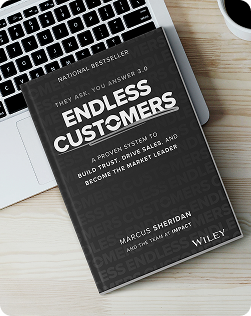
FREE BOOK PREVIEW
Endless Customers Special Preview Edition
Get a taste of the book that brings you a proven system to build trust, drive sales, and become the market leader. This special preview edition has select chapters and The Four Pillars of a Known and Trusted Brand, resources to accelerate your success, and more.
Frequently Asked Questions
What's the first role I should hire when building an in-house marketing team?
Start with a content person. Someone who can write, interview internal subject matter experts, and publish consistently. Most of your buyers are doing research before they ever contact you, and they can help make sure you are found by the right people. A content manager who knows your business and your buyers will have more impact on your pipeline than almost any other single hire.
How does in-house marketing compare in cost to keeping an agency?
Agency retainers typically run $3,000 to $10,000 or more per month, with costs that stay fixed regardless of output. An in-house content hire in the same range will cost a similar annual amount, but every hour of that person's work goes toward your company's growth specifically. You also gain consistency: same person, same voice, same institutional knowledge over time, rather than starting over each time staff turns over at the agency.
Should I fire my agency before hiring someone in-house?
Not necessarily. Some companies run a parallel period where the in-house hire is getting up to speed while the agency handles tactical execution. The important thing is that you have internal ownership of strategy, goals, and accountability before you fully cut the cord. Firing the agency first without a plan in place tends to create a gap that stalls momentum.
How do I know if the person I'm hiring is actually good at marketing?
Ask to see real results. Not samples of writing, but evidence that their work drove outcomes: content that ranked, campaigns that generated pipeline, and a content program that the sales team actually used. Spend real time in the hiring process. Talk to fifteen or twenty candidates before you decide. The quality difference between the fifth candidate and the fifteenth is usually significant. Check out IMPACT's How to Hire a Content Manager Guide for job posting and description.
Related Reading
- How to Hire and Onboard a Content Manager (with Job Posting & Description) - Get real tips and strategies for bringing your first critical marketing hire on board.
- 7 Benefits of Hiring an In-House Videographer vs. Outsourcing - As you keep building that marketing team, a videographer is going to be more valuable than you think. See why having them on your staff outperforms outsourced video.
- How to Choose Marketing Metrics that Actually Drive Sales - Learn how to track marketing performance to sales outcomes that support both teams’ success.
- How to Create a Digital Marketing Strategy - If you’re starting from scratch, learn everything you need to know about digital marketing in the age of AI.
- What is Assignment Selling? Using Content to Close Deals Faster - How can marketing and sales collaborate better to bring in more customers? The answer: Assignment Selling. Learn more about this strategy as part of the Endless Customers System™.

Written By
Bob Ruffolo founded IMPACT in 2009 and has led it as CEO ever since. What started as a simple web design company has grown into a business coaching and training company that helps leaders and their teams get better at sales, marketing, communication, and leadership. IMPACT has been a HubSpot partner since 2011, one of HubSpot's first, and today is a HubSpot Diamond Solutions Partner, twice named HubSpot Partner of the Year and a four-time Inc. 5000 honoree (2018 to 2021). Bob himself has been recognized as a 40 Under 40 winner and named to Glassdoor's Best CEO for Small Businesses list. Bob is the co-creator of the Endless Customers System with Marcus Sheridan, the methodology behind IMPACT's coaching, the USA Today bestselling book, the Endless Customers podcast, and the annual Endless Customers Live conference. It teaches companies to build marketing and sales capability in-house rather than outsourcing it indefinitely. In recent years Bob has led IMPACT's shift to an AI-first company and become a go-to voice for leaders trying to understand what AI means for marketing, sales, and the workforce.
Bob Ruffolo founded IMPACT in 2009 and has led it as CEO ever since. What started as a simple web design company has grown into a business coaching and training company that helps leaders and their teams get better at sales, marketing, communication, and leadership. IMPACT has been a HubSpot partner since 2011, one of HubSpot's first, and today is a HubSpot Diamond Solutions Partner, twice named HubSpot Partner of the Year and a four-time Inc. 5000 honoree (2018 to 2021). Bob himself has been recognized as a 40 Under 40 winner and named to Glassdoor's Best CEO for Small Businesses list. Bob is the co-creator of the Endless Customers System with Marcus Sheridan, the methodology behind IMPACT's coaching, the USA Today bestselling book, the Endless Customers podcast, and the annual Endless Customers Live conference. It teaches companies to build marketing and sales capability in-house rather than outsourcing it indefinitely. In recent years Bob has led IMPACT's shift to an AI-first company and become a go-to voice for leaders trying to understand what AI means for marketing, sales, and the workforce.
/Assets/Icon%20Library/social/linkedin-logo.svg)
Share
/Assets/Icon%20Library/social/x%20corp.svg)
/Assets/Icon%20Library/social/mail-to.svg)
/Assets/base/Learning%20Center%20Resource%20Category%20Icons/Website%20link.svg)
NEED HELP BUILDING YOUR MARKETING TEAM?
If you’re looking to build a marketing team and not sure where to start, IMPACT can help. We’ll guide you on how to structure your right team, hire the right people, and train them to drive real results.
NEED HELP BUILDING YOUR MARKETING TEAM?
If you’re looking to build a marketing team and not sure where to start, IMPACT can help. We’ll guide you on how to structure your right team, hire the right people, and train them to drive real results.