
/Assets/arrow-facing-left--black-01.svg)
/Assets/navigation-global--close-symbol-black-01-1.svg)

/Assets/Icon%20Library/social/facebook-logo.svg)

/Assets/Icon%20Library/social/instagram-logo.svg)
/Assets/Icon%20Library/social/youtube-logo.svg)






As marketers, there will never be a shortage of things to work on. There's digital marketing strategy, content, video, social media, sales alignment, and more. The list is long and growing.
Prioritizing work that will actually make an impact on the business is key. That’s why having objectives is important.
The problem is, marketing objectives too often are siloed, disconnected from the greater goals of the organization, like sales, revenue, and growth.
Most successful small businesses we work with have marketing objectives that tie directly back to revenue and sales (thanks to the development of a revenue team).
Revenue is the lifeblood of every business, and when sales and marketing work together to drive it, the results can be incredible.
When your marketing objectives are closely aligned with the organization’s monetary goals, it helps you achieve results in the leanest way possible.
After working with hundreds of companies using the Endless Customers System™, we’ve found the following to be some of the best marketing objectives examples that align digital strategy with the rest of the organization’s goals.
In this article, we will share:
- The difference between marketing objectives and key performance indicators (KPIs)
- 10 examples of marketing objectives
- KPIs that can be used to track those objectives
You can use this list to determine how to measure your success with the right objectives and KPIs.
Marketing objectives vs. KPIs
Some say objectives and key performance indicators (KPIs) are the same thing. Others disagree.
We're the latter at IMPACT.
Here is how we define objectives and KPIs:
- Objective: The thing you’re trying to achieve. Objectives should be SMART goals (specific, measurable, achievable, relevant, time-bound) that are clearly defined.
- KPI: A measurable metric used to determine if you are on track to achieve your objective. (Often multiple KPIs contribute to one objective.)
In other words, objectives are what you're trying to achieve, a KPI is a number you track to measure your progress.
From company and sales objectives to marketing objectives
We coach our clients to begin by aligning their sales and marketing teams, especially when it comes to defining marketing objectives and KPIs.
The best way to do this is by forming what we call a Revenue Team.
A revenue team is made up of the key players in your sales and marketing units.
Even though different members might focus on specific parts of the process, the team will come together and plan to work toward a common goal: driving revenue.
If sales and marketing are not aligned and working toward the same goals, a number of problems ensue, including:
- Marketing campaigns that fall flat with your audience
- Siloed data and metrics
- An inconsistent buying experience for customers
- Tension and miscommunication between the teams
And that's just the tip of the iceberg.
Whether you’re a large or small business, here are 10 marketing objective examples that can bring your teams together and unite your efforts.
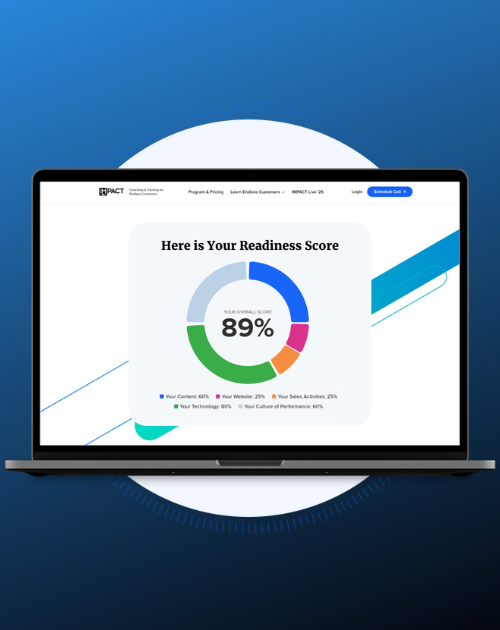
Free Assessment
Free Marketing Assessment: Where do you stand?
AI is changing how buyers find businesses, and most companies are dangerously underprepared. Take this free assessment and find out if yours is at risk of becoming invisible to your buyers.
Examples of marketing objectives
1. Increase lead quality
This objective is about increasing the probability that the sales team closes a higher percentage of deals. The higher quality leads you can attract as a marketing team, the happier your sales team will be.
Your KPIs for this objective should be focused on initiatives that define what a “quality lead” is, or indicators of whether your efforts are working along the way.
Examples of related KPIs:
- Number of good-fit leads
- Number of booked initial sales conversations.
- Number of closed deals associated with marketing.
2. Shorten the sales cycle
It’s not just up to the sales team to be more efficient or effective with their conversations. Marketing can help shorten the sales cycle, too.
Because modern prospects get so much information before talking with sales, it’s marketing’s job to deliver consistent messaging, branding, and relevant materials to help them progress toward making a purchase.
KPIs for this objective can be focused on sales enablement materials.
Examples of related KPIs:
- Pieces of sales enablement content created
- New product pages launched
- Case studies produced
(Note: The Endless Customers System™is a great starting point for creating sales enablement materials that empower the sales team and shorten the sales cycle by wielding the power of Assignment Selling.)
3. Reduce the percentage of lost deals/sales
Though sales has the most impact on this objective, marketing can have a significant influence as well.
Marketing sets the tone for prospects entering the sales process. And if marketing is not qualifying leads properly or setting the right expectations, it will be nearly impossible for a salesperson to change course and still close the deal.
For businesses with online transactions, KPIs may center on reducing abandonment at key conversion points, such as incomplete checkouts or forms. For organizations with a longer, consultative sales process, marketing can assist by updating website content or other materials that prospects see before talking with sales.
Examples of related KPIs:
- Decreased shopping cart or form abandonment percentage
- Sales enablement materials launched
4. Increase customer lifetime value
Focusing on increasing the average amount that each customer spends with you can be an easy way to impact revenue with less effort because the relationship is already built.
KPIs for this objective can be based on the activities you’ll need to accomplish to re-engage customers with new products or new deals.
Examples of related KPIs:
- Percentage increase on average client spend
- Number of return or upsold clients
5. Improve awareness and demand around new products or services
If your organization is ready to launch a new product or service, promotion and demand generation will be essential.
KPIs could pertain to social media or the number of requests or opportunities that sales have in the pipeline related to new products.
Examples of related KPIs:
- Social media engagement related to new products
- Content produced that answers questions about new products
- Traffic to website pages for new products
- Number of inquiries about new products
6. Increase positive reviews
Any brand, whether you’re B2B or B2C, can benefit from product or service reviews.
Depending on your industry, you may have a particular platform where reviews have special importance, but no matter what, they’re important.
This objective will certainly direct more business — the more positive reviews, the more likely others will find you through review sites.
Today, those same reviews are also trust signals for AI tools. When someone asks Google or ChatGPT who they should work with, those systems lean on public ratings and recent feedback to decide which companies feel safe to recommend first.
Examples of related KPIs:
- Number of reviews in X directory
- Number of past clients likely to recommend you (based on NPS score or other metric)
7. Launch product or service in a new market
Beyond “make more money for the company,” you can get more specific with your objectives when it comes to launching a product in a new market.
Examples of related KPIs:
- Number of products/services sold in a new market by X date
- Engagement in product trials
8. Increase profitability
Marketing can play a huge role in increasing the profitability of the company.
After defining what products or services are most profitable, marketing can put more effort into promoting those items, effectively driving more leads to the profit center.
Examples of related KPIs:
- Number of new sales opportunities
- Recurring revenue rate (often monthly)
- Improved sales velocity
9. Increase brand authority
With increased brand authority comes additional opportunities to engage audiences, and this, in turn, makes it easier to compete against other companies.
Of course, your product or services can make your brand the best of its kind in the space, but what beyond that can you do to delight customers? Marketing plays a huge role in educating prospects, and this is your opportunity to put your stake in the ground.
Examples of related KPIs:
- Number of media interviews
- Number of backlinks to your website
- Number of placements in outside publications
- Number of bookings on podcasts, events, or industry group meetings
10. Develop an engaged audience
Now, this is an objective many smaller organizations think they can get away with ignoring, but for your long-term company health, it is essential. You want to grow the size of your engaged audience.
Even if they are not ready to buy from you now, they are the ones who will be most likely to turn to you when they are ready to buy or even to recommend you.
If you’re doing objectives 1-9 exceptionally well, tracking this objective is even easier.
Related KPIs should look at email metrics or social engagement to know if you’re on track to nurturing an engaged audience. Using these metrics allows you to measure without paying for market research.
Examples of related KPIs:
- Number of newsletter subscribers
- Email open/click rates
- Social media impressions, interactions, and comments
- Website traffic
Thinking beyond traffic
Now that we’ve gone through these objectives, you’re probably thinking, "what about traffic?"
Traffic is certainly something you should be tracking, but it is something that is more useful to marketing than the company as a whole.
In fact, in the age of AI overviews and answer engines, you might even see website traffic flatten or drop even when your content is working. More buyers are getting what they need directly from search results and AI summaries, so traffic alone can’t be your definition of success.
If the focus of the conversation is not on revenue or revenue-driven objectives, then you’re not putting your energy into the right focus area.
At the end of the day, if you grew traffic but sales plummeted, no one would be celebrating marketing.
If marketing’s primary role is to assist the sales team, then make sure your marketing objectives align with your sales objectives and with those of the organization.
Frequently asked questions about marketing objectives
What is the difference between a marketing objective and a KPI?
A marketing objective is the outcome you want to achieve. It is the destination, such as “Increase qualified leads from our website by 30% this year.”
A KPI (key performance indicator) is how you measure progress toward that objective. It is the gauge on the dashboard, such as organic traffic, demo requests, or close rate.
You might have one objective with several KPIs that tell you if you are on track.
How many marketing objectives should a company have?
Most companies do best with a small set of clear objectives, usually three to five for a given quarter. At IMPACT, we use what we call "Focus Areas."
Too many objectives will dilute focus. It becomes harder for teams to know what to prioritize and harder for leadership to see what is actually working. A short, focused list makes it easier to align sales, marketing, and leadership around the same outcomes.
Are marketing objectives the same as business goals?
They are related but not the same:
Business goals are the big outcomes for the whole company, such as revenue, profit, or market share.
Marketing objectives support those goals. They define how marketing will contribute, such as increasing qualified traffic, improving lead quality, or shortening the sales cycle.
If a marketing objective does not tie back to a business goal, it is probably a vanity metric.
How Endless Customers Coaching helps you hit the right marketing objectives
If your marketing objectives feel fuzzy, disconnected from revenue, or hard to execute, you most likely have a clarity and alignment problem. That’s what the Endless Customers Coaching Program is built to fix.
With a coach, you’re not just setting goals like “get more traffic” or “post more on social.” You’re defining a small set of sales-aligned objectives that actually grow the business.
Your coach helps you translate those objectives into a clear plan, get alignment from sales and leadership, and stay accountable when things get busy. Over time, marketing stops feeling like a collection of random campaigns and starts operating as a focused system designed to hit the numbers that matter most.
Learn How to Make It Happen
The Endless Customers Coaching Program
If your marketing isn’t delivering and you’re ready for a proven, future-ready system built for the age of AI (one your team can run in-house) check out our coaching program.

Written By
Katie Coelho is the President and Integrator at IMPACT. With over 12 years at the company, she has played a pivotal role in shaping its growth and evolution. Today, she leads day-to-day operations, oversees client success, and manages financial performance—ensuring both the business and its clients continue to thrive. Katie is passionate about empowering her team, helping individuals grow with confidence, and celebrating their milestones along the way. She finds it especially rewarding to watch client journeys unfold through Endless Customers, as they overcome sales and marketing challenges to achieve real, lasting growth. Outside of work, Katie enjoys spending time with her husband and twinnies, traveling, exploring new restaurants with friends, and relaxing on Long Beach Island—ideally with a spicy margarita in hand.
Katie Coelho is the President and Integrator at IMPACT. With over 12 years at the company, she has played a pivotal role in shaping its growth and evolution. Today, she leads day-to-day operations, oversees client success, and manages financial performance—ensuring both the business and its clients continue to thrive. Katie is passionate about empowering her team, helping individuals grow with confidence, and celebrating their milestones along the way. She finds it especially rewarding to watch client journeys unfold through Endless Customers, as they overcome sales and marketing challenges to achieve real, lasting growth. Outside of work, Katie enjoys spending time with her husband and twinnies, traveling, exploring new restaurants with friends, and relaxing on Long Beach Island—ideally with a spicy margarita in hand.
/Assets/Icon%20Library/social/linkedin-logo.svg)
Share
/Assets/Icon%20Library/social/x%20corp.svg)
/Assets/Icon%20Library/social/mail-to.svg)
/Assets/base/Learning%20Center%20Resource%20Category%20Icons/Website%20link.svg)
NEED HELP WITH YOUR MARKETING STRATEGY?
If you’re looking to take control of your sales and marketing with a proven system built for the age of AI, IMPACT can help. We can guide you on how to control your growth, stop relying on agencies, and become the most known and trusted brand in your market.
NEED HELP WITH YOUR MARKETING STRATEGY?
If you’re looking to take control of your sales and marketing with a proven system built for the age of AI, IMPACT can help. We can guide you on how to control your growth, stop relying on agencies, and become the most known and trusted brand in your market.