
/Assets/arrow-facing-left--black-01.svg)
/Assets/navigation-global--close-symbol-black-01-1.svg)

/Assets/Icon%20Library/social/facebook-logo.svg)

/Assets/Icon%20Library/social/instagram-logo.svg)
/Assets/Icon%20Library/social/youtube-logo.svg)





Every other day, another social media post says AI just built someone a fully working website in an afternoon.
You watch a fifteen-second clip of someone typing a prompt into a tool, and a homepage appears. It is easy to start wondering whether you even need a developer anymore, or whether you could just describe your next landing page and be done with it.
At IMPACT, we build and maintain HubSpot websites for growing companies every day, and we use AI tools ourselves, on our own site and inside client projects. It’s all part of how we help companies build the Right Website under the Endless Customers System™. We have watched vibe coding go from a novelty to something professional developers use daily, and we have also watched it quietly fall apart the moment it meets a real business website.
Here is what vibe coding can genuinely do for your website right now, where it still needs a human in the loop, and how to set your team up to manage what AI builds instead of getting stuck depending on the one person who built it.
What Does "Vibe Coding" Actually Mean?
Vibe coding means describing what you want in plain language and letting AI generate the code, rather than writing it yourself line by line. It has moved fast from a hobbyist novelty into a method professional developers use as part of their normal workflow.
There are two camps worth knowing. App builders like Lovable, Bolt, Replit, and v0 generate whole applications from a prompt, aimed at people who want a working product without touching code.
And then, AI coding assistants like Cursor, Claude Code, and Windsurf live inside a developer's existing workflow, writing and editing code alongside a human who is still steering the project.
Can AI Really Build a Working Website Right Now?
Yes, AI can generate a full website today, but what usually comes out is a scaffold: HTML, CSS, and some JavaScript with no real connection to the systems that make a business website actually run.
Picture someone asking AI to clone a Shopify store. What comes back might look like Shopify on the surface, but none of the infrastructure underneath it, inventory, payments, or fulfillment, is actually there.
The same is true of a platform like HubSpot. HubSpot has a CRM built in, analytics on user behavior and conversions, and security that most businesses could never replicate on their own. A vibe-coded scaffold does not know any of that exists unless you tell it to build for it.
AI can't read your mind about how your business runs. It is making an educated guess, and the quality of that guess depends entirely on how much you tell it up front.
What Happens When AI-Generated Code Meets a Real Platform Like HubSpot?
A platform like HubSpot separates the content management system from the code, so a marketer can log in, write an article, and publish it without needing a developer.
If you don’t tell an AI tool that this is the goal, it will hand you a website that looks right on the outside, but doesn't function on the inside.
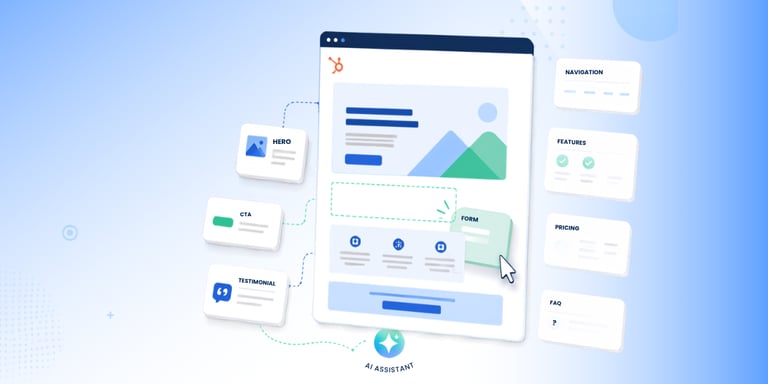
The fix is to think in modules from the start. Instead of asking AI to build a page, ask it to build reusable sections with real inputs: a headline field, an image or video field, and a layout choice. Each one becomes a building block that a marketer can rearrange without writing a line of code.
That is the same logic behind IMPACT's own HubSpot TRUST theme, used across hundreds of client sites specifically because it is built to be handed off to a marketing team once the developer walks away.
How Do You Set Up a Vibe-Coded Tool So Your Team Can Actually Manage It?
If you want to vibe code a tool or website into something fully functional, insist on modules with clearly defined inputs instead of hardcoded pages. Then a marketer can change a headline or swap an image without opening a code editor. This single decision is the biggest gap between a slick demo and a tool your business can actually run.
A few practices make this real:
-
Tell the AI up front where the tool needs to live, not just what it needs to do.
-
Use a connector, sometimes called an MCP server, that lets the AI check a platform's real documentation instead of guessing at what is and is not possible.
-
Break big projects into a written plan before you start building, so both you and the AI are working from the same checklist instead of one long, unstructured request.
For bigger builds, some teams are going further and having one AI agent manage several others, assigning pieces of the project, checking the work, and reporting back before anything ships.
That kind of orchestration can save real development time.
Free Assessment
Free Marketing Assessment: Where do you stand?
AI is changing how buyers find businesses, and most companies are dangerously underprepared. Take this free assessment and find out if yours is at risk of becoming invisible to your buyers.
What Should You Watch Out For Before You Trust AI-Generated Code?
Nearly half of AI-generated code still contains security vulnerabilities that need a human to catch, so treat anything AI builds for your website as a first draft, not a finished product.
AI tools are genuinely good at demos, but can stall the moment you try to move them into production.
Cost is worth watching too. Newer models tend to produce more efficient output per task, but the models themselves cost more to run, so the net savings are not always as large as they first appear. It is still typically far cheaper than hiring a developer outright, but it is not free, and vague instructions burn far more time and cost than specific ones.
The most expensive mistake is skipping preparation. Walking into a project without a clear goal, without documented business logic, and without a sense of who will maintain the result later does not save time. It moves the cost from a developer's hourly rate to hours of AI back-and-forth that still ends with a human cleaning things up.
Where Should Your Business Start With Vibe Coding?
Start by matching the tool to your team's skill level: app builders like Lovable or v0 for a non-technical team testing a quick idea, and coding assistants like Cursor or Claude Code for a team with real developer support behind it. Then ship something small and real before attempting to rebuild your whole site.
Good starting points include a self-service calculator, a simple internal tool, or a single new module for an existing HubSpot template. Each one lets your team learn what AI does well, and where a human still needs to step in, without betting your entire website on the outcome.
Want to see this play out in a real rebuild instead of a hypothetical one? Bob Ruffolo walks through his own attempt to vibe code IMPACT's website with Danny Escardo, including where Danny had to step in to make it work inside HubSpot, from a custom menu module to connecting an MCP server that let the AI check HubSpot's documentation directly.
Where Vibe Coding Actually Pays Off
Vibe coding already works for building real website tools, but only when you set it up to live inside a system your team can maintain without a developer standing by. Skip that step, and you end up with a scaffold that looks finished on the outside, but fails to function the way you want it to.
The businesses getting real value from this right now are the ones being specific: naming the platform, defining the goal, and building in reusable pieces from day one, rather than asking AI to guess at all three.
At IMPACT, we're seeing even small teams make progress by experimenting with vibe coding. As part of the Endless Customers System™ that we teach, the Right Website is key to creating a buyer experience that builds trust and keeps your brand visible for both humans and AI.
To learn more about the Endless Customers System™, download the free preview edition below.
FREE BOOK PREVIEW
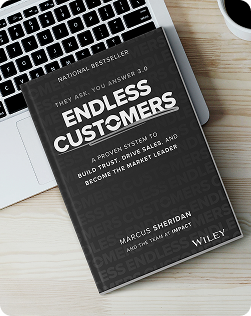
Endless Customers Special Preview Edition
Get a taste of the book that brings you a proven system to build trust, drive sales, and become the market leader. This special preview edition has select chapters and The Four Pillars of a Known and Trusted Brand, resources to accelerate your success, and more.

Written By
Daniel Escardo is a Sr. Front-end Developer at IMPACT and the original developer of IMPACT's HubSpot TRUST theme, which he still leads as principal developer. Daniel has developed more than 300 websites across industries and led every one of them, either solo or as team lead. Most of that work has been in HubSpot, WordPress, and Shopify: marketing sites, themes, modules, and tools that clients can manage without calling a developer for every update. His client work includes sites for Allied Exteriors, BirdRF, Brennan, and Contec, plus Shopify work for Shasta Pool Supply. For IMPACT itself, Daniel built the Learning Center, the self-selection tools, and the pricing tools. Before 2018, most of his career was in WordPress, where he specialized in plugin and theme development and in extending the Elementor page builder with custom functionality. He holds all of HubSpot's developer certifications. Day-to-day, Daniel still works mostly in HubSpot and WordPress, and he's expanding into React, Next.js, Node.js, and using AI to automate parts of the development process. Outside of IMPACT, he’s a husband, a doting father, and loves anything on the ocean.
Daniel Escardo is a Sr. Front-end Developer at IMPACT and the original developer of IMPACT's HubSpot TRUST theme, which he still leads as principal developer. Daniel has developed more than 300 websites across industries and led every one of them, either solo or as team lead. Most of that work has been in HubSpot, WordPress, and Shopify: marketing sites, themes, modules, and tools that clients can manage without calling a developer for every update. His client work includes sites for Allied Exteriors, BirdRF, Brennan, and Contec, plus Shopify work for Shasta Pool Supply. For IMPACT itself, Daniel built the Learning Center, the self-selection tools, and the pricing tools. Before 2018, most of his career was in WordPress, where he specialized in plugin and theme development and in extending the Elementor page builder with custom functionality. He holds all of HubSpot's developer certifications. Day-to-day, Daniel still works mostly in HubSpot and WordPress, and he's expanding into React, Next.js, Node.js, and using AI to automate parts of the development process. Outside of IMPACT, he’s a husband, a doting father, and loves anything on the ocean.
/Assets/Icon%20Library/social/linkedin-logo.svg)
Share
/Assets/Icon%20Library/social/x%20corp.svg)
/Assets/Icon%20Library/social/mail-to.svg)
/Assets/base/Learning%20Center%20Resource%20Category%20Icons/Website%20link.svg)
NEED HELP WITH YOUR WEBSITE?
If you’re looking to improve and optimize your website, IMPACT can help. We’ll guide you on how to structure a site that builds trust with buyers and improves conversion.
NEED HELP WITH YOUR WEBSITE?
If you’re looking to improve and optimize your website, IMPACT can help. We’ll guide you on how to structure a site that builds trust with buyers and improves conversion.