
/Assets/arrow-facing-left--black-01.svg)
/Assets/navigation-global--close-symbol-black-01-1.svg)

/Assets/Icon%20Library/social/facebook-logo.svg)

/Assets/Icon%20Library/social/instagram-logo.svg)
/Assets/Icon%20Library/social/youtube-logo.svg)






The noise around AI continues to grow. For many business owners, that noise has produced one of two things: paralysis or panic-buying.
You might be waiting for things to settle before committing to anything. You might try stacking tools you don’t fully understand onto teams who are just as confused. You might push publishing AI-generated content at volume and wonder why revenue remains flat. Or you might think this is a trend that will eventually “blow over.”
So many businesses are acting on impulse without a real AI marketing strategy. And reacting to AI from a place of fear is one of the most expensive things a business can do right now.
The problem isn’t a lack of information. It’s too much of it, most of it funded by someone trying to sell you something. What’s actually hard to find is an honest read on what is true, what is overhyped, and what any of it means for how you actually run your business.
IMPACT has spent years coaching teams through exactly this kind of market shift as part of the Endless Customers System™. Right now, the questions we hear most often are rooted in the same handful of myths.
We are cutting through five of them below. The goal? Replace the noise with a clearer picture of where things actually stand.
Myth 1: AI Is Going to Gut Your Marketing Team
This one keeps a lot of CEOs and marketers up at night.
If we invest in AI, do we still need the people we have? And on the flip side: can we use AI to avoid hiring people we probably should?
The honest truth? AI will make some marketing teams smaller. The “politically correct” version of this story says AI just makes people more efficient (which is true).
The more accurate version is that it will replace certain roles and transform others. In the end, it will allow fewer people to do what used to require more. That is not a reason to panic. It is a reason to be intentional.
The companies getting this right are the ones that treat AI as a delegation tool, not a headcount solution. Think about the tasks on your team's plate that nobody enjoys, that drain energy without adding real value. Give those to AI. It clears the path so your best people can spend their time on the work only they can do.
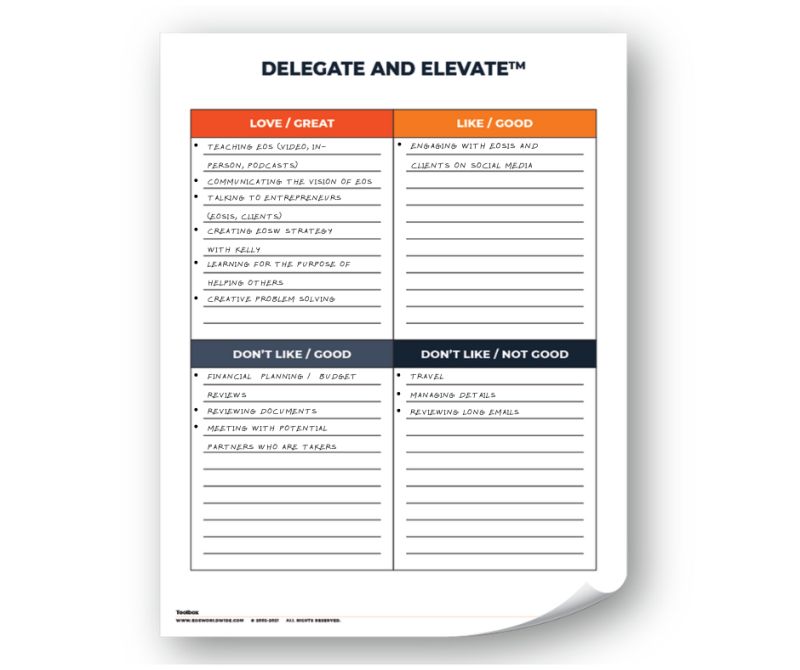 One way to think about it: there is a framework from EOS© that some businesses use called the Delegate and Elevate model, which maps your tasks against what you enjoy doing and what you are good at.
The bottom-left quadrant is tasks you neither like nor excel at. Those need to get off your plate. AI is one of the most powerful ways to make that happen.
Myth 2: The Content AI Produces Is Good Enough to Publish
AI-generated content is getting better fast. In some cases, it can produce output that matches or beats what a person would write in a fraction of the time. Not a myth. It’s improving every week.
But there is a problem that’s probably going to get more attention as it gets more obvious. If you type a prompt into ChatGPT, and a competitor types the same prompt from a different city, you will both get essentially the same content.
It is derivative by design. Every piece of AI output is built from the same training data, shaped by the same patterns, producing the same generalizations. The output is competent. It is just not yours.
What gets lost is everything that actually differentiates you. Your company's real process. The specific ways you approach a problem differently than anyone down the street. The earned expertise that comes from doing this work with real clients over real years.
There is also a legal dimension that most business owners have not thought through. Under current law, AI-generated content may not be copyrightable unless you change it substantively.
What constitutes "substantively" is still an open question legally. But publish an unedited AI article, and you may have no recourse if a competitor copies it word for word.
AI Content Does Not Build Trust. Your Perspective Does.
Your unique point of view, your real-world experience, and your specific take on what you sell are what set you apart is what’s going to make your content stand out.
Assume that even strong AI output still has a 10 to 20 percent gap. You need someone like a content manager to make sure things are added, cut, or changed to make it actually yours. This is your opportunity to create something tailored for your buyers and your business.
The Endless Customers System™ is built on the principle that buyers choose the companies they trust most, and trust is built by saying what others in your industry are not willing to say.
How do you do that? By showing your real process. By taking a position when your competitors stay vague.
Raw AI output cannot do that. It is, by definition, the average of everything that has already been said. Your perspective is the only thing that is not.
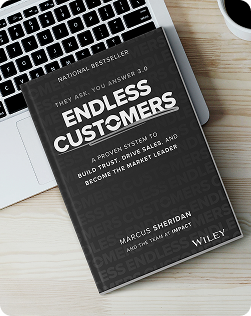
FREE BOOK PREVIEW
Endless Customers Special Preview Edition
Get a taste of the book that brings you a proven system to build trust, drive sales, and become the market leader. This special preview edition has select chapters and The Four Pillars of a Known and Trusted Brand, resources to accelerate your success, and more.
Myth 3: The Smart Move Is to Wait Until the Market Settles
This one lands in more of a gray area. The instinct to wait is not irrational. The AI landscape is genuinely volatile right now. Think early dot.com bubble or how Google eventually beat out search engines like Yahoo! and Ask Jeeves.
According to a report from The Information, OpenAI is projected to lose $14 billion this year and may not reach profitability until 2029. Many of the niche tools being pitched to businesses today run on top of Claude or ChatGPT infrastructure. It’s a wild market, and it’s hard to predict where things will end up.
Significant consolidation is coming, either through acquisition or burnout. Some of the tools businesses are paying for monthly right now will not exist in three years.
So the "wait and see" instinct has logic behind it, but you can’t be completely stagnant in a world that’s moving as fast as AI.
Every position on the technology adoption curve carries risk. There is the cutting-edge risk: you move first, you invest in tools that do not survive, you spend money finding out what does not work.
And there is the laggard risk: you wait so long that your competitors have built real capability, real culture, and real fluency with these tools while your team is still treating AI as something they dabble in on the side. Neither position is automatically safe.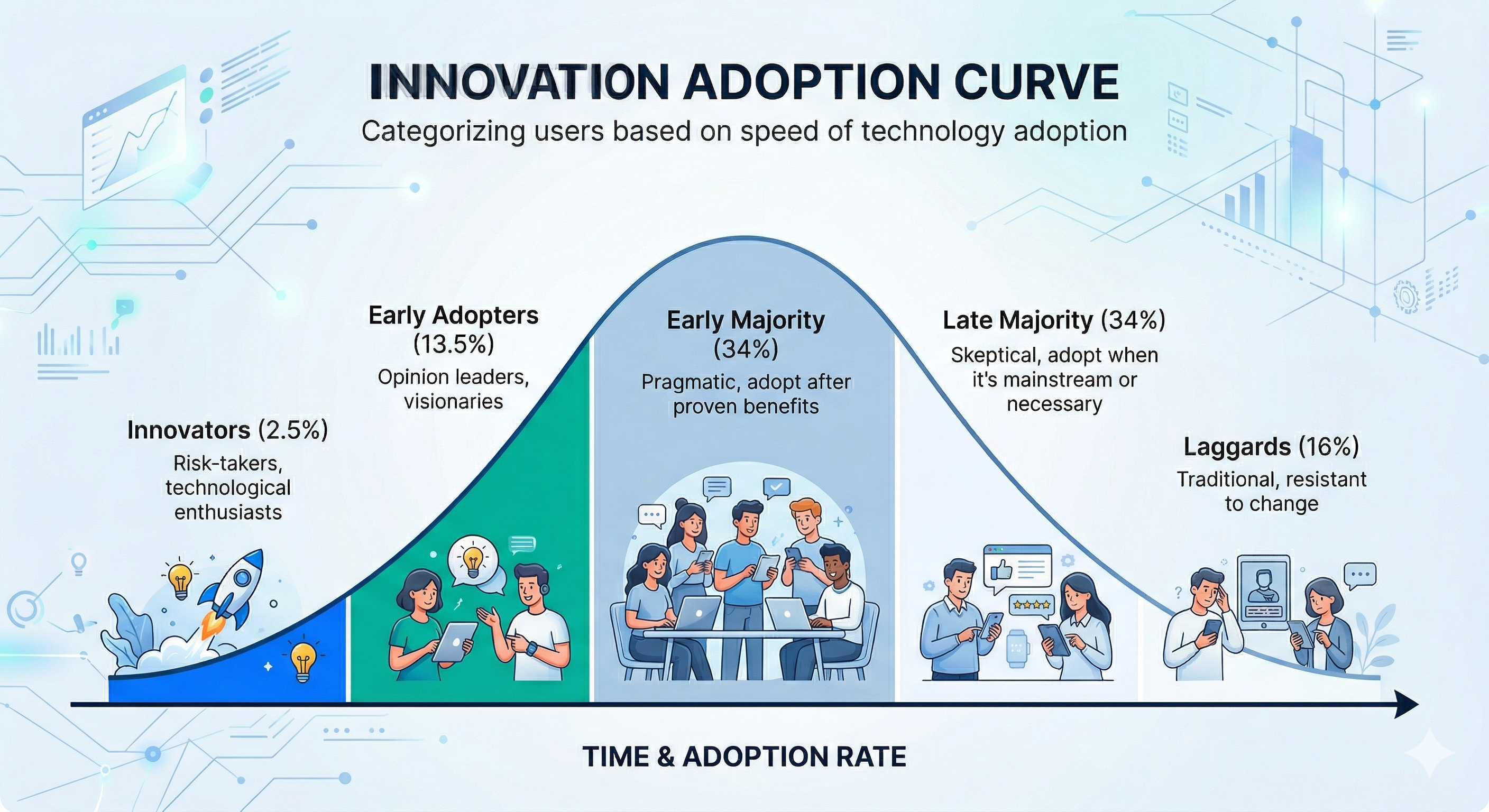
What early movers are actually building right now is not tool expertise. It is AI fluency. They are building a culture of experimentation.
Let your team develop instincts and figure out what AI is good at and where it falls short. That takes time to build, regardless of which specific tools eventually win the market. You cannot shortcut it by waiting for the dust to settle.
The practical path forward is not to go all-in on every new release, and it is not to wait for a clear winner. It is to start building fluency now in the tools you are already using, integrate AI where it is already embedded in your existing stack, and stay curious and cautious about niche tools with uncertain longevity.
Myth 4: More AI Tools Mean More Competitive Advantage
This is the shiny object version of AI strategy, and it is one of the most common traps we see right now. CEOs are being pitched something new every week. The underlying assumption in those pitches is that each new tool is a competitive edge you do not yet have. More tools, more advantage. That’s not the case.
Your competitive advantage is your people. If your collection of AI tools is making your best employees anxious or disengaged, you are not gaining an edge. You are losing the thing that made you competitive in the first place.
The companies getting real value from AI are not the ones with the most subscriptions. They are the ones who have mastered one or two tools, pushed them to their limits, identified genuine gaps, and only then added something new.
Build the toolkit with your team, not around them.
There is also a data risk that grows with every tool you add. Every AI integration you connect to your CRM, your email platform, your sales inbox is touching customer data. Names, phone numbers, email addresses, and in some cases, home addresses. More tools mean more surface area for exposure. Strong data governance is not a nice-to-have in this environment. It is a requirement.
One of our coaches watched a large company invest significantly in an AI sales training tool. Salespeople could practice closing against AI avatars, set to the most demanding objection modes possible. Only some of them used it constantly and got a lot out of it. Most never opened it. In the end, it was a high cost to carry for something getting half the use it should.
The tool's effectiveness was not a technology problem. It was an adoption and change management problem. And that pattern plays out across every company that’s adding tools without a clear plan for how those tools actually get used.
Before adding another AI tool, ask one question: Is this solving a real problem for my best people, or am I reacting to something I read?
Myth 5: AI Makes Content Strategy Less Important
So, if AI makes content faster and cheaper to produce, the playing field levels out, and you need less strategy to compete, right? The opposite is true.
When everyone has access to the same tools, the differentiator is the quality of thinking behind the content. And that thinking still has to come from your team.
Your internal team are the engineers. They know what questions buyers are actually asking in sales calls. They hear the objections. They understand what makes your company different from the competitor two clicks away.
No AI tool has access to that. Your team has to take those real conversations happening inside your business and use them to decide what content gets created, what angle it takes, and who it is actually written for. AI supports that process. It does not drive it.
Where AI genuinely helps is with execution. It can analyze what your high-performing content has in common, surface trends in what your audience is searching for, and act as a sounding board when you are shaping a strategy. That is powerful. But it only works when there is a real strategy behind it.
Without that, you are not marketing. You are adding to the sea of mediocre content that already exists and wondering why nothing is gaining traction.
The bar has not gone down in the AI era. It has gone up. More content is being produced than ever before, which means average content disappears faster than it used to.
The companies that win are the ones whose content makes a buyer feel genuinely understood. AI can help you produce more of that. It cannot replace the human thinking that makes it worth reading in the first place.
The Mindset Shift That Matters Most
When you get past the five myths above, the thing that unites them is a single question every CEO needs to answer: Am I making decisions about AI from a place of clarity, or from a place of fear?
Both the doom-and-gloom timelines and the soothing "don't worry, it's not coming for your job yet" narratives are overhyped. Both are designed to produce an emotional reaction.
Neither is designed to help you lead well.
Check who funded the article you are reading. Look at what else they publish. Are they consistently catastrophizing or consistently reassuring?
The two skills that actually define who wins in this environment are curiosity and delegation.
- Curiosity means staying genuinely interested in what is working, asking honest questions, and being willing to experiment even when you are not sure what you will find.
- Delegation means using AI to get the low-value, low-energy tasks off your team's plate so the people you employ can spend their time on the work that only they can do.
The future of your marketing organization is a human-AI hybrid. Humans managing AI tools and building the strategy that AI executes. Building that workforce well starts now, and it starts at the top.
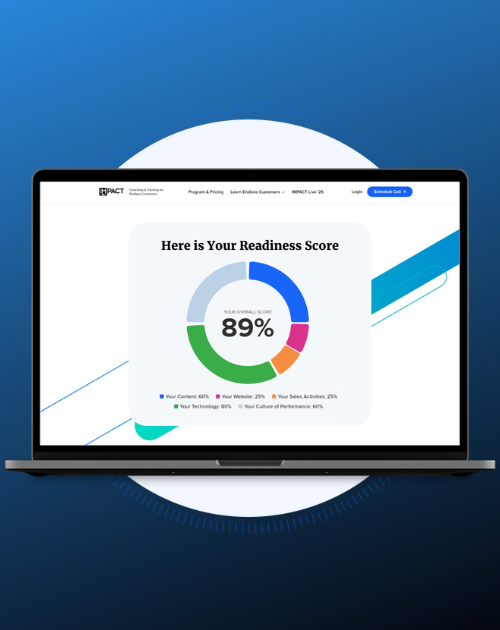
Free Assessment
Free Marketing Assessment: Where do you stand?
AI is changing how buyers find businesses, and most companies are dangerously underprepared. Take this free assessment and find out if yours is at risk of becoming invisible to your buyers.
Common Mistakes to Avoid
Using AI as a cover for underinvesting in people. The efficiency gains from AI are real. But companies that use those gains to justify gutting their marketing team before understanding what AI actually does are making a long-term mistake. Your people, the ones who know your buyers and your market and what makes your company different, are still your competitive advantage.
Publishing AI content without adding your real perspective. AI output is a starting point. Every article, post, or piece of content that goes out under your company's name should carry your actual experience, your real point of view, and the earned expertise that no one else has. If it does not, it will look and feel exactly like what everyone else is publishing.
Equating tool count with competitive readiness. The CEO with 12 AI subscriptions is not ahead. Master one or two tools, push them to their limits, find the gaps, then add intentionally. The best tool is the one your team actually uses.
Where Do You Go From Here?
The five myths above have one thing in common. They all come from making decisions about AI from a place of fear or confusion rather than a clear-eyed strategy.
The companies that win in this environment are not necessarily the ones moving fastest or spending the most. They are the ones that have built the internal capability to evaluate what actually works, adopt it deliberately, and build a culture where their people are empowered to use it well. That is a strategic advantage that compounds over time, and it does not happen by accident.
That is exactly what working alongside an IMPACT coach through the Endless Customers™ program is designed to help you build. Not just the content strategy or the marketing playbook, but the culture, the systems, and the leadership alignment that make all of it stick, whether AI looks the same next year or completely different.
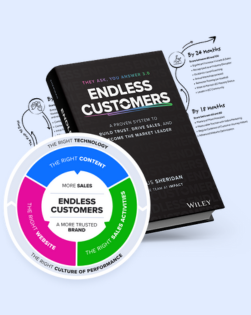
Learn How to Make It Happen
The Endless Customers Coaching Program
If your marketing isn’t delivering and you’re ready for a proven, future-ready system built for the age of AI (one your team can run in-house) check out our coaching program.
Frequently Asked Questions About AI and Marketing
Is it worth investing in AI marketing tools in 2026?
Yes, but the investment should be deliberate rather than reactive. The companies seeing real results are not the ones with the most tools. They are the ones who have mastered one or two and built adoption into how their team works.
Start with AI capabilities already embedded in the tools you use, build fluency there, and add intentionally based on actual gaps rather than vendor pitches.
How do I know if AI is ready to replace parts of my marketing team?
A better question is: which tasks on your team's plate are low-value, low-energy, and not what your best people were hired to do? Those are the candidates for AI. AI is most effective as a delegation tool, not a replacement strategy.
The companies that use it to free up their best people for high-impact work outperform the ones that use it as a headcount-cutting rationale.
Will AI-generated content hurt my search rankings?
Publishing unedited AI content at volume carries real risks: generic output that looks and reads like everyone else's, potential copyright issues for content you cannot substantively claim as your own, and declining trust with readers who can increasingly recognize AI-produced writing.
The content that builds trust and earns rankings is the content that carries your company's actual expertise and perspective. Use AI to accelerate production. Use your team to make it worth reading.
What should a CEO do first to prepare their company for the AI era?
Build a culture where it is safe to experiment. Before any tool purchase or team restructure, the most important thing a CEO can do is make curiosity and experimentation normal.
That means acknowledging uncertainty openly, making room for people to try things and fail, and staying genuinely interested in what is working rather than reacting to headlines. AI fluency is built through practice, and practice requires a culture where it is okay to not get it right the first time.
Does AI make content marketing harder or easier?
Both, depending on how you use it. AI makes producing content faster and cheaper, which raises the volume of content in every market and lowers the bar for average work. That makes content strategy more important, not less.
When everyone has access to the same production tools, the differentiator becomes the quality of thinking behind what you produce: how well you know your buyers, how clearly you have defined your company's point of view, and how precisely your content serves your audience. AI handles the execution. Strategy still has to come from you.
Related Reading
-
AI for Marketing - The full picture on how CEOs and business owners can think about AI adoption across their marketing and sales strategy.
- Should You Build an In-House Marketing Team? - Thinking about the structure of your marketing team in an AI world? Start here.
- What is a Content Strategy and Why Does Your Business Need One? -AI makes content production easier. Strategy is what makes it work.
- What is the Endless Customers™ System? - The framework IMPACT uses to help companies build trust, attract better buyers, and become the most known and trusted brand in their market.

Written By
John Becker is a Coach at IMPACT, where he uses the Endless Customers System to help businesses improve how they communicate and go to market by aligning their sales, marketing, and leadership teams. A Connecticut native, John studied at UPenn, Middlebury, and UMass, and has worked in both corporate and nonprofit settings. Every day, he helps businesses improve how they sell, market, and communicate.
John Becker is a Coach at IMPACT, where he uses the Endless Customers System to help businesses improve how they communicate and go to market by aligning their sales, marketing, and leadership teams. A Connecticut native, John studied at UPenn, Middlebury, and UMass, and has worked in both corporate and nonprofit settings. Every day, he helps businesses improve how they sell, market, and communicate.
/Assets/Icon%20Library/social/linkedin-logo.svg)
Share
/Assets/Icon%20Library/social/x%20corp.svg)
/Assets/Icon%20Library/social/mail-to.svg)
/Assets/base/Learning%20Center%20Resource%20Category%20Icons/Website%20link.svg)
NEED HELP WITH AI FOR MARKETING?
If you’re looking to take control of your sales and marketing with a proven system built for the age of AI, IMPACT can help. We can guide you on how to control your growth, stop relying on agencies, and become the most known and trusted brand in your market.
NEED HELP WITH AI FOR MARKETING?
If you’re looking to take control of your sales and marketing with a proven system built for the age of AI, IMPACT can help. We can guide you on how to control your growth, stop relying on agencies, and become the most known and trusted brand in your market.