
/Assets/arrow-facing-left--black-01.svg)
/Assets/navigation-global--close-symbol-black-01-1.svg)

/Assets/Icon%20Library/social/facebook-logo.svg)

/Assets/Icon%20Library/social/instagram-logo.svg)
/Assets/Icon%20Library/social/youtube-logo.svg)




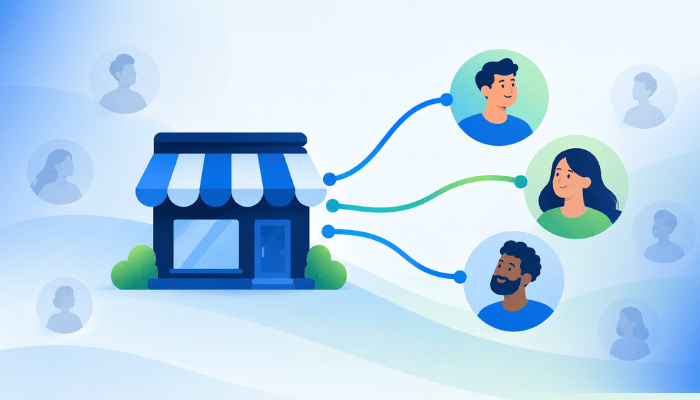
Your team is publishing. People are seeing the content. But the sales conversations still start with the same questions: What makes your company different? Is this really the right fit? Why should someone choose you?
At IMPACT, we help businesses become the most known, trusted, and recommended brands in their markets through the Endless Customers System™. We prioritize trust, transparency, and honest content that helps buyers connect with the right company.
And building a brand that attracts the right customers starts with a clear choice: understanding who you are and are NOT a good fit for. Your content, your people, and the experience of working with your company should make that choice easy for buyers to recognize.
That's much more useful to work toward than simply becoming better known. It gives the business a reputation to earn.
Who are you trying to become known and trusted by?
Start with the customers whose problems your company is equipped to solve well. Look at the circumstances that make them a good fit, including their priorities, expectations, and the kind of help they need.
An industry or demographic alone rarely tells your marketing team enough.
“Homeowners” could describe someone making an emergency repair, preparing a house for sale, or planning to stay in it for another 20 years. Those people have different questions and different reasons to choose a contractor.
Let's get more specific.
For example, imagine a remodeling company that does its best work with homeowners preparing to age in place. Its buyers want to understand safety, future accessibility, cost, and how to make changes without making the house feel unfamiliar. That gives the company a much clearer conversation to lead.
To find that level of clarity, review a few recent customers with your sales and service teams:
- What was happening when they started looking for help?
- What mattered most in their decision?
- Where did your team make a meaningful difference?
- Which expectations were difficult for your company to meet?
Include customers who weren't a good fit. Those experiences can reveal limitations your marketing needs to explain earlier.
Choosing a priority audience doesn't require turning away everyone else. A company serving several markets can create specific content for each. The important thing is knowing who a particular message is meant to help.
What should your business be known for?
Choose something your buyers value and your company can demonstrate. “Great service” leaves too much for the buyer to guess. A useful reputation tells someone when your expertise matters and what they can expect from you.
Consider the remodeling company again.
It could become known for helping homeowners make practical accessibility improvements while preserving the character of their homes.
That focus gives its team plenty to teach: which changes are worth making now, which can wait, what affects cost, and where a seemingly simple project becomes more involved.
Your own focus should draw on work your team understands deeply. What do you care enough about to keep teaching? Where do customers need better advice? Which shortcuts or assumptions do you regularly help them avoid?
Those questions connect the company's convictions with something buyers need. A founder's favorite topic can be a starting point, but it still has to help the audience.
Try describing the recommendation you hope a customer would give. Could someone explain, in one sentence, who should call your company and why? If the answer could describe any competitor, keep working on it.
This is one decision within a broader brand-building strategy. It gives the rest of that strategy a clearer purpose.
How do you make your brand feel authentic to the right buyers?
Let buyers see how your people think and how your company makes decisions. In one word: transparency. Specific explanations give them a chance to judge whether your approach fits what they need.
For the remodeler, that could mean using video to walk through a completed project and explaining why the team recommended certain changes, what the homeowner chose to postpone, and how the budget affected those decisions. The expertise and the company's priorities become visible together.
The same principle applies when something goes wrong.
Explain the problem, take responsibility where appropriate, and show what changed. A promise to care about customers means more when people can see how that promise affects a difficult decision.
Our guide on humanizing your brand explains that openness and recognizable people help buyers get to know a business. Give those people room to sound like themselves, whether they're outgoing teachers or quieter specialists who explain complicated work clearly.
What ACT Dental's brand-building approach illustrates
Kirk Behrendt's work at ACT Dental offers a useful example.
In his conversation with Bob Ruffolo, he describes a commitment to helping dentists build better businesses and more manageable working lives. His teaching grows out of that concern for the people he serves.
He also knows the boundaries of his expertise. His focus is the business of dentistry. He brings in other experts to address subjects they know better. That gives his audience more useful help while keeping his own contribution clear.
Kirk reports publishing more than 1,000 podcast episodes. Speaking and podcasting suited his strengths, so he leaned into it, and it paid off. Another company may need a different mix of marketing activities to serve its buyers well.
Watch Bob and Kirk discuss building a trusted brand on the Endless Customers podcast.
How can your content turn expertise into buyer trust?
Teach people how to make the decisions your business helps them face. Let them see the reasoning behind your advice, including the circumstances in which you would recommend another option.
This is central to the Endless Customers System™. Questions about cost, problems, comparisons, reviews, and the best available options give your team opportunities to help buyers evaluate their choices honestly.
The remodeling company could answer: Which accessibility changes are worth making before they're needed? When is a renovation more expensive than moving? What can go wrong with a bathroom conversion?
Answers like these connect a clear audience with real expertise. Add the examples, trade-offs, and explanations your team uses in actual customer conversations. When another professional can give a better answer, bring them into the discussion.
Keep doing that as buyers work through their decisions. Someone may find your advice useful long before they're ready to hire you.
But a series of helpful answers gives them reasons to return and opportunities to build trust with your brand.
Where should your business show up to reach the right customers?
Choose channels based on how your buyers discover, evaluate, and stay connected with businesses like yours. Your team's strengths and capacity should shape how you serve those needs.
Ask recent customers where they first heard about you, what they checked before getting in touch, and which sources helped them decide. You may find that an industry event creates the introduction, video explains the work, and your website and reviews help them evaluate fit.
Those activities have different jobs. Set priorities accordingly, and assign enough ownership and resources to do them well. Build ways to stay connected that don't leave the entire business dependent on one outside platform.
There is no universal number of channels that makes a brand successful. The useful question is whether your presence helps the right people find you, understand you, and feel confident taking the next step.
How does a clear brand support recommendations from people and AI?
A clear brand gives people specific reasons to recommend your business. The information supporting that reputation also matters when buyers use AI to research their options.
Make it easy to find what your company does, who it serves, where it operates, and evidence of its experience. Keep those details accurate across your website and relevant profiles. Publish examples that explain the customer's situation, the work performed, and the outcome.
Check out this article on customer reviews and AI recommendations that explores how outside feedback can support that picture. A practical implication is to help buyers find evidence that relates to their needs, beyond your own claims about being trustworthy.
Clear positioning and credible evidence give recommendation systems more useful information to work with. They don't guarantee that an AI tool will include your company in an answer.
How will you know whether your brand is attracting the right customers?
Look for changes in who contacts you and what they understand when they arrive. Reach helps you assess whether people are seeing your work; sales conversations help you assess whether it is connecting with suitable buyers.
Track the share of inquiries that meet your fit criteria, content prospects mention, and the reasons customers give for choosing or recommending you. Review those observations alongside qualified opportunities and revenue over your normal sales cycle.
Start by asking your leadership, sales, and marketing teams to agree on the reputation the company wants to earn. Then choose one unanswered buyer question that would demonstrate it, and give someone responsibility for publishing a useful answer.
If your team needs a shared foundation for that work, download the free Endless Customers Special Preview Edition. It introduces the system IMPACT helps businesses put into practice to become more known, trusted, and recommended in their markets.
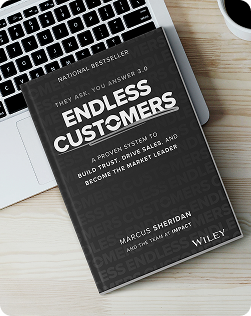
FREE BOOK PREVIEW
Endless Customers Special Preview Edition
Get a taste of the book that brings you a proven system to build trust, drive sales, and become the market leader. This special preview edition has select chapters and The Four Pillars of a Known and Trusted Brand, resources to accelerate your success, and more.

Written By
Bob Ruffolo founded IMPACT in 2009 and has led it as CEO ever since. What started as a simple web design company has grown into a business coaching and training company that helps leaders and their teams get better at sales, marketing, communication, and leadership. IMPACT has been a HubSpot partner since 2011, one of HubSpot's first, and today is a HubSpot Diamond Solutions Partner, twice named HubSpot Partner of the Year and a four-time Inc. 5000 honoree (2018 to 2021). Bob himself has been recognized as a 40 Under 40 winner and named to Glassdoor's Best CEO for Small Businesses list. Bob is the co-creator of the Endless Customers System with Marcus Sheridan, the methodology behind IMPACT's coaching, the USA Today bestselling book, the Endless Customers podcast, and the annual Endless Customers Live conference. It teaches companies to build marketing and sales capability in-house rather than outsourcing it indefinitely. In recent years Bob has led IMPACT's shift to an AI-first company and become a go-to voice for leaders trying to understand what AI means for marketing, sales, and the workforce.
Bob Ruffolo founded IMPACT in 2009 and has led it as CEO ever since. What started as a simple web design company has grown into a business coaching and training company that helps leaders and their teams get better at sales, marketing, communication, and leadership. IMPACT has been a HubSpot partner since 2011, one of HubSpot's first, and today is a HubSpot Diamond Solutions Partner, twice named HubSpot Partner of the Year and a four-time Inc. 5000 honoree (2018 to 2021). Bob himself has been recognized as a 40 Under 40 winner and named to Glassdoor's Best CEO for Small Businesses list. Bob is the co-creator of the Endless Customers System with Marcus Sheridan, the methodology behind IMPACT's coaching, the USA Today bestselling book, the Endless Customers podcast, and the annual Endless Customers Live conference. It teaches companies to build marketing and sales capability in-house rather than outsourcing it indefinitely. In recent years Bob has led IMPACT's shift to an AI-first company and become a go-to voice for leaders trying to understand what AI means for marketing, sales, and the workforce.
/Assets/Icon%20Library/social/linkedin-logo.svg)
/Assets/Icon%20Library/social/x%20corp.svg)
/Assets/Icon%20Library/social/mail-to.svg)
/Assets/base/Learning%20Center%20Resource%20Category%20Icons/Website%20link.svg)