
/Assets/arrow-facing-left--black-01.svg)
/Assets/navigation-global--close-symbol-black-01-1.svg)
/Assets/Icon%20Library/social/facebook-logo.svg)

/Assets/Icon%20Library/social/instagram-logo.svg)
/Assets/Icon%20Library/social/youtube-logo.svg)






Customer reviews. You know you need them, but they aren't always easy to get.
But this strategy from a client of IMPACT, could help you double your review count without having to double your customers.
Most companies treat a review as a single event: the job ends, someone asks, and (hopefully) a rating shows up online.
That's the standard strategy, but AI just made reviews even more important. AI tools now are looking for reviews across multiple platforms, evaluating: how recent they are, how specific they are, and whether they connect to real, verifiable work. A pile of unremarkable five-star ratings sitting on one platform does none of that work.
At IMPACT, we coach companies inside the Endless Customers System™ to treat reviews as a living digital marketing strategy, built for how AI actually searches, and a plan for turning proof into something AI can cite. Here is what that system looks like in practice, including a technique for turning a stack of reviews into something much more powerful.
Why customer reviews matter more than ever
Customer reviews have always been a great trust builder. People want to hear first-hand experience from others, and they trust that more than any website copy from a business.
As traditional search shifts to AI-powered search, AI engines are driving buying decisions by making direct recommendations of brands it trusts. Not surprisingly, customer reviews are a huge part of AI visibility.
IMPACT's 2026 AI Visibility Report looked at 92 prompts about 23 industries across 4 AI platforms to learn how AI makes recommendations. While each platform/industry combo was slightly different, there were clear priorities for how AI evaluates companies.

Customer reviews came in as number two, but not just on Google. Because Google's API isn't public, most LLMs struggle to read Google Business Profile reviews. That sent AI searching on platforms you've probably neglected, like Houzz, Angi's List, Yelp, and more. Which means you probably need more reviews, across multiple platforms.
Can you get more than one review per customer?
You can reasonably ask the same customer for a review more than once, as long as each ask sits at a different, honest moment in the relationship.
A homeowner right after a sales consultation has had a different experience than the same homeowner after the work is finished, and each moment deserves its own ask.
Most companies wait until a project is fully complete to ask for a review at all. That single-moment habit caps how many reviews you can generate no matter how many customers walk through the door. A better approach treats the customer journey as a series of distinct moments, each one worth a specific ask.
ZINTEX Remodeling, a bath and shower remodeling company, restructured its ask around exactly this idea. Design consultants ask for a review right after the in-home consultation, whether the homeowner buys or not, framed simply as: how did we do? Installers ask again after the completed install. The same homeowner can reasonably leave two honest reviews describing two different parts of the experience.
The company took it a step further and built an internal customer satisfaction survey around those same two touchpoints, so the team gets a clear read on how a project actually went, backed up by the third-party reviews that came out of the same moments.
What Review Platforms Should You Build Beyond Your Google Business Profile?
Beyond your Google Business Profile, home services and trades businesses should prioritize the Better Business Bureau, Angi, and industry-specific review sites, the platforms IMPACT's own research found carrying the most weight with AI recommendation tools in this industry. The right sequence is to earn a strong Google rating first, then expand once that foundation is solid.
IMPACT's 2026 AI Visibility Report studied how ChatGPT, Google AI Mode, Gemini, and Perplexity make recommendations across 23 industries. For home services specifically, the report found BBB, Angi, and Yelp function as the defining trust signals AI tools check, and that this cluster carries the highest concentration of disqualifying red flags of any industry studied, roughly 2.6 flagged mentions per AI response. In a category where AI is actively looking for reasons to rule a business out, third-party platform coverage outside Google matters more than in most other industries.
ZINTEX set an internal rule that reflects this: do not shift focus away from Google until it clears 4.8 stars. Past that point, attention moves to the Better Business Bureau and to review sites built specifically for the home improvement industry.
A high star rating on one platform does not mean you're done. It means it's time to find out where you are still invisible.
The Better Business Bureau is worth a specific note. A lot of consumers land there specifically to file or read complaints, which means a business needs a real volume of positive interactions to keep the profile from reading one-sided. An accredited listing with a strong rating is a simple, high-leverage move most home services and trades companies still have not made.
How do you find out what AI is actually saying about you?
You find out by asking AI the exact questions a real buyer would ask, from an incognito browser so cached history and past searches do not skew the results, and comparing what comes back to your own sense of your reputation.
That means running queries like "who are the top five bathroom remodel companies in [market]" and "show me [company] reviews in this market" across the markets your business actually serves, then reading the answers the way a buyer would.
The gaps that show up (like a platform AI keeps citing that a company has ignored or a competitor with more recent reviews in a specific area) point directly to where the next round of effort should go.
It's worth asking the more direct question, too: what would this company have to do for you to recommend them more? That gives you clear next steps.
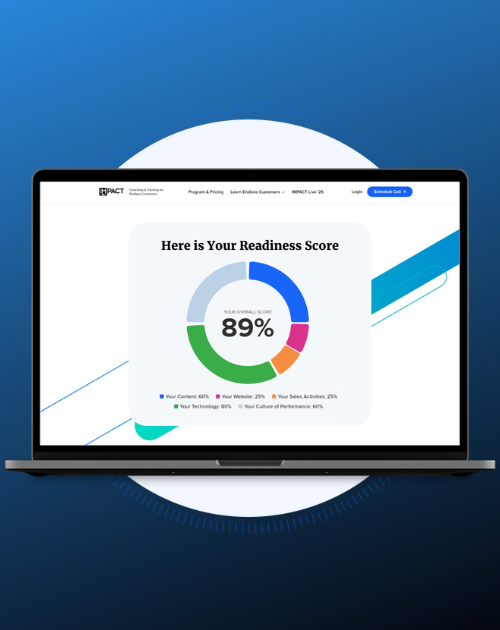
Free Assessment
Free Marketing Assessment: Where do you stand?
AI is changing how buyers find businesses, and most companies are dangerously underprepared. Take this free assessment and find out if yours is at risk of becoming invisible to your buyers.
What do you do with negative customer reviews?
The right response to a negative customer review is to answer quickly, keep it public, and treat it as a diagnostic instead of a problem to hide. Deleting a real review, even an unflattering one, signals to both AI and buyers that a business cannot be trusted with the truth.
Centralizing review responses in a single platform, rather than logging into each site separately, makes a timely response realistic even at scale. ZINTEX uses a tool called Birdeye to respond to reviews across every platform from one place, and to run the same customer satisfaction survey mentioned earlier.
The more important habit sits behind the response itself. Every sales and service interaction gets recorded, so when a review comes in low, the team can go back to the actual conversation instead of guessing what happened. A design consultant who came across as pushy, for example, gets a direct, specific coaching conversation instead of a vague reminder to do better. That combination, respond fast and fix the root cause, is what turns a three-star review into a five-star one on the same account down the line.
How do you turn reviews into proof AI can use?
You turn reviews into proof AI can use by connecting each one to something concrete - a project photo, a neighborhood, a specific service - so an AI system has more than a star rating to point to when it explains a recommendation.
This is exactly the idea behind a tool Shane Rogers, Director of Strategy and Innovation at ZINTEX Remodeling, built internally: a map of every project the company has completed, tied to the Google and BBB reviews left about that specific job and to the project photos that came out of it.
That is the shape of proof AI is built to reward. AI recommendation systems work by understanding what a buyer needs, then searching for the most relevant, most specific experience a business can show.
What does it take to make a consistent customer review system?
Creating a customer review system, instead of leaving reviews to chance, takes three ongoing commitments: consistent volume so reviews stay recent, a reason for your team to keep asking, and a habit of checking your own results and responding to reviews.
1. Recency carries real weight. A frequently cited stat puts the number at roughly 70% of consumers weighing reviews from the last thirty days more heavily than older ones, which means a company that stops asking for six months is quietly losing ground even if its star rating never moves. AI is the same way.
2. Incentives keep the asking habit alive without turning it into a chore. ZINTEX runs regional competitions among design consultants and installers, rewarding both the number of reviews generated and whether the employee's own name gets mentioned in them. There is a small monetary incentive attached, but the bigger driver, by the company's own account, is the pride of seeing your name attached to a five-star review a stranger can read.
3. Customer reviews aren't a "set it and forget it" game. Make sure someone on your team is tracking the relevant platforms, responding to positive and negative reviews, and keeping your team responsible for maintaining review recency.
Great businesses deserve great reviews
If you are a great business doing great work, you deserve to show up where buyers are searching: on AI or traditional search. So put real commitment and resources behind how you source reviews.
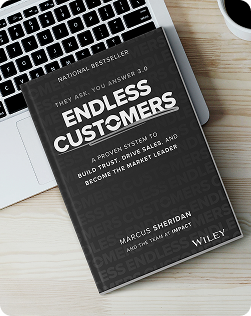
If you want to learn more about the strategies that help businesses become the most known, trusted, and RECOMMENDED company in their market, check out the preview edition of Endless Customers.
FREE BOOK PREVIEW
Endless Customers Special Preview Edition
Get a taste of the book that brings you a proven system to build trust, drive sales, and become the market leader. This special preview edition has select chapters and The Four Pillars of a Known and Trusted Brand, resources to accelerate your success, and more.

Written By
Bob Ruffolo founded IMPACT in 2009 and has led it as CEO ever since. What started as a simple web design company has grown into a business coaching and training company that helps leaders and their teams get better at sales, marketing, communication, and leadership. IMPACT has been a HubSpot partner since 2011, one of HubSpot's first, and today is a HubSpot Diamond Solutions Partner, twice named HubSpot Partner of the Year and a four-time Inc. 5000 honoree (2018 to 2021). Bob himself has been recognized as a 40 Under 40 winner and named to Glassdoor's Best CEO for Small Businesses list. Bob is the co-creator of the Endless Customers System with Marcus Sheridan, the methodology behind IMPACT's coaching, the USA Today bestselling book, the Endless Customers podcast, and the annual Endless Customers Live conference. It teaches companies to build marketing and sales capability in-house rather than outsourcing it indefinitely. In recent years Bob has led IMPACT's shift to an AI-first company and become a go-to voice for leaders trying to understand what AI means for marketing, sales, and the workforce.
Bob Ruffolo founded IMPACT in 2009 and has led it as CEO ever since. What started as a simple web design company has grown into a business coaching and training company that helps leaders and their teams get better at sales, marketing, communication, and leadership. IMPACT has been a HubSpot partner since 2011, one of HubSpot's first, and today is a HubSpot Diamond Solutions Partner, twice named HubSpot Partner of the Year and a four-time Inc. 5000 honoree (2018 to 2021). Bob himself has been recognized as a 40 Under 40 winner and named to Glassdoor's Best CEO for Small Businesses list. Bob is the co-creator of the Endless Customers System with Marcus Sheridan, the methodology behind IMPACT's coaching, the USA Today bestselling book, the Endless Customers podcast, and the annual Endless Customers Live conference. It teaches companies to build marketing and sales capability in-house rather than outsourcing it indefinitely. In recent years Bob has led IMPACT's shift to an AI-first company and become a go-to voice for leaders trying to understand what AI means for marketing, sales, and the workforce.
/Assets/Icon%20Library/social/linkedin-logo.svg)
Share
/Assets/Icon%20Library/social/x%20corp.svg)
/Assets/Icon%20Library/social/facebook-logo.svg)
/Assets/Icon%20Library/social/mail-to.svg)
/Assets/base/Learning%20Center%20Resource%20Category%20Icons/Website%20link.svg)
NEED HELP WITH YOUR MARKETING STRATEGY?
If you’re looking to take control of your sales and marketing with a proven system built for the age of AI, IMPACT can help. We can guide you on how to control your growth, stop relying on agencies, and become the most known and trusted brand in your market.
NEED HELP WITH YOUR MARKETING STRATEGY?
If you’re looking to take control of your sales and marketing with a proven system built for the age of AI, IMPACT can help. We can guide you on how to control your growth, stop relying on agencies, and become the most known and trusted brand in your market.