









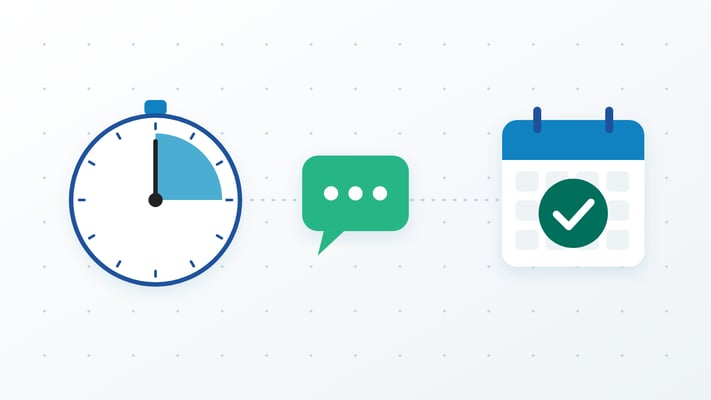
You spent real money to get that inquiry. A buyer read your content, filled out the form, and raised their hand.
But then the lead sat in an inbox while your team finished a job, was tied up in a meeting, or waited until Monday. By the time someone called back, the buyer had already booked with a competitor.
At IMPACT, we coach companies through the Endless Customers System™ to become the most known, trusted, and recommended company in their market. The gap we see where businesses lose out on opportunities most often comes after the buyer reaches out. Your inbound marketing helps you win the first 80% of the buying decision.
Then a slow, clunky handoff can cause you to lose the last 20%. This article explains what speed to lead means now, how fast buyers expect an answer, and how to find the gaps in your own process.
.What does speed to lead mean today?Speed to lead is how quickly your company responds after a buyer reaches out, and how quickly you help them reach the next step. Five years ago, the standard was simply replying first. Now buyers expect a real answer and a booked appointment within minutes, from whatever channel they used to contact you.
Bob Ruffolo, IMPACT's CEO, puts it plainly: "Time kills all deals." From the moment a buyer reaches out, the clock is running. Fifteen minutes later, they're on a competitor's website. Thirty minutes later, something else in their life has taken priority, and your callback goes to voicemail.
Why do businesses have so little time to get back to their prospects?
Buyers now get instant answers everywhere else. They ask ChatGPT, they order on Amazon, they text a business and get a reply. Unfortunately, your company gets measured against those experiences, whether that's fair or not.
How fast do you need to respond to a new lead?
Respond within minutes, and plan to finish the next step in that same exchange. Research published in Harvard Business Review found that firms contacting a lead within an hour were nearly seven times more likely to qualify it than firms waiting another hour, and over 60 times more likely than firms waiting a day.
That study is from 2011, and buyer expectations have only climbed since. In the same audit of 2,241 U.S. companies, just 37% responded to a web lead within an hour. That leaves a lot of room for the companies willing to move faster. (The Short Life of Online Sales Leads)
A more recent report from Salesforce and Velocify shows that contact made in the first minute is 391% more likely to convert, with conversion rates dropping off steeply after that. 
Trailstone Insurance learned this from its own buyers. Their quoting process took about 25 minutes on the phone, then two or three more hours to deliver a quote. Meanwhile, their customers were telling them they want to finish the whole process in one 15-minute call. Trailstone is now rebuilding that experience around what buyers expect, rather than what the industry has always done.
Why isn't an autoresponder enough?
An autoresponder only proves you received the message. It tells the buyer you'll get back to them, which is the same thing as telling them to keep shopping.
Speed to lead now means being the first company to carry the conversation forward: answer the question, collect what you need, and get the appointment on the calendar.
This is where AI has changed the math. A conversational AI agent can text back in seconds, ask the right intake questions, pull answers from your website and knowledge base, and book the appointment against your real calendar. Buyers know when they're talking to AI, and most don't mind, as long as it gets them where they're trying to go.
Bob's take is direct. A good AI agent responds faster than a person, writes more clearly, and never makes a buyer wait until someone climbs down off a roof or finishes another sales call. The companies winning right now put that experience at the front of every inquiry and tell buyers up front that it's there to help them.
One honest caveat: AI follow-up is only as good as what you feed it. If your calendar isn't current, it will book appointments you can't keep. If your website doesn't answer common questions, the agent can't either. Someone on your team still has to own the setup.
What does a fast response look like on a buyer's phone?
A fast response is one a buyer can complete on their phone in under a minute. They tap a link, answer a few multiple-choice questions, pick a time, and get a calendar invite. Every extra field, broken link, or "we'll call you" step adds friction, and friction sends buyers to the next company on their list.
Leads also come from more places than your website. A buyer might find you through a Google Business Profile, a Facebook community group, a referral text, a review site, or an AI answer. Each of those entry points needs a one-click path to schedule. A great website form doesn't help the buyer who never visits your website.
How can content and self-service tools answer buyers before you call back?
Self-service tools respond instantly, so they work around the clock as part of your speed to lead. A pricing calculator, assessment, or personalized video gives buyers a real answer the moment they ask, which builds trust before your team says a word. That fits the Endless Customers System, where buyers get control and clarity.
The Flood Insurance Guru built a "Check My Flood Risk" assessment that gives homeowners pricing and risk data down to their street. About four minutes after someone submits it, they get an email with a personalized video about their flood risk. The tool brings in roughly 200 leads a month. As founder Chris Greene describes the buyer's reaction: "Wait a minute, that's somebody I can trust."
Eco Plumbing added a pricing calculator to its website and received 846 completed inquiries through it. About 30% of those became sold jobs. The calculator answered the buyer's biggest question, cost, before anyone picked up the phone, and their team says the sales conversations that follow are easier because buyers arrive better informed.
Want to build one yourself? Start with How to Create a Pricing Calculator on Your Website and The Business Case for Self-Service Tools.
How do you audit your own speed to lead?
Shop your own business. Go through every channel a buyer might use, including your website form, phone line, Google Business Profile, social pages, and review sites, and time how long it takes to get a real answer and a booked appointment. Then repeat the audit every few months, because buyer expectations keep moving.
As you go, write down:
- How long each channel took to send a real reply, not an autoresponder.
- How many steps it took to book a time.
- Any broken links, dead forms, or pages that didn't load on your phone.
- Whether anyone followed up after you went quiet.
- Whether every inquiry landed in your CRM, so nothing lives only in someone's personal text messages.
That last point matters more than most owners expect. Many buyers aren't ready today, and a lead that never reaches your CRM can't be nurtured, remarketed to, or measured. If your team struggles to keep the CRM current, How to Get Your Sales Team to Actually Use Your CRM is a good place to start.
Bob Ruffolo talks through what the best companies do differently after a buyer reaches out in "The New Speed to Lead: From First Call to Booked Appointment" on the Endless Customers podcast.
Frequently asked questions
Will AI follow-up turn buyers off?
Usually not, if you're upfront about it. Buyers object to AI that traps them in a loop with no way out. Tell them they're chatting with an assistant, make sure it can book or answer, and always offer a path to a person.
Does speed to lead matter for B2B companies with long sales cycles?
Yes. A B2B buyer who requests a demo is comparing you to two or three other firms that same day. Booking the first conversation quickly keeps you in the evaluation, even if the final decision takes months.
What should we measure?
Track median time to first real reply, time to booked appointment, and the share of inquiries that book. Compare them by lead source, so you can see which channels are leaking.
The bottom line on speed to lead
Speed to lead now means helping buyers finish their next step within minutes, not just replying first. The companies that win respond on the buyer's phone, from every channel, with real answers and one-tap scheduling. They also use self-service tools to answer questions before anyone calls back, and they audit the whole experience on a regular schedule.
At IMPACT, we help companies build that kind of buying experience as part of the Endless Customers System, from the content and tools that earn the inquiry to the HubSpot setup that responds to it. To see where your process is losing buyers, start with the free AI Marketing Assessment. [CTA: impactplus.com/endless-customers-assessment]
Related reading
- How to Create a Sales Process (That Actually Closes Deals): Build the process that takes a booked appointment to a signed deal.
- What is 'Assignment Selling'?: Use content to prepare buyers before the first meeting.
- The Business Case for Self-Service Tools: See what to build first, and why.
FREE BOOK PREVIEW
Endless Customers Special Preview Edition
Get a taste of the book that brings you a proven system to build trust, drive sales, and become the market leader. This special preview edition has select chapters and The Four Pillars of a Known and Trusted Brand, resources to accelerate your success, and more.

Written By
Brian Casey is a Sr. Coach at IMPACT, known for a direct, practical coaching style that turns ideas into action. He puts the fundamentals first. Before chasing the newest tactic, Brian makes sure a team's core habits, processes, and standards are working. He also stays close to changes in buyer behavior, AI, search, content, and sales, so the strategies his clients use fit where the market is going.
Brian Casey is a Sr. Coach at IMPACT, known for a direct, practical coaching style that turns ideas into action. He puts the fundamentals first. Before chasing the newest tactic, Brian makes sure a team's core habits, processes, and standards are working. He also stays close to changes in buyer behavior, AI, search, content, and sales, so the strategies his clients use fit where the market is going.

Share


NEED HELP WITH YOUR SALES PROCESS?
If you’re looking to improve your sales process and not sure where to start, IMPACT can help. We’ll guide you on how to structure the right team, use strategic content to build trust, and drive real results.
NEED HELP WITH YOUR SALES PROCESS?
If you’re looking to improve your sales process and not sure where to start, IMPACT can help. We’ll guide you on how to structure the right team, use strategic content to build trust, and drive real results.