
/Assets/arrow-facing-left--black-01.svg)
/Assets/navigation-global--close-symbol-black-01-1.svg)

/Assets/Icon%20Library/social/facebook-logo.svg)
/Assets/Icon%20Library/social/instagram-logo.svg)
/Assets/Icon%20Library/social/youtube-logo.svg)






Picture this: You’re a salesperson getting ready for a call with a prospect.
You’re anticipating any and all possible buyer questions and ready to provide articles, case studies, details, and expertise needed to answer them.
Then, in the call itself, just when you’re preparing to answer those same old questions, something magical happens...
There are no questions.
The prospect already has the answers.
Every single one.
Your prospect already has all the information they need. They already trust your business, and they're eager to move forward into the next stages of the sales process.
This is Assignment Selling in action.
Simply put, Assignment Selling is the practice of using educational content about your products and services to help speed up the sales process.
This content helps answer questions before they come up, making sales calls more productive and efficient.
However, like most great sales and marketing tactics, Assignment Selling is easy to get wrong when you're new to it.
Assignment Selling is sales enablement — but better
The theory behind Assignment Selling is simple: An educated prospect is more likely to become a customer and do so faster.
In practice, Assignment Selling usually begins before a first sales call, when a salesperson sends pieces of content to the prospect to review before the call takes place.
The content is designed to answer the most pressing questions that buyers have at that stage in the sales process.
Once a prospect has gone through the material, ideally, they'll be better educated and prepared for specific conversations.
With many of the standard concerns addressed ahead of time, you can focus on that prospect's specific needs during the meeting.
On the flip side, some prospects may opt out of the sales process (or not complete the assignment at all). While no salesperson likes canceled meetings, anyone who opts out is likely a bad-fit prospect, so your time is saved in the long run.
Overall, Assignment Selling can be a sales rep’s greatest tool, but only if it's done well.
Here are some common mistakes to avoid.
Avoiding 4 common Assignment Selling mistakes
If you're just getting started with Assignment Selling, you can avoid some common mistakes others have made.
Here are four common things to avoid:
- Assigning too much or too little content
- Moving forward even if the prospect blatantly ignores the assignment
- Using only text-based content
- Not selecting unique content for each prospect or situation
Let's dive into each to see how you can avoid it.
1. Assigning too much or too little content
How much is too much content?
Imagine you're a prospect. If you received an email with 15 different links you were supposed to read before your call, would you do it?
You want to give each prospect enough information to have a better sales conversation, but you don't need to assign them the entire encyclopedia.
If you assign too much, you're more likely to get ignored.
How to fix it:
I recommend two or three pieces of content ahead of each call. Any more than that and you're pushing it.
However, you can provide more content as long as you don't assign it. Something like a buyer's guide might be lengthy, but prospects can use it as reference material they can look through, reading what they'd like.
Also, explain what each piece of content is and why it's relevant and helpful (if that's not obvious from the title).
2. Moving forward if the prospect doesn't complete the assignment
So, what do you do if a prospect doesn't complete the assignment? Unfortunately, this happens, and it's usually for two possible reasons.
Either they're not that serious about buying, or they're too busy or forgot.
Shrugging this off and moving forward with the sales process can waste your and the prospect's time.
How to fix it:
The day before your call, respond to your prospect with a short but sincere email that stresses the importance of reviewing the material.
The email could look something like this:
Hi [prospect name],
Confirming our 2:45pm EST call today.
This is a reminder to make sure you have had time to go through the resources below before we speak. If not, it may make sense to reschedule. I want to ensure we make the best use of our time together.
- Marcus Sheridan’s free course: They Ask, You Answer Fundamentals
- What Is a Learning Center and Why Does My Website Need One?
If you haven't had time to look at the above material, here is my calendar to book another time.
Keep me posted!
Tom
If you need to reschedule the call, so be it. If the prospect didn't complete the assignments because they are not serious, you've saved yourself the time that would have been wasted on an unqualified prospect.
If they didn't get to it, pushing back the meeting gives them the time they need to really focus, and also reinforces the importance of the materials.
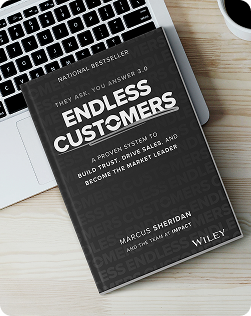
FREE BOOK PREVIEW
Endless Customers Special Preview Edition
Get a taste of the book that brings you a proven system to build trust, drive sales, and become the market leader. This special preview edition has select chapters and The Four Pillars of a Known and Trusted Brand, resources to accelerate your success, and more.
3. Using only text-based content
Articles are great, but many prospects prefer to consume information in different ways. This may mean podcasts, infographics, videos, or even interactive tools.
Video can be one of the most useful tools in educating quickly and thoroughly.
In fact, video is becoming an essential part of any sales process, with Wyzowl reporting that 85% of people have been convinced to buy a product or service from watching a video.
Knowing this, it's a huge mistake not to incorporate other mediums, especially video, into your Assignment Selling materials.
How to fix it:
Meet with your marketing team to talk about creating a wider variety of content. Can they help you by producing video content? Are there other types of content they can make?
Be clear with them: sales enablement materials should take different forms to suit different buyers.
You can also take matters into your own hands.
Use your smartphone or laptop camera to record a video reciting some of the insights shared in an article, or use a tool like Canva, ChatGPT, or Gemini to create an infographic on your own.
Canva has dozens of templates to help you turn your copy into a compelling infographic to share with your prospects without any design experience.
🔎 Not sure what kind of video to make? You can learn more about what we call 80% videos.
4. Not selecting the right content for each buyer's stage
A prospect just getting to know your company is not in the same position as a final-stage buyer deciding between two options. Both need information from you, but their needs and mindsets are vastly different.
As a salesperson, if you blast out the same content email to every prospect, you're going to come off as generic and insincere.
You may be sending along information that is of zero interest to your prospect and, in turn, you're missing a huge opportunity to resonate and build trust.
How to fix it:
Build up a library of sales enablement materials that answer as many buyer questions as possible and keep them organized by things like the stage of the buyer's journey or pain point.
You can use a tool like Paperflite, HubSpot Sales Hub, or Salesreach to organize and track your content.
From there, whenever you send an Assignment Selling email, you can check your library and choose the material that is best suited to that prospect based on conversations you've already had and conversations still to come.
The right path for sales enablement
Your website and digital content are the best sales tools your reps will ever have.
Delivering content to prospects allows your sales teams to spend their time in the right places — closing deals, not "working" deals.
Assignment Selling is the key to:
- Better qualifying a prospect's commitment to the sales process
- Shortening the sales cycle
- Devoting time to more qualified leads
- Dramatically improved close rates
Avoiding the common mistakes above will help you use this process in the most effective way possible. Keep tweaking and evaluating as you go, sharpening your skills and improving your technique.
Frequently Asked Questions about Assignment Selling
How much content should I assign a prospect before a call?
Stick to two or three pieces per assignment. Sending more than that, like a list of 10-15 links, makes it easy for a prospect to ignore the whole thing. If you have additional material, offer it as optional reference (like a buyer's guide) rather than required reading, and always explain why each piece matters.
What should I do if a prospect doesn't complete their assignment?
Don't just move forward as if nothing happened. The day before the call, send a short reminder that stresses why the material matters and offers to reschedule if they haven't had time to review it. If they still skip it, that's often a sign they're not a serious buyer, and you've saved yourself the time of a wasted meeting. If they genuinely didn't get to it, pushing the call back gives them room to actually engage with it.
Does Assignment Selling only work with written content?
No, and it shouldn't be text-only. Prospects consume information differently, so mixing in video, infographics, and other formats makes your assignments more effective. Video in particular has an outsized impact on buying decisions, so it's worth prioritizing alongside articles.
How is Assignment Selling different from general sales enablement?
Assignment Selling is a specific application of sales enablement: instead of just arming reps with materials to use during a call, it puts educational content directly in the prospect's hands before the call happens. That shifts the conversation from answering basic questions to addressing the prospect's specific needs.
How do I know which content to assign to a specific prospect?
Match the content to where the prospect is in their buyer's journey and to the specific questions or objections that have already come up in your conversations. A new prospect needs different material than one comparing final options.
Keeping your sales content organized by buyer stage or pain point, using a tool like a shared content library or sales enablement platform, makes it easy to grab the right piece for the right person instead of sending the same generic list to everyone.
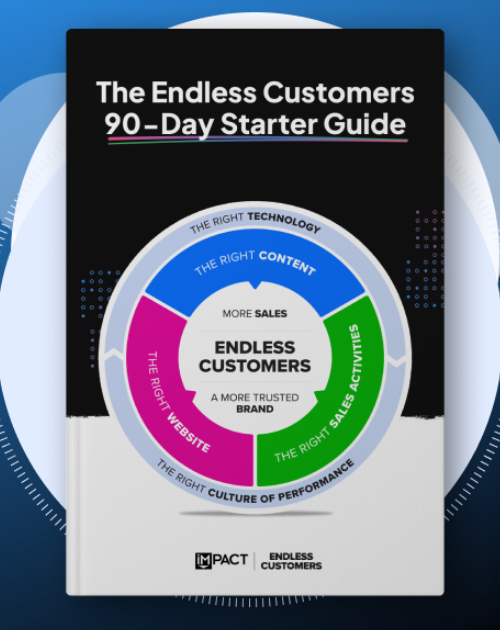
Want to dive deeper into Assignment Selling and how to do it right? Try the Endless Customers 90-day Starter Guide to build a foundation for Endless Customers success.
Free Resource
The Endless Customers 90-Day Starter Guide
More than $150 million in revenue has been generated by businesses applying the principles of Endless Customers. Now, you can get the roadmap of the first 90 days.

Written By
Tom DiScipio is Managing Partner & Client Advisor at IMPACT, where he helps business leaders decide whether IMPACT is the right partner for them and brings the voice of the customer into the company's leadership decisions. For more than 15 years, Tom has worked alongside CEOs and leadership teams as they evaluate a new strategy, question the direction of their sales and marketing, or try to understand why growth has stalled. His job in those conversations is to help leaders separate signal from noise and make decisions with confidence. He's found that struggling businesses rarely lack ideas. They're usually solving the wrong problem, chasing too many priorities, or reacting to a crowded market. Tom believes trust comes from honest guidance, even when that guidance points a business toward a different path than working with IMPACT. He also believes marketing's biggest job today is enabling sales, building trust, and making a company the obvious choice when buyers search for answers. Tom is a calm presence and a thoughtful listener who asks the questions that help people see a problem differently. He measures his work by the leaders who made better decisions because of their conversations together. Beyond the day-to-day, Tom balances life at IMPACT as a hobbyist photographer, guitar player, and wannabe (BMW) race car driver.
Tom DiScipio is Managing Partner & Client Advisor at IMPACT, where he helps business leaders decide whether IMPACT is the right partner for them and brings the voice of the customer into the company's leadership decisions. For more than 15 years, Tom has worked alongside CEOs and leadership teams as they evaluate a new strategy, question the direction of their sales and marketing, or try to understand why growth has stalled. His job in those conversations is to help leaders separate signal from noise and make decisions with confidence. He's found that struggling businesses rarely lack ideas. They're usually solving the wrong problem, chasing too many priorities, or reacting to a crowded market. Tom believes trust comes from honest guidance, even when that guidance points a business toward a different path than working with IMPACT. He also believes marketing's biggest job today is enabling sales, building trust, and making a company the obvious choice when buyers search for answers. Tom is a calm presence and a thoughtful listener who asks the questions that help people see a problem differently. He measures his work by the leaders who made better decisions because of their conversations together. Beyond the day-to-day, Tom balances life at IMPACT as a hobbyist photographer, guitar player, and wannabe (BMW) race car driver.
/Assets/Icon%20Library/social/linkedin-logo.svg)
Share
/Assets/Icon%20Library/social/x%20corp.svg)
/Assets/Icon%20Library/social/mail-to.svg)
/Assets/base/Learning%20Center%20Resource%20Category%20Icons/Website%20link.svg)
NEED HELP WITH YOUR SALES PROCESS?
If you’re looking to improve your sales process and not sure where to start, IMPACT can help. We’ll guide you on how to structure the right team, use strategic content to build trust, and drive real results.
NEED HELP WITH YOUR SALES PROCESS?
If you’re looking to improve your sales process and not sure where to start, IMPACT can help. We’ll guide you on how to structure the right team, use strategic content to build trust, and drive real results.