
/Assets/arrow-facing-left--black-01.svg)
/Assets/navigation-global--close-symbol-black-01-1.svg)
/Assets/base/Close.svg)

/Assets/Icon%20Library/social/facebook-logo.svg)

/Assets/Icon%20Library/social/instagram-logo.svg)
/Assets/Icon%20Library/social/youtube-logo.svg)




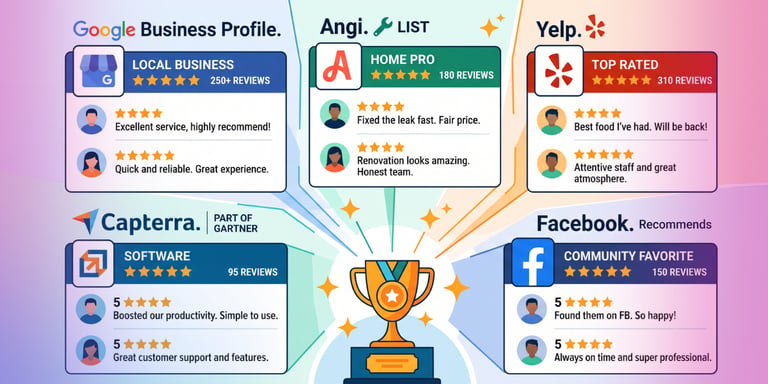
Your team can deliver a five-star job every single time and still lose the next opportunity to a competitor whose review profile simply looks more alive than yours.
Not only are reviews one of the first things a buyer checks, but they are increasingly one of the first things an AI tool looks at on the buyer's behalf.
At IMPACT, we work with companies inside the Endless Customers System™ to treat reviews as a business asset they build on purpose, the same way they would build a sales pipeline.
Here is what actually separates the companies that keep earning reviews, year after year, from the ones who get a burst of them and stall out, and how to build that same engine inside your own business.
What's the difference between a review strategy that works and one that doesn't?
Companies that keep earning reviews regularly treat review generation as a daily operating habit, not a task assigned to marketing once a quarter and then forgotten. The habit has to be built into how every job starts and ends, and must be continuously supported by leadership and part of new employee onboarding.
What happens for most companies is that they realize, "Woah, we haven't gotten a review for a while," and the marketing or admin team is left chasing down old customers in hopes they will leave a review.
Being that far out from the project or service significantly decreases the likelihood that someone will do the ask, even if you did a great job. Reviews have to be tied to the timeline of the job.
How a home services company brought in nearly 200,000 reviews
Eco Plumbers, Electricians, and HVAC Technicians, a home services company in Dayton and Cincinnati, Ohio, has more than 20,000 Google reviews at a 4.9-star average in its original Columbus market alone. Add in every platform and location, and that adds up to roughly 195,000 reviews at the time of this article. (We're sure they are still climbing!)
Founder and CEO, Aaron Gaynor, built all of those reviews from nothing. He set the standard from the beginning: do great work and ask for the review. They repeated that on every job for a decade, and now his company often outpaces large competitors in his market.
Another IMPACT client and CEO coaches his team to make the ask before the job starts. At the beginning of each job, project managers tell customers, "At the end of this project, I'm going to ask you for a review. If at any time I'm not providing five-star service, please let me know."
When reviews become ingrained in your culture, your team and your customers know exactly what to expect.
What makes a review request feel like part of the job instead of a favor?
A review request feels natural instead of forced when it is framed as proof of a job well done, not an add-on tacked onto the invoice. You want both your team to feel motivated to ask and the customer motivated to respond.
At Eco, technicians are trained to think about it this way:
Their job is to deliver a five-star experience, and asking for the review that proves that is simply part of that process. A technician who sees it as an add-on will continually forget or make excuses not to ask. A technician who sees it as proof of work they are already proud of asks almost every time.
Free Assessment
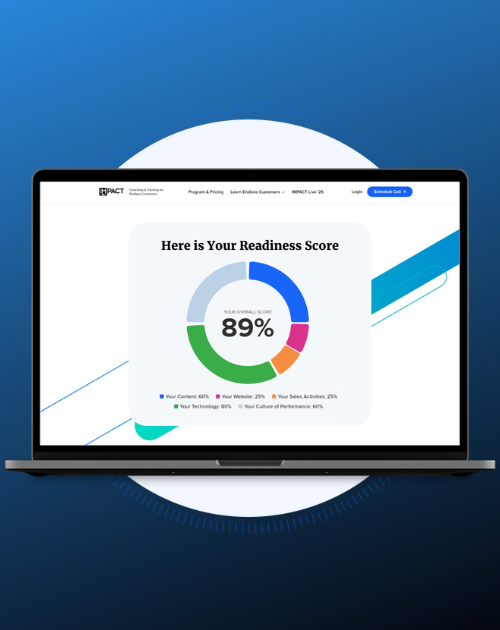
Free Marketing Assessment: Where do you stand?
AI is changing how buyers find businesses, and most companies are dangerously underprepared. Take this free assessment and find out if yours is at risk of becoming invisible to your buyers.
Should you ever pay for a review?
No. Paying an employee per review or offering a customer something in exchange for one turns a review into a transaction versus an honest account of the work completed. Google has specific guidance against paying for company reviews on your Google Business Profile.
The safer path keeps the ask simple and honest: aim for a five-star experience, then ask the customer to say so if it's true. Recognize employees for consistently good reviews if you want to, through non-cash incentives, but never buy the review itself. That keeps the review honest and valuable.
How do you handle fake or unfair reviews?
You handle a fake or unfair review by verifying the customer against your own job records, but you need to respond to it either way. AI platforms like ChatGPT look at review responses as part of their research when reviewing a company. If it is truly fake, escalate any reviews you cannot verify to the platform for removal.
Build a process that flags every negative review to someone senior enough to stay on it until it is resolved, whether that means fixing a real service failure or proving a review came from someone who was never actually a customer.
One IMPACT client, Trailstone Insurance, took a one-star review and answered it head-on with a YouTube video.
What should good review software actually do?
Good review software should make it effortless for a customer to leave a review on the platform of their choice right after the job is done, and nothing more. But it cannot replace the culture and the follow-up that make someone want to write a review in the first place.
The best setups send a short, personal-feeling prompt right after a job, then let the customer choose where to post it, since not every platform behaves the same way.
Some platforms make leaving a review almost frictionless, while others restrict how directly a business can link to a review form at all. Software should absorb that friction.
Why is AI raising the bar on what counts as a strong review profile?
AI tools are raising the bar because they now read the substance of a review, not just the star count, when deciding which businesses to recommend. A thin or stale review profile can quietly remove a business from an answer a buyer never even sees them compete for.
Star ratings are still important, but AI systems increasingly weigh volume, how recently reviews were posted, and how detailed they are, since a longer review gives them more customer sentiment to work with. That shift rewards the same habits that build trust with human readers: ask consistently, respond honestly, and never let the profile go stale.
It's just one part of how AI scores a business's full reputation.
What platforms should you prioritize for reviews?
If you are trying to decide what platforms to get reviews on, you might be surprised to find that third-party platforms are seeing a resurgence of importance as AI search grows. AI platforms can't read Google Business Profile reviews directly, so they often rely on industry-relevant, third-party platforms to evaluate your business. Humans might check Google Business Profiles, but AI is looking somewhere else.
IMPACT conducted a research study on how AI determines who to recommend by asking four AI platforms about 23 different industries.
The results come down to what industry you are in. There's no single playbook for what review platforms to focus on.
Review platforms AI references by industry
The table below breaks down which review platforms AI cited most for each of the 23 industries studied.
| Industry | Review platforms cited | Industry | Review platforms cited |
| Roofing | Angi, Yelp | HVAC | Angi, Yelp, Best Pick Reports, Today's Homeowner |
| Plumbing | Angi, Yelp, HomeAdvisor | Electricians | Angi, Yelp, Thumbtack, Porch |
| Painting | Angi, Yelp, Home Advisor, Expertise | Landscaping | Angi, Houzz, Thumbtack, Expertise, LawnStarter |
| Construction/ Remodeling | Angi, HomeAdvisor, Houzz | Concrete/ Concrete Coatings | Angi, Yelp |
| Accounting | Yelp, Clutch, G2, UpCity | Manufacturing | ThomasNet, ClearlyRated, Zippia, Clutch |
| Payroll | Trustpilot, Capterra | Insurance | Accreditation prioritized over reviews |
| Recruiting | None cited | Retail Sources | None cited |
| Cybersecurity | Clutch, G2 | IT | Clutch |
| Marketing Agency | Manifest, Clutch, UpCity, DesignRush, Glassdoor | SaaS | G2, Capterra, Glassdoor, Indeed, Product Hunt |
| Dentist | Yelp, Healthgrades | General Physician | Yelp, Healthgrades, Zocdoc |
| Medical Specialists | Healthgrades, Vitals, Zocdoc, RateMDs | Law Firm | Martindale-Hubbell, Avvo |
Build the system, then let it compound
Reviews become a lasting business advantage once the system behind it can run without depending on any one person to remember to ask.
Get the culture and the services right first: reviews as proof of good work, not a chore. Keep the ask honest by never paying for one. Treat every negative review, real or fake, as something worth investigating rather than ignoring. Then add software that removes friction and makes it even easier for your team.
At IMPACT, we help companies build exactly this kind of trust-generating system as part of the Endless Customers System™, because your reputation has become one of the most important assets your business owns.
If you want a clearer picture of what building that system would actually look like inside your business, check out the free preview edition of Endless Customers.
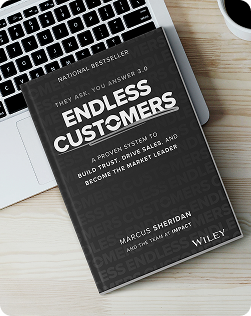
FREE BOOK PREVIEW
Endless Customers Special Preview Edition
Get a taste of the book that brings you a proven system to build trust, drive sales, and become the market leader. This special preview edition has select chapters and The Four Pillars of a Known and Trusted Brand, resources to accelerate your success, and more.
Keep Learning:
Written By
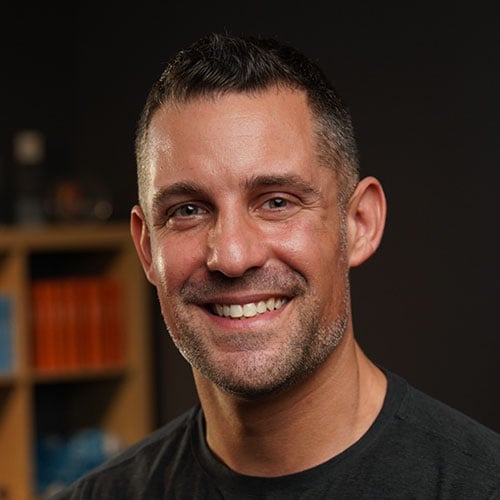
Bob Ruffolo founded IMPACT in 2009 and has led it as CEO ever since. What started as a simple web design company has grown into a business coaching and training company that helps leaders and their teams get better at sales, marketing, communication, and leadership. IMPACT has been a HubSpot partner since 2011, one of HubSpot's first, and today is a HubSpot Diamond Solutions Partner, twice named HubSpot Partner of the Year and a four-time Inc. 5000 honoree (2018 to 2021). Bob himself has been recognized as a 40 Under 40 winner and named to Glassdoor's Best CEO for Small Businesses list. Bob is the co-creator of the Endless Customers System with Marcus Sheridan, the methodology behind IMPACT's coaching, the USA Today bestselling book, the Endless Customers podcast, and the annual Endless Customers Live conference. It teaches companies to build marketing and sales capability in-house rather than outsourcing it indefinitely. In recent years Bob has led IMPACT's shift to an AI-first company and become a go-to voice for leaders trying to understand what AI means for marketing, sales, and the workforce.
Bob Ruffolo founded IMPACT in 2009 and has led it as CEO ever since. What started as a simple web design company has grown into a business coaching and training company that helps leaders and their teams get better at sales, marketing, communication, and leadership. IMPACT has been a HubSpot partner since 2011, one of HubSpot's first, and today is a HubSpot Diamond Solutions Partner, twice named HubSpot Partner of the Year and a four-time Inc. 5000 honoree (2018 to 2021). Bob himself has been recognized as a 40 Under 40 winner and named to Glassdoor's Best CEO for Small Businesses list. Bob is the co-creator of the Endless Customers System with Marcus Sheridan, the methodology behind IMPACT's coaching, the USA Today bestselling book, the Endless Customers podcast, and the annual Endless Customers Live conference. It teaches companies to build marketing and sales capability in-house rather than outsourcing it indefinitely. In recent years Bob has led IMPACT's shift to an AI-first company and become a go-to voice for leaders trying to understand what AI means for marketing, sales, and the workforce.
/Assets/Icon%20Library/social/linkedin-logo.svg)
Share
/Assets/Icon%20Library/social/x%20corp.svg)
/Assets/Icon%20Library/social/mail-to.svg)
/Assets/base/Learning%20Center%20Resource%20Category%20Icons/Website%20link.svg)
WANT TO BECOME THE MOST KNOWN AND TRUSTED BRAND IN YOUR MARKET?
If you’re looking to become a trusted brand and not sure where to start, IMPACT can help. We’ll guide you on how to lead with transparency, show your process with video, sell in buyer-friendly ways, and keep it human. All to build the trust that drives real revenue.
WANT TO BECOME THE MOST KNOWN AND TRUSTED BRAND IN YOUR MARKET?
If you’re looking to become a trusted brand and not sure where to start, IMPACT can help. We’ll guide you on how to lead with transparency, show your process with video, sell in buyer-friendly ways, and keep it human. All to build the trust that drives real revenue.