
/Assets/arrow-facing-left--black-01.svg)
/Assets/navigation-global--close-symbol-black-01-1.svg)
/Assets/base/Close.svg)

/Assets/Icon%20Library/social/facebook-logo.svg)

/Assets/Icon%20Library/social/instagram-logo.svg)
/Assets/Icon%20Library/social/youtube-logo.svg)





.png?width=768&height=400&name=5%20foundations%20of%20marketing%20(1).png)
Business leaders are under pressure to put AI to work. New tools promise faster content creation, easier video production, smarter websites, and automated workflows, while competitors appear to be moving quickly.
But if your content lacks a clear point of view, your buyer journey is confusing, or your team cannot agree on a strong result, AI will not correct those problems on its own. It may simply produce more work from a weak foundation.
At IMPACT, we coach companies through the Endless Customers System™, an approach to becoming the most known and trusted brand in your market. In 15 years here, I have helped more than 500 businesses build the skills and processes behind that growth. My advice to leaders is straightforward: define what good looks like before asking AI to scale it.
This guide explains the five marketing foundations your company should build first and how to tell when a process is ready for AI.
Why does AI make weak marketing worse?
AI can increase the speed and volume of a marketing process without knowing whether that process serves buyers, protects trust, or supports the right business outcome.
A polished output can still be strategically wrong. AI can draft an article that never helps the reader take a useful next step. It can write a video script without a strong hook. It can build a website tool that looks impressive while creating security risks or sending valuable customer data nowhere.
I encountered a smaller but revealing example while creating schema for a client’s website. The AI generated the requested markup but omitted the script tag required for the code to work in the site header. My development background helped me catch the omission before publishing. Someone without that experience could have assumed the confident-looking output was complete.
In a conversation on the Endless Customers podcast, Bob Ruffolo shared a similar lesson from earlier in IMPACT’s history. We pulled images off the internet to use for blog content without considering copyright rules. We were shocked when we got hit with fines as big as $1,500 from Shutterstock. Thankfully, we know better.
Just like an inexperienced marketing team can make mistakes, AI won't have the judgment to make the best decisions for your company on its own. It will try to make you happy and feel good about everything, but you have to have a strategy behind it.
We aren't trying to convince you not to use AI. It's more about still valuing the human experience and expertise that drives strategic outputs and more successful AI adoption.
How do you define what good marketing looks like?
Defining good marketing means agreeing on the buyer outcome, quality standards, process, ownership, and measurement before AI becomes part of the workflow.
“Make this better” is not a usable standard. A team needs to know who the work is for, what the buyer should understand, what they should do next, and what would make the output accurate and trustworthy.
The definition you come up with should be specific enough that a knowledgeable person can review an AI output and explain why it meets the standard or where it falls short. It also gives the team instructions worth teaching to an AI system.
Without that shared standard, every prompt begins from personal preference and every output is judged differently.
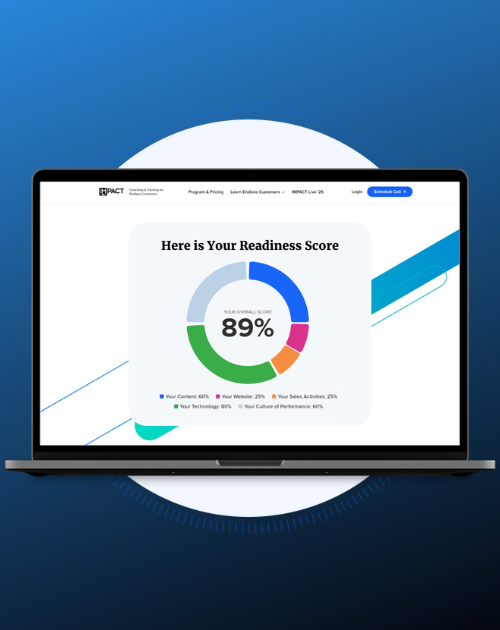
Free Assessment
Free Marketing Assessment: Where do you stand?
AI is changing how buyers find businesses, and most companies are dangerously underprepared. Take this free assessment and find out if yours is at risk of becoming invisible to your buyers.
What marketing foundations do you need before scaling with AI?
Your company needs five foundations: a clear buyer outcome, defined quality standards, a working manual process, qualified human ownership, and technical guardrails with meaningful measurement.
Foundation 1: Is the business goal and buyer’s next step clear?
Every AI-supported task should begin with the result you are trying to create.
For an article, that might be helping a buyer compare two options and continue to a pricing guide. For a self-service tool, it might be helping someone understand fit while giving sales useful context for a later conversation.
If the buyer journey is unclear, AI often defaults to a generic “contact sales” CTA. That can feel like too much pressure to someone who needs another educational step. Map the buyer journey first, then tell AI where this piece of work belongs within it.
Foundation 2: Has your team defined its quality standard?
Brand voice is part of what makes AI-generated content more personalized, but quality standards take it further. Your team should know what builds trust, what makes your point of view distinct, which buyer concerns must be addressed, and what claims require proof.
The same applies to video. AI can draft a script or edit footage, but someone still needs to recognize whether the opening earns attention, the explanation is clear, and the person on camera feels credible. Your quality standard gives AI boundaries and gives reviewers a consistent scorecard.
Foundation 3: Can someone execute and document the process manually?
A reliable AI workflow starts with work your team already understands. Ask the person who owns the task to document the steps, decisions, inputs, exceptions, and finished result as if they were training a new employee.
At IMPACT, we call this the invisible work. It may feel slower than opening Claude or ChatGPT immediately, but it exposes unclear steps before they become automated problems. It also gives AI better instructions and real examples to follow.
Foundation 4: Who is qualified to review the output?
Human review only protects the business when the reviewer knows what to look for. A junior marketer may catch a typo but miss a broken buyer journey, unsupported claim, copyright issue, or technical error.
Assign review based on risk. A subject matter expert should confirm technical claims. A marketing leader should protect the strategy and brand. A developer or security professional should review code, integrations, and data handling before an AI-built tool reaches customers.
Foundation 5: Are the technical guardrails and success measures clear?
Before connecting AI to your website, CRM, or customer data, determine what information the tool can access, where data will go, and who will maintain the system. A fast prototype may be useful for testing an idea, but leaders should understand when it needs to be rebuilt for security, reliability, or long-term scale.
Measure the result as well as the efficiency. Time saved matters, but so do accuracy, conversion, buyer engagement, sales adoption, and revenue influence. Producing twice as much content is not progress if buyers trust it less or sales cannot use it.
How can you tell if a marketing process is ready for AI?
A process is ready for AI when your team can perform it well, document how it works, recognize a strong result, assign appropriate review, and measure whether automation improves the outcome.
Before scaling a workflow, ask:
-
Can someone on our team complete this process successfully without AI?
-
Have we documented the steps, inputs, decisions, and exceptions?
-
Can we explain what a strong output must accomplish for the buyer?
-
Is a qualified person responsible for reviewing accuracy and strategy?
-
Have we addressed data access, copyright, security, and technical risk?
-
Can we measure improvement in quality or business results, not just speed?
A “no” does not mean you have to stop using AI, but it can help you identify areas that need more work before AI scales broken systems.
Where should your marketing team start using AI?
Start with one repeatable, well-understood, lower-risk task where AI can remove friction without making the final decision for your team.
Good starting points include summarizing interview transcripts, organizing buyer questions, creating an outline from approved source material, or producing variations of an existing message. A knowledgeable person can review these outputs quickly, and a mistake is easier to correct before it reaches a buyer.
Run the process as a pilot. Compare the AI-supported version with the current method, document what changed, and revise the instructions. Once the output is consistently useful, expand carefully into connected workflows or customer-facing applications.
How do these foundations support the Endless Customers System?
Strong AI foundations help your team scale the trustworthy, buyer-focused work at the center of the Endless Customers System™ without handing its judgment over to a tool.
Endless Customers asks your company to answer buyer questions honestly, show your expertise, create helpful video, build a self-service website, and align sales and marketing around trust. AI can accelerate each part of that work when your people understand the principles and own the process.
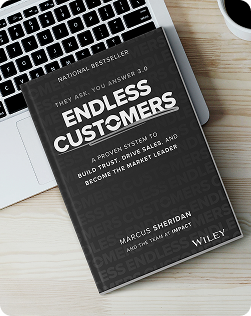
FREE BOOK PREVIEW
Endless Customers Special Preview Edition
Get a taste of the book that brings you a proven system to build trust, drive sales, and become the market leader. This special preview edition has select chapters and The Four Pillars of a Known and Trusted Brand, resources to accelerate your success, and more.

Written By
Vin Gaeta is an Executive Coach at IMPACT, where his work combines leadership, sales, marketing, digital strategy, and buyer behavior. He helps businesses become easier to trust, easier to buy from, and harder to ignore, especially as AI changes how people search, learn, compare, and decide. Vin works with organizations in home services, construction, manufacturing, automotive, professional services such as payroll and accounting, SaaS, and other complex B2B spaces where the buying process is long and depends on trust. His clients include TMA Small Business Accounting, Inline Plastics, CSI Accounting, HomePride, and Family Security Plan. Whether he's coaching a leadership team, improving the sales experience, rethinking a website, or shaping content strategy, his goal is to make it easier for buyers to get answers and easier for businesses to earn the right to be chosen. Outside of work, Vin is a husband and dad of two girls. He's happiest with good music on, out on a hiking trail, or deep in geek and pop culture, and he leans fully into Halloween and horror season. He takes the work seriously but tries not to take himself too seriously. Vin is available to speak on Endless Customers alignment, sales enablement, 1:1 video, Assignment Selling, and website optimization.
Vin Gaeta is an Executive Coach at IMPACT, where his work combines leadership, sales, marketing, digital strategy, and buyer behavior. He helps businesses become easier to trust, easier to buy from, and harder to ignore, especially as AI changes how people search, learn, compare, and decide. Vin works with organizations in home services, construction, manufacturing, automotive, professional services such as payroll and accounting, SaaS, and other complex B2B spaces where the buying process is long and depends on trust. His clients include TMA Small Business Accounting, Inline Plastics, CSI Accounting, HomePride, and Family Security Plan. Whether he's coaching a leadership team, improving the sales experience, rethinking a website, or shaping content strategy, his goal is to make it easier for buyers to get answers and easier for businesses to earn the right to be chosen. Outside of work, Vin is a husband and dad of two girls. He's happiest with good music on, out on a hiking trail, or deep in geek and pop culture, and he leans fully into Halloween and horror season. He takes the work seriously but tries not to take himself too seriously. Vin is available to speak on Endless Customers alignment, sales enablement, 1:1 video, Assignment Selling, and website optimization.
/Assets/Icon%20Library/social/linkedin-logo.svg)
Share
/Assets/Icon%20Library/social/x%20corp.svg)
/Assets/Icon%20Library/social/mail-to.svg)
/Assets/base/Learning%20Center%20Resource%20Category%20Icons/Website%20link.svg)
NEED HELP WITH AI FOR MARKETING?
If you’re looking to take control of your sales and marketing with a proven system built for the age of AI, IMPACT can help. We can guide you on how to control your growth, stop relying on agencies, and become the most known and trusted brand in your market.
NEED HELP WITH AI FOR MARKETING?
If you’re looking to take control of your sales and marketing with a proven system built for the age of AI, IMPACT can help. We can guide you on how to control your growth, stop relying on agencies, and become the most known and trusted brand in your market.