
/Assets/arrow-facing-left--black-01.svg)
/Assets/navigation-global--close-symbol-black-01-1.svg)
/Assets/base/Close.svg)

/Assets/Icon%20Library/social/facebook-logo.svg)

/Assets/Icon%20Library/social/instagram-logo.svg)
/Assets/Icon%20Library/social/youtube-logo.svg)





With so many AI tools and platforms out there, it's easy for individual team members to each end up running AI their own way. They figure out what works for their workflow, but it rarely extends beyond that.
That, combined with the sheer number of tools available, is making the AI landscape messy for most teams at best, and chaotic at worst. AI literacy varies wildly across an organization, and most leaders still haven't seen the time savings show up anywhere beyond a few individual desks.
At IMPACT, we coach sales and marketing teams facing this exact struggle. AI has the potential to fundamentally change the way teams operate, but no one knows where to start. Everyone is trying to figure out where AI can actually do the most good.
Leaning into vibe coding can give even non-developers the opportunity to take a problem and create a customized solution, rather than buying another subscription.
In this article, we'll walk through what it actually takes to turn a vibe-coded first draft into a tool your team relies on, and where a real expert still has to be part of the process.
What is vibe coding and how can marketing teams use it?
Vibe coding is the practice of describing the tool you want in plain, everyday language and letting AI write the code behind it, without needing to understand programming yourself. It has the potential to put small, single-purpose SaaS tools out of business entirely, as teams build the exact tool they need instead of renting one that almost fits.
For a marketing team, that means a content manager can build a working internal tool instead of waiting on a developer or evaluating another piece of software.
For years, growing a marketing team meant buying a new tool for every job: one for email, one for social scheduling, one for content, one for reporting. Each cost a few dollars to a few hundred a month, and most of them ended up used by one person on the team.
Imagine the opportunity that ambitious marketers have to create customized solutions to everyday problems: content topic sourcing, repurposing content, article drafts, social media strategy, subject line testing for emails...the list goes on and on.
Our response to one software company
We've seen this shift firsthand.
A friend of the company offered up a software tool. It was great and a potential solution for a bottleneck our team had been facing.
But we saw an opportunity.
We decided to take some time and vibe code something specifically tailored to the work we do here at IMPACT. It's taken time and a lot of failed tests, but our whole team is excited about the progress. We are one step closer to creating a personalized piece of software that gives our team a competitive edge in the services we provide.
That's what companies need to start doing. Creating solutions tailored to how their team works.
Also, this isn't meant to be a knock on software companies. It's just a sign of where the market is shifting.
Why this is important to us
At IMPACT, we coach businesses to marketing and sales success as part of the Endless Customers System™, our methodology that puts content, trust, and transparency at the forefront of business growth. Vibe coding can allow marketing teams to keep up with the competitive nature of content production, but maintain quality and controls that keep content unique to their brand.
Why do many AI tools fail?
Most AI tools fail for the same reason most software fails: adoption, not access. Teams get pitched a new platform every few weeks, the novelty wears off, and nobody commits. They drift back to ChatGPT or Claude and keep working the way they always have.
If you want to make a real impact with how your organization uses AI, shift the mindset: become engineers and builders, not just users. When you build something specific enough to solve one real problem at your company, your team sees the value immediately.
It starts with just one person. They don't need to be a developer. They need to be a problem solver willing to spend a few extra hours turning a working prompt into something shareable.
Free Assessment
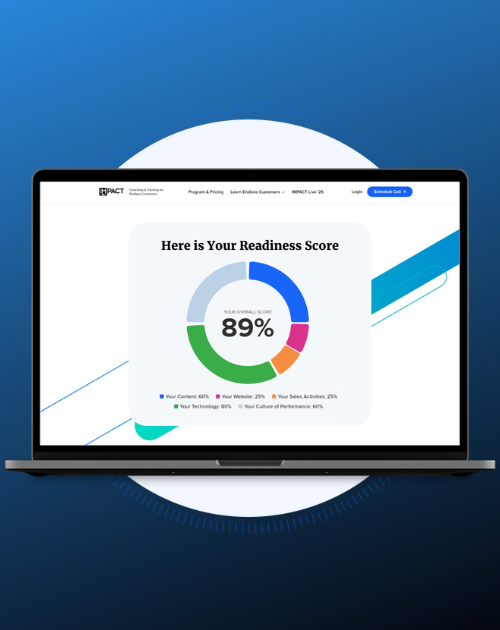
Free Marketing Assessment: Where do you stand?
AI is changing how buyers find businesses, and most companies are dangerously underprepared. Take this free assessment and find out if yours is at risk of becoming invisible to your buyers.
What does it actually take to vibe code a tool your team will use?
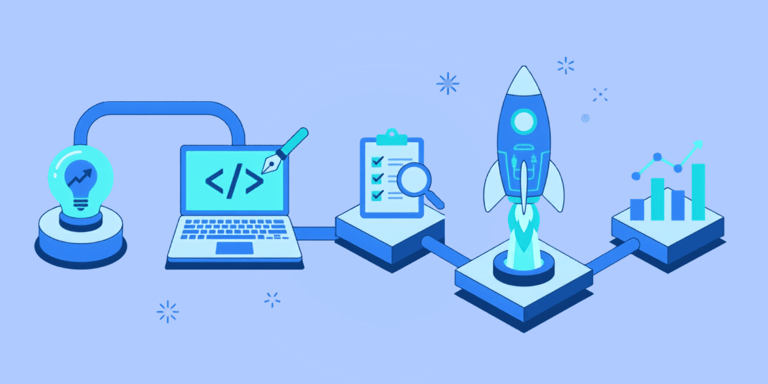
Building a tool your team will actually use takes four concrete steps: identify the problem, map the manual process, feed AI real examples with hard boundaries, then turn the working result into a page someone can open without touching a prompt.
This is what takes you from only using prompts, projects, and custom GPTs, to a customized tool for your team.
Step 1: Identify the problem.
Look for the obstacles, the roadblocks, or the work nobody wants to do. Ask your team what they dread starting every week, or what keeps getting pushed to Friday afternoon.
Brainstorm where AI could take that task off someone's plate entirely, freeing up time for the work that actually needs a human.
Step 2: Map the manual process
Write down exactly what a person does today, in order, to complete that task. For example: if you are creating a content creation tool, identify what the content manager needs to start a first draft, what goes into the editing process, and what your standards are for a complete draft. Don't summarize or cut down the process. Write it down the way you'd train a new hire to do it by hand.
Step 3: Feed AI real examples and set hard boundaries
Hand the AI actual past examples of the work, not a description of the work. Real articles, real emails, real briefs. Set explicit limits alongside them: word counts, required sections, how many headers, and what to never include.
Expect to correct it. One early draft we built came back nearly five times longer than the target length. That's normal. The fix isn't to scrap the tool, it's to keep narrowing the instructions until the output matches what an editor would actually sign off on.
Step 4: Turn it into something your team can run
A prompt that only works inside your own chat window isn't a tool just yet. The step most people skip is giving it a simple front end: a page where a teammate types something in, watches it run, and gets a result back, with no prompt, no chat history, and no explanation needed.
Claude can turn a working prompt into a shareable page with an input box through its Artifacts feature. Tools built specifically for this, like Lovable, Replit, or Bolt, work the same way: describe what you want in plain language, and you get a working link back.
Want to see how IMPACT is using vibe coding?
We walk through exactly how we set up the first version of a tool like this in a recent episode of the Endless Customers podcast.
How does vibe coding change the content manager's job?
Vibe coding does not shrink the content manager's job, it moves it up. When a content tool built through vibe coding gets most of a first draft right, the person who used to write everything from scratch becomes the editor who sources original material, catches what AI gets wrong, and refines it into something worth publishing.
That shift frees up time and space for a content manager to get strategic, rather than bogged down by repeatable tasks. A content manager who used to spend a full week writing a batch of articles from scratch can spend that time on strategy, distribution, or coaching the rest of the team through their own AI tools instead.
Where does vibe coding still need a human expert in the loop?
Vibe coding still needs a human expert in the loop for two reasons: first, their experience is what builds something amazing. They know where processes get hung up or what everyone else in the industry gets wrong.
Second, AI is imperfect. It can state a wrong fact, cost, or technical detail with the same confident voice it uses for everything else it writes. You need firsthand experience and someone who already knows the subject well enough to catch the mistake before it gets published.
This is exactly why the tool and the reviewer are a package deal. A business that hands a vibe-coded workflow to someone with no subject-matter expertise is trading one risk, slow content, for a worse one: confidently wrong content, published under the company's name.
Should your team start vibe coding its own AI tools?
Your team should start vibe coding its own tools once it has a specific, repeatable task that a subject-matter expert could describe step by step. Teams without that foundation yet get more value from mapping their process first than from building a tool around it too early.
The category itself is growing fast enough to take seriously even if your team hasn't touched it yet. Market researchers at Second Talent estimate the vibe coding market will reach $4.7 billion globally in 2026, on pace to reach $12.3 billion by 2027. That is not a niche experiment. It is quickly becoming a normal part of how internal teams build software.
Scott Merritt, founder of Honest Fix, is creating content at scale with his new business, which is only possible through the help of AI.
The opportunity belongs to teams willing to experiment
Most teams are looking for solutions that take AI from just prompts and ideas to organizational transformation. That starts by getting curious, finding problems, and testing solutions.
Before you buy another tool or subscription, consider if, with a little time and testing, your team can create a customized solution that you own, instead of rent.
For more information about the Endless Customers System™ and how it can help you become the most known and trusted brand in your market, check out the free preview edition below, or if you want to know more about how to work with one of our coaches, schedule a no-pressure consultation about your business needs.
Keep Reading
- What is Vibe Coding? (The Pros and Cons)
- How Do You Successfully Vibe Code Tools for Your Website?
- 5 Myths About AI in Marketing That Could Be Hurting Your Business
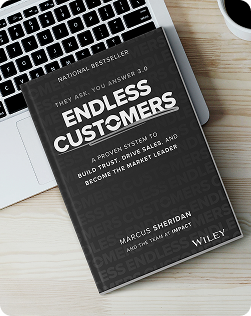
FREE BOOK PREVIEW
Endless Customers Special Preview Edition
Get a taste of the book that brings you a proven system to build trust, drive sales, and become the market leader. This special preview edition has select chapters and The Four Pillars of a Known and Trusted Brand, resources to accelerate your success, and more.

Written By
Bob Ruffolo founded IMPACT in 2009 and has led it as CEO ever since. What started as a simple web design company has grown into a business coaching and training company that helps leaders and their teams get better at sales, marketing, communication, and leadership. IMPACT has been a HubSpot partner since 2011, one of HubSpot's first, and today is a HubSpot Diamond Solutions Partner, twice named HubSpot Partner of the Year and a four-time Inc. 5000 honoree (2018 to 2021). Bob himself has been recognized as a 40 Under 40 winner and named to Glassdoor's Best CEO for Small Businesses list. Bob is the co-creator of the Endless Customers System with Marcus Sheridan, the methodology behind IMPACT's coaching, the USA Today bestselling book, the Endless Customers podcast, and the annual Endless Customers Live conference. It teaches companies to build marketing and sales capability in-house rather than outsourcing it indefinitely. In recent years Bob has led IMPACT's shift to an AI-first company and become a go-to voice for leaders trying to understand what AI means for marketing, sales, and the workforce.
Bob Ruffolo founded IMPACT in 2009 and has led it as CEO ever since. What started as a simple web design company has grown into a business coaching and training company that helps leaders and their teams get better at sales, marketing, communication, and leadership. IMPACT has been a HubSpot partner since 2011, one of HubSpot's first, and today is a HubSpot Diamond Solutions Partner, twice named HubSpot Partner of the Year and a four-time Inc. 5000 honoree (2018 to 2021). Bob himself has been recognized as a 40 Under 40 winner and named to Glassdoor's Best CEO for Small Businesses list. Bob is the co-creator of the Endless Customers System with Marcus Sheridan, the methodology behind IMPACT's coaching, the USA Today bestselling book, the Endless Customers podcast, and the annual Endless Customers Live conference. It teaches companies to build marketing and sales capability in-house rather than outsourcing it indefinitely. In recent years Bob has led IMPACT's shift to an AI-first company and become a go-to voice for leaders trying to understand what AI means for marketing, sales, and the workforce.
/Assets/Icon%20Library/social/linkedin-logo.svg)
Share
/Assets/Icon%20Library/social/x%20corp.svg)
/Assets/Icon%20Library/social/mail-to.svg)
/Assets/base/Learning%20Center%20Resource%20Category%20Icons/Website%20link.svg)
NEED HELP WITH YOUR WEBSITE?
If you’re looking to improve and optimize your website, IMPACT can help. We’ll guide you on how to structure a site that builds trust with buyers and improves conversion.
NEED HELP WITH YOUR WEBSITE?
If you’re looking to improve and optimize your website, IMPACT can help. We’ll guide you on how to structure a site that builds trust with buyers and improves conversion.