







Website Strategy
Everything You Need to Know Before You Hire a Web Design Agency
So, you want to redesign your organization’s website, and you’re considering partnering with a web design agency to get it done. But are you ready to make that phone call yet? This guide will take you through each step of what a successful website redesign process looks like, from picking the right internal team members and the data you’ll need before you get started, to the questions you should ask a prospective web design agency.
Introduction
Before We Get Started, Why Do You Want to Redesign Your Website?

What Is a Website Redesign?
A website redesign updates a site's content, structure, design, or functionality to better serve its visitors and business goals. It can involve rebuilding the site or improving specific parts. Start by identifying what buyers need and what is getting in their way, then decide how much needs to change.
This guide walks through five steps: plan your budget and timeline, assess your technology, prepare your team, gather performance data, and choose the right agency.
If you’ve decided that your website needs a redesign, there’s usually some sort of obvious symptom or pain point that you’ve identified. After all, people don’t spend the time and money associated with your typical, months-long website redesign project just for the fun of it, right?
Whether the appearance needs a face lift, the technology is painful to use or the content needs updating, you’re probably here because something led you to the conclusion that you need a web design agency to fix your problem.
But before you hire an agency -- even us -- you need to make sure that you’ve covered all your bases and carefully considered what it is that you really need. (That’s what this guide is for!)
Because while there are a lot of good reasons to give your website a makeover, there are also a lot of bad ones, too.
“I Just Don’t Like Our Website Anymore...”
One of the biggest “issues” that people cite with their website is simply, “I don’t like it anymore.”
Designers and developers at agencies are visual problem solvers, so, unfortunately, this kind of “blank check” statement gives them almost nothing to go on.
It’s merely a personal, subjective opinion that you have as someone who likely views the website every single day. But what do your customers think?
As the most important users of your website, are your customers satisfied with what it offers them?
Another poor reason for a redesign is to keep up with your competitors. Your analytics, customer feedback, and business goals should help you judge how effective your website is.
If you’re redesigning it only because a rival just rolled out their sleek new site, then your goal is really to save face, not to change your lead conversions or update your technology. You can’t be objective, purposeful and strategic when thinking about your own website if you’re only being reactionary to a competitor.
Finally, a significant change to your website, while exciting, doesn’t always necessitate a complete redesign. Adding a feature such as a blog or a membership portal may be possible within your current site. A platform migration is also a separate decision from a visual redesign. Investigate the work each requires before assuming they need to happen together.
Also, a new hire with web design chops will sometimes want to make their mark by suggesting changes to the website, but this shouldn’t always mean a massive new project.
Why You Should Redesign Your Website
With that out of the way, there are some very good reasons why your website may need a redesign. Here are three of the strongest:
- Your site doesn’t provide value to visitors;
- Your site doesn’t accommodate mobile users or isn’t responsive; or
- Your site looks outdated and outmoded.
Another good reason is having a new strategy or new business objectives that include clearly defined goals for your website. So if your company is moving in a different direction or introducing a brand new product, it’s worthwhile to consider who your business will be targeting and how your website will contribute to those objectives.
But before you take the leap, there are still three key areas you need to evaluate:
- The number of leads you’re currently getting;
- User feedback about the current site’s helpfulness; and
- The security risks involved with your current technology.
Ultimately, Your Website Isn’t About You
You may not want to hear this, but your opinion matters very little when it comes to a redesign.
Your website should be first and foremost about your users. It needs to be designed in a way that your users are familiar with: the way they consume media and the way that they’re going to buy your products and services. Everything is about the user, and as soon as you start thinking that way, a lot of decisions about the redesign will be a lot easier to make.
Neither should your website be a sales brochure. It shouldn’t be about directly telling users what you can do. Instead, it should be focused around solving their problems and understanding their journey and what they need.
Once you’ve determined that you’re going into your website redesign project with the correct mindset, it’s time to call up the agency of your dreams and get to work with new designs and fonts, right?
Actually, not so fast. You have a lot to do to prepare for your next website redesign. In fact, before you start looking at agencies, there are still four internal preparation steps you need to go through, and they include:
- Evaluating your objectives against your timeline and budget;
- Assessing your technology needs and access requirements;
- Aligning your stakeholders and identifying your team; and
- Gathering and analyzing your website’s benchmark data.
Step 1:
Evaluate Your Budget and Timeline
Just like you can’t go to a steakhouse if you only have $10 in your pocket, you need to have an honest, realistic conversation internally about what you need from your website redesign project, as well as how much you’re willing to invest in it.
The worst thing you can do is hire a web design agency when you have champagne taste and a beer budget.
Websites do cost time and money -- especially award-winning websites -- but that fact alone shouldn’t dissuade you.
Spending more does not automatically produce more value. Focus your investment on the problems your buyers and your team need the website to solve.
This stage is all about figuring out that sweet spot that balances your objectives, as well as the resources you’re willing to invest, from the standpoint of both cost and effort.
How Much Does a Website Redesign Cost?
A website redesign's cost depends on the scope: the number and complexity of pages, how much content you can reuse, custom design and development, integrations, and the support your team needs. Compare proposals against the same requirements, and separate the project fee from ongoing hosting, software, maintenance, and support costs.
Perhaps the most important question of them all is:
What does a realistic redesign budget look like for your business?
Of course, when it comes to determining how much your website redesign should cost, you need to keep one thing in mind -- if you’re looking for a website that you ultimately can’t afford, you’re setting yourself up for disappointment.
For a current example, IMPACT’s website redesign projects start at $30,000, with the final price depending on scope. Review the service page for current pricing and what is included.
The answer is different for every company, but here are some of the most important factors to consider:
-
What does your wish list look like, and what do you want out of the project?
The answer could be a simple redesign, a new platform or new technology, new content, new photography and video, or an entire digital strategy with search engine optimization. All of these need to be factored into your budget. -
How much of your current website content will be used for your new site, and how much new content will you need to create?
You need to define the content needs for your company's website redesign as early as possible. Not only will it impact your project timeline and budget, knowing this information in advance will help you find the right agency -- not every agency is equipped to handle website content creation. -
What level of support and experience are you comfortable with?
The level of communication, project management, and specialist support varies by provider and scope. Ask who will work with you, how often you’ll meet, and what your team will need to contribute. -
Do you need to integrate existing functionality, such as an e-commerce platform?
That will require additional testing to make sure it’s compatible with the rest of the website.
The other point you need to consider is your potential return on investment with a new website. For example, a $25,000 investment would require $25,000 in additional contribution after the costs of delivering the extra sales to recover that investment. The number of sales depends on your margins, ongoing website costs, and what results the redesign actually contributes. This is an illustration, not a forecast or an IMPACT price.
So, take our advice:
Don’t underplay your project’s complexity so that you can bring your numbers down.
Finally, make sure that you leave room in your budget for contingencies.
Sometimes old, forgotten legacy technologies present problems, or a new tool clashes with your company’s intranet. In cases such as these, the agency may need to pull in an outside developer for help, which can break the budgets of those who are unprepared.
How Long Does a Website Redesign Take?
A website redesign timeline depends on the scope, content readiness, integrations, and how quickly your team can review and approve work. Ask for a schedule covering discovery, content, design, development, testing, and launch. Agree on who owns each decision before committing to a launch date.
Just like your budget, you have to consider whether your projected timeline is viable.
If you have a fixed launch deadline, ask prospective agencies what scope they can realistically deliver within it.
The time it takes for agencies and clients to agree on a website redesign project varies with the scope and decision process. This period can be extended if you need to wait for the budget to be approved, or if a key stakeholder is unavailable.
During this time, you should be open and honest with salespeople about your situation -- otherwise, you'll risk your website redesign project going off the rails. A good sales team will put effort into understanding your business, your goals, your competitors and how their agency can fit into the picture.
Realize that your company has a great deal of influence over how long the project will take, and that you need to figure out internally how much time you have available. Throughout the process, you’ll need to participate in kickoff meetings and site reviews, give feedback and spend time either writing new copy for your site or speaking to copywriters who are writing it for you.
Ask the agency to estimate your team’s weekly participation and identify the periods when content, interviews, and approvals will require more time.
For example, copywriting may involve interviews with subject matter experts as well as research, drafting, review, and approval. Agree on the time and responsibilities for each stage.
Step 2:
Get a Handle on Your Internal Technology

Your website’s hosting and domain name credentials are like the deed to your house: not information you need every day, but vitally important.
Your hosting provider provides a home for your website’s files, your domain registrar manages your domain registration, and your DNS provider manages the records that connect your domain to website, email, and other services. These may be separate companies. Before launch, confirm who can change the necessary records without disrupting other services.
In many cases, however, your hosting provider and domain registrar are separate companies, and you may not even realize it. This is especially true if your organization has multiple departments, and it’s been some time since you’ve looked for that information.
For instance, you may have purchased your domain name on GoDaddy, but host your files on WP Engine. Well, what if you only know about one and not the other? (In our experience, this is not uncommon.)
Our advice is to do the research before you hire an agency, and don’t make a potentially disastrous assumption and tell your agency, “Everything you need is in GoDaddy.” Not only would that be inaccurate, this knowledge gap can lead to serious issues down the road, when you go to launch your website.
This gives you another decision to make: Who will manage the technical changes at launch, and what access will they need?
If you have internal IT staff who manage DNS and hosting, they may be able to handle the technical launch with the agency. Agree on the specific records and services that will change, who approves those changes, and who can help if something goes wrong.
If the agency needs access, keep company ownership of the accounts and invite named users with the permissions they need. Use multifactor authentication and each platform’s access controls where available. If a credential must be shared, use an approved secure sharing process rather than email or a shared master login. Document how access will be removed or reduced after launch.
“Whoa, This Is Already A Lot of Work...”
By now, you might be saying to yourself: “This sounds like a lot of work that I don’t want to do. I shouldn’t have to think this hard.”
First, if you’re not willing to think about your budget and timeline, then you need to pay an external consultant to do it for you. Their decisions will be made based on their own experience and best practices, not yours.
Second, and more to the point, if you aren’t willing to put in the time and effort to figure this out, then you’re going to be very disappointed with the entire process when you engage with a web design agency. You can’t get what you need if you don’t know how to ask for it in the first place.
Okay, are we good?
Great. Let’s get back to business.
Step 3:
Align Your Organizational Players

Once you’ve determined your needs, expectations, budget, timeline, and technical constraints, it’s time to make sure that your team is in total alignment. What do we mean by alignment?
The alignment process involves two separate steps:
- Identifying and getting buy-in from key stakeholders; and
- Assembling your team.
Grab Your Key Stakeholders
Before you pick up the phone to call a web design agency, you need to determine the person who will have ultimate approval power and judgment over the entire project. This is typically someone such as a CEO or a marketing director, who will sign off on any major decisions.
The situation you want to avoid is any sort of “design by committee,” in which more than one person has these responsibilities.
While it’s good to have multiple people involved -- we’ll talk more about that in a minute -- having this kind of crowding at the top of the approval chain will prolong your timeline and increase the chance of conflicts. Plus, it puts the burden on the agency to resolve conflicting opinions and ideas, a time-consuming process that you will ultimately pay for.
That’s why selecting a single, final decision-maker is for the benefit of both you and the agency, so that they can have an established point of contact for their questions and concerns, and you’re not paying your agency to play mediator for your team.
Build Your Internal Team
Beyond this project leader, you will also need to select a committed team that will be working with and assisting the agency throughout the process. They will be able to provide on-the-spot feedback as important developments occur, rather than involving the entire company or conducting an internal user survey.
Your team for the redesign should be a diverse, cross-functional group of people, with clear responsibilities and enough time to contribute. Keep the core review group manageable and bring in specialists when needed.
They must be willing to contribute to the process by participating in the initial kickoff call and evaluating major milestones, at the very least. They should have different backgrounds and opinions in order to give the best feedback, but not volatile or conflicting personalities that make for a dysfunctional team -- and for awkward arguments in front of your agency of choice.
Who Should Be a Member of Your Team?

Employees in client-facing roles can be a great choice for inclusion. Salespeople and members of your customer service department are often more tuned in than anyone else in the company to what your prospects want and need, because they hear it from them directly. They’re also usually the ones who will answer a lot of your partner agency’s questions.

Your marketing team can also be a great asset, because they not only live and breathe your current website, they’re going to probably be the ones working with and updating your new website the most. That means they’ll have a lot of valuable input - just be choosy as to who you invite from the team.

A higher-level executive in the C-suite would be an ideal choice. They may not participate as much in the process, but they can be inserted strategically at various points in order to make sure that the new website is in line with your company’s mission and vision. This is especially important if your redesign is meant to help turn over a new leaf for your company, or is a key part of achieving forward-looking revenue and business goals.

If your business has a large number of subject matter experts, you should definitely include someone who knows your products or services inside and out, and who can assess the quality and accuracy of the content on the new website. This is especially important if you plan to have any sort of copywriting delivered by the agency as part of your redesign.

Employees who have been at your company for a long time are also a good choice, because they can testify about your company’s story and have a better idea of where your business has been, as well as where it’s headed in the future.
While it’s important to plan ahead, you don’t need to have a final team in place until you engage with an agency and understand the demands they will ask of you. Every agency is unique, and every process will require a different number of people with varying levels of involvement.
Still, you should have a general idea of the different segments of your business that need to be involved in the project and keep certain people on an unofficial list.
This way when you first start reaching out to agencies, you can point them to specific employees with knowledge of different areas who can answer their questions.
“What If My Website Redesign Project Includes Content?”
If your project will involve content creation (whether that content be written copy for your website pages, a new explainer video for your homepage, or visuals that help explain what you do), and the agency is responsible for creating the new content, you need to have members of your team ready to take on two tasks:
- Contributing as a subject matter expert; and
- Editing as part of your review team.
Contributors need to be available and willing to speak with the agency’s copywriting or content creation team, possibly during multiple interviews. They can range from those who execute the service to those who sell the service -- just make sure to select individuals who can speak to your different business segments with ease.
Also, if this redesign is to be a signal of a new chapter for your company, plan on a C-level executive being involved in some capacity, such as an interview focused on what the road ahead looks like for your organization.
Next, you will need to have an internal set of individuals who will review any new content created by the agency. In our experience, two editors from a client, as well as one point of contact set aside as a final approver, tends to work well. Or you can simply have one point of contact for editorial review on your end.
Again, your agency should be more than willing to work with multiple individuals, but they will need to know who has the final say. Otherwise, you run the risk of creating confusion and missing deadlines.
The one thing to keep in mind with content is how easily it can become the most challenging part of your project.
Be realistic about what you’re looking to get out of a website redesign project, from the content end, and measure that against the level of effort you’re willing to put into it.
Identify Your Internal Technology Resource

Finally, you need to select a point of contact at your company that the agency can consult for the project’s technology needs.
The right person for this job will depend on how robust your company’s IT framework is.
Are you a small startup with five employees and an outsourced IT solution, or do you have a more sophisticated IT environment with thousands of employees across the country?
No matter your internal arrangement, your technology point of contact should be ready and available to answer technical questions from the agency. This person should be prepared for any IT emergencies that might arise during the project and able to be on standby when the website launches.
Step 4:
Gather Benchmark Data for Your Current Website

After you have your logistics and project team in place, the last piece of the pie is gathering your benchmark data. Why is benchmarking data important?
When you contact an agency, you’re doing it because you are operating on a certain set of assumptions. Generally, that means you think that your website is broken because of its design, technology, content, or any number of other reasons.
When you collect data about your website ahead of a redesign, the results may validate your assumptions, but they could also flat out contradict them. That’s why this is such an important step -- you don’t want to start a lengthy and expensive redesign process, only to realize at the end that you solved the wrong problem.
In some cases, companies are completely happy with their website design, only to find that visitors struggle to find useful information or take the next step. In Google Analytics 4, bounce rate is the percentage of sessions that were not engaged sessions. Under the default definition, an engaged session lasts longer than 10 seconds, has a key event, or includes at least two page or screen views. Check your configuration, and remember that a single-page visit can still satisfy a visitor. See Google’s explanation of engagement and bounce rate.
A good website redesign has to be a careful balancing act between making the client happy and staying true to the company brand, while also making website visitors happy and achieving business results such as visitor traffic and lead conversion.
This can be accomplished by listening to the data. When you reach out to web design agencies, you’ll likely be asked a number of questions about your website’s current performance, including:
- How many pages are on your site?
- How much traffic do you get?
- What percentage of visitors bounce off your homepage?
- Do visitors return after filling out your contact forms?
- Does Google index all of your pages?
- Does your site rank for the right keywords?
- Do you have broken links on your site?
- How do you answer these questions?
There are many ways to gain this kind of insight. The following four tools can help you understand your website’s performance and your users’ behavior. Features, pricing, installation requirements, and data availability vary. Check your tracking setup and applicable consent settings before collecting data.
Compare how buyers use your site on different devices. Our mobile versus desktop traffic and conversion benchmarks can help you interpret those differences alongside your own data.
Tool 1: Hotjar, Now Part of Contentsquare
Hotjar is now part of Contentsquare. Its heatmaps and session replay tools can help you see where visitors click and how far they scroll across devices. Check the current product and plan details.
You can use this information about how people respond to your website’s page designs to take the subjectivity out of understanding the user’s journey through your website and make data-backed decisions about how the new site will be designed.
For example, you may be assuming that people are scrolling all the way down your page, or that an offer in a prominent location is getting a lot of attention, but the Hotjar data may tell you that your visitors are not even going beyond the hero image on mobile.
Heatmaps give you a visual representation of interactions collected from actual visitors.
These visual cues can help you investigate how your website’s design affects the experience. With low traffic, treat a small set of sessions as observations to investigate, not proof of how every visitor behaves.
Combine those observations with analytics, customer feedback, and task testing to understand what needs to change.
Tool 2: Google Analytics
You might already have Google Analytics 4 installed on your site. If not, agree on a measurement plan with the person responsible for analytics. Your agency will need enough relevant data to understand patterns, alongside customer feedback and business context.
Google Analytics offers a free version. Installation and configuration should include the events and outcomes that matter to your business, with verification that the data is being collected correctly.
You’ll need to collect data about how many views each page gets, what the overall traffic to your site is, how users move through your site, and which pages they bounce away from. This information also allows you to see which pages are in most need of a restructure or need to be more closely evaluated.
Many companies that we talk with want to rebuild their website with a fresh new look and feel, without necessarily reviewing the site’s content. Google Analytics provides the kind of data that might make you realize that certain pages need an entire overhaul of the on-page content as opposed to simply a new design.
For instance, if a page barely gets visitors, investigate its purpose, search visibility, incoming links, and usefulness before deciding to remove it. If an important page has a high bounce rate, check whether visitors are finding the answer they need and whether your measurement setup reflects the intended task.
Tool 3: Google Search Console
Google Search Console is a free tool that reports Google Search clicks, impressions, queries, and indexing information. It can help you understand which pages bring visitors and identify reported indexing issues.
Before the redesign, export the queries and pages that bring relevant visitors, including clicks, impressions, click-through rate, and average position. Preserve useful content, page URLs, and internal links where possible. After launch, compare equivalent periods and review indexing alongside qualified inquiries and sales. Rankings alone do not tell you whether the redesign is helping buyers.
Repairing broken links as part of a website redesign can take time. Use a site crawl and direct link checks alongside Search Console; it is not a complete inventory of every broken internal link. Give your agency the findings so they can plan the work, budget, and schedule.
If you have a very old website, some of your links may have broken over time as you’ve shifted things around. Higher-end web design agencies know to check for issues like this, because it affects their work on things like search engine optimization (SEO).
Tool 4: HubSpot
HubSpot’s marketing and CRM tools can help connect website interactions, form submissions, and contacts to your sales process. The reports available depend on your subscription, integrations, tracking setup, and consent settings. Review the current HubSpot marketing tools.
Used with your CRM outcomes and customer conversations, this can help you understand the buyer’s journey and investigate gaps in the process.
This is great data to have in advance of a site redesign, because you really need to understand how visitors are using your website in its current form before attempting to rebuild it.
Start Collecting Data Early
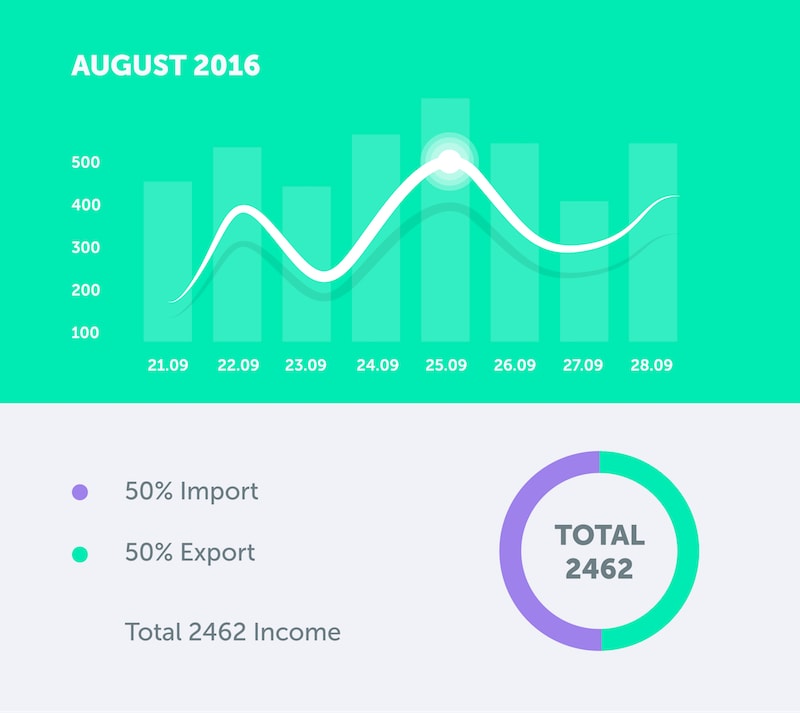
Start collecting and validating data early enough to establish a useful baseline. The period you need depends on your traffic, sales cycle, seasonality, and measurement setup. Keep the reporting period and definitions with your findings so you can compare results after launch.
This being said, don’t feel like you can’t engage with an agency if you don’t have these tools installed, but understand the risks involved if you do begin a website redesign project without adequate benchmarking data.
If you begin without reliable baseline data, identify the assumptions you are making. Use customer interviews, sales feedback, and task testing to reduce uncertainty, and agree on what you will measure as the project progresses.
Step 5:
Choose the Right Agency for Your Project
Unless you have the website redesign skills and capacity you need in-house, you’ll need outside help to complete your project. Depending on the scope, that could mean an agency, independent specialists, or a combination. If you’re looking for an agency, picking the right partner matters.
(That's probably why you're reading this guide in the first place!)
Picking the best agency is about more than just having the right price tag, or being right down the street from your offices. Website design agencies come in many different shapes and sizes, with goals that are best suited for different kinds of customers.
The only way to know the right kind of agency for you is to understand what types of agencies are out there, and match these with your goals for your website redesign project.
The 4 Types of Web Design Agencies
Ad Agencies: Brand and Campaign Focus

Advertising agencies often focus on branding, messaging, and campaigns. Website design may be part of their offering, but the services and experience vary by firm.
Ask how the website work connects with their broader brand and campaign expertise, and which parts of the project they deliver themselves.
An ad agency might be right for you if the website is part of a wider brand or advertising initiative. Compare the proposed website scope and costs against your requirements, rather than assuming an agency’s location or client list determines its fit.
E-Commerce Agencies: Specialized Knowledge
Agencies in this area concentrate on building e-commerce websites, and market themselves as such. They help businesses whose customers interact with them through online transactions, including B2C and B2B sales.
They may specialize in a particular commerce platform. Check that their experience matches your catalog, payments, integrations, security, and ongoing operating needs.
If this is the right type of agency for your business, you’ll likely already know it, since e-commerce companies require a particular skill set. Developing an e-commerce website requires knowledge of a lot of different specialties, such as security and payments or abandoned shopping cart nurturing, that need to be pulled off without a hitch.
Marketing Agencies: Focused on Strategy

Marketing agencies can come in various forms. They may do work in inbound marketing, outbound marketing, or even traditional public relations. If you’re looking to work with a marketing agency, you need to be aware of the differences here, because they’ll all come to the table with different specialties and solutions to address your pain points.
These agencies often connect website work with a broader marketing strategy. IMPACT provides sales and marketing coaching, training, and hands-on implementation. Our website redesign services combine strategy, content guidance, design and development, and training on HubSpot or WordPress so your team can manage the site.
That means that the focus is on the content and the user, from the moment they land on your website, through to the close of a deal. To us, the entire purpose of your website should be to answer customers’ questions and aid them throughout the buyer’s journey. Conversion rate optimization (CRO) is one part of improving that experience.
Additionally, they may have experience with CMS platforms such as HubSpot and WordPress. Ask them to demonstrate the updates your team will need to make, and compare the capabilities, integrations, ownership, and ongoing costs.
If you’re comparing platforms, review the differences between HubSpot and WordPress. The right choice depends on your requirements and the people who will maintain the website.
If you use marketing automation, ask how the website will connect with those tools and your CRM. Understand what is included in the integration and how the data will be maintained.
Other marketing agencies focus on advertising, public relations, visual design, or a combination. Compare their actual process and expertise with the outcomes you want from the redesign.
If you want informative content that helps buyers solve problems and make decisions, look for a partner with demonstrated content and conversion expertise.
These categories overlap. Evaluate the team and proposed work rather than relying on an agency label alone.
Website Design Agencies: Technical Specialization
Website design agencies specialize in designing and building websites. Their services can also include strategy, content, SEO, and ongoing support, so check the scope rather than assuming what is included.
If you’re looking to build a site with custom modules such as real-time data visualization or interactive elements, a website design agency could be the right choice. Ask to see relevant work and confirm who has the skills and capacity to deliver the technical requirements.
If you want your website to fulfill a larger business purpose and drive qualified inquiries, look for evidence that the agency can connect the design with content, user experience, and your sales process.
The right partner should see your site as one piece of a much larger puzzle and explain how it supports your business plan and marketing strategy.
Which Type of Agency Is Right for You?
If you’re totally lost, do this first: Figure out whether your company is primarily B2B, B2C, or e-commerce of any variety. This will affect how you approach your website and how users interact with it. If you don’t know your own goals, you won’t be able to appreciate how a website is supposed to help you with them.
Next, take stock of the various skill sets you might need. Who do you have internally on your team, and where are the gaps? Do you need content writers, developers, or someone with design sense? The agency you work with should be able to fill these vacancies with skilled members of their own staff.
Finally, beware of ye olde shiny penny syndrome.
Don’t make your decision based on how pretty an agency’s portfolio is. You also want website visitors to find useful answers and take the next step toward becoming customers. Look at usability, accessibility, content, and evidence of results alongside visual design.
A snazzy website which does lots of fancy tricks built by an ad agency might not make sense if your goal is to get your visitors to fill out a form and provide you with their email address or phone number.
As previously discussed, before you talk to an agency, you need to have some sense of your budget. However, you should expect to have some flexibility on this during the negotiation process, especially if your project will require additional support in the form of copywriting or developers to code specialized features.
When talking about how much things will cost, compare the same requirements across proposals. If you need to reduce the budget, discuss which pages and features matter most, what can wait, and what tradeoffs a smaller scope creates.
Think about your website budget in terms of the complete work: communication with the agency, creativity, strategy, branding, content, development, and search research. Evaluate what each part contributes to your goals, alongside the cost.
Evaluating Your Agency Contenders
Now that you have an idea of what type of agency you would like to work with, you still have more research to do before selecting your top pick(s).
By researching different agencies and looking at their websites, you can pick up on some indicators that are either green lights or red flags to help you whittle down the potential agencies to do your redesign. In fact, we’d say all of the below factors are ones that you should be able to access online, through your own research, without having to pick up the phone to ask.
Ultimately, the goal of this independent research phase is to land on two to four agencies you’d like to speak with further about your redesign project.
1. Location, Location, Location
The first factor is something that’s a deal breaker for some people: location. If working with a local agency is important to you, that should be the very first thing you use as a qualifier.
Of course, now that teleworking, screen-sharing technology and video chatting are ubiquitous, it’s certainly not important to everybody - but still, you should talk it over with your team before you contact agencies. That may not be the way they prefer to work or collaborate.
2. What Does Their Team Look Like?

Next, you should check the makeup of the company’s staff by reading its About page. How many are core members of the team versus freelancers? What kind of experience and educational background do they possess?
Also, examine the diversity of skills that the team members have. You don’t necessarily want to work with an agency filled with generalists.
For example, if one person is responsible for design, development, copywriting, and marketing, ask how they manage the workload and where specialists provide support. A small team can be a good fit, but it needs the capacity and skills to meet your project’s requirements.
3. Proof of Performance
When you make a purchase online, you probably look at ratings and reviews to see what other people think of the product. Website testimonials and case studies are the two most common ways that agencies show off their results.
Testimonials
Testimonials are important because you want to make sure that this isn’t the agency’s first rodeo. Usually, a testimonial will provide the person’s name, company, and role, which enables you to see whether that website is still up-to-date and functioning properly.
This can be a bit tricky to evaluate in some cases, since an agency isn’t always involved with maintenance or upkeep, once a website goes live. If you look at a site that the agency has designed and something seems wrong with it, ask the agency itself what the story is.
In addition to reviewing testimonials, you can - and should - ask the agency for references. This is a great way to dig deeper and find out not just what the sites they’ve designed look like, but what it is like to work with their team:
- Are their past clients happy with the experience or was it a battle?
- Do they feel that the agency team is knowledgeable?
- Would they work with them again?
These are all important questions that you can get answered by checking references.
Case Studies
A website can look great but still function below expectations. That’s why it’s important to also check out case studies to make sure that previous clients had results in line with what you desire. Ask what was measured, over what period, and what other changes contributed to those results.
Did they want lots of flashy graphics or a rise in their conversion rate? And was the website built by the agency able to deliver on those expectations?
What If They Don’t Have Either?
The absence of public testimonials and case studies leaves you with less evidence to evaluate. Ask whether the agency can provide references or discuss relevant work, including any confidentiality limits.
In this case, if you are still interested in working with them, we absolutely recommend that you call the agency and ask for references.
Pro Tip: If an agency doesn’t have testimonials or case studies, you need to ask them for references.
It’s always a risk and a leap of faith when you reach out to a new partner, and agencies know that they need to demonstrate their capabilities to their clients. So if they’re not able to provide this kind of validation of their work, that may be the sign of a larger problem.
4. Portfolios
Portfolios are work samples that let you know that the agency is in line with your aesthetic. Meaning if you have a dog grooming business, an agency that usually works with technology startups might not have the right look and feel for you. That’s why it’s wise to review an agency’s body of work to make sure it matches the aesthetic you have envisioned.
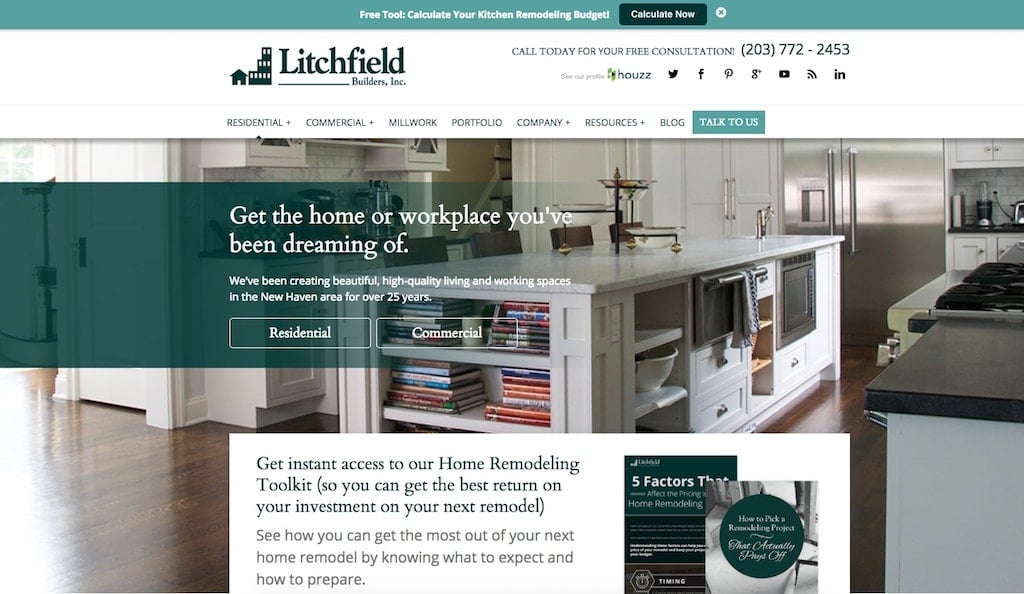
Although it’s true that websites are starting to resemble each other more and more, there’s a difference between a similar user interface pattern being seen all across the web and a particular agency using a single aesthetic as a crutch. If it’s the latter, the company is taking a cookie cutter approach to design, rather than purposefully toward the needs of the client.
5. Pricing

An agency’s price proposal needs to be just as acceptable as its team, its results, and its aesthetic. At this point, you should be conscious of the fact that you can’t get a champagne website on a beer (or water) budget.
You should be able to get at least a ballpark number from an agency without having to ask for a full blown proposal. This saves both you and the agency time.
Discovery can take time and may be a separately paid engagement. Ask each agency how it works, what it costs, and when you will receive a scope and price. Establish budget fit early so neither side invests time in an approach you cannot fund.
Providing price estimates is also a good sign of a healthy agency. It gives you a sense that they know themselves well, they’re competent, and they’re aware of how much effort they need to put into a project.
Questions to Ask Prospective Web Design Agencies
Before choosing a website redesign agency, confirm these six things:
- Fit: Relevant work, references, and an understanding of your buyers and goals.
- Scope: Written deliverables, pricing, exclusions, and ongoing costs.
- People: A clear point of contact and named responsibilities for your team and theirs.
- Process: A realistic schedule for content, design, development, reviews, and changes.
- Launch: A plan to protect search visibility and test accessibility, performance, and tracking.
- Ownership: Control of your domain, content, accounts, and a clear handoff and support plan.

Now that you have your agency candidates in mind, it’s time to begin having those initial conversations that will help you make the best choice for your project.
Depending on your business and industry experience, your company will obviously need its own list of specialized questions for prospective agencies. However, regardless of who you are, you should also go through some standard, yet important, questions which may be less obvious right off the bat.
It should be an automatic demerit in the back of your head if they can’t provide answers to all of these inquiries. And the answers agencies provide to the first six questions below are probably the most interesting and valuable for your business.
“What’s the approach or philosophy to decision-making in your design?”
Why This Question Matters: Some companies want the agency to use data-driven design based on analytics and user behavior, while others are happy to trust the intuition of experts and don’t need statistics to back up every decision. Find out which type of decision-making that agency uses to make sure they’re the right personality fit for you.
“What is your process?”
Why This Question Matters: An agency’s website design process should be written down on paper and available immediately - or at least shortly after the request is made. This is an indication that they’ve had enough experience to put a formal outline in place. If the process is proprietary, they should at least have a high level overview and be able to have a designer or developer explain it to you step-by-step.
“How well will you get to know us?”
Why This Question Matters: The agency needs to understand what your business does and how it’s distinct from your competitors. There should be an initial call or meeting so they familiarize themselves with your sales process, buyer’s journey and products or services. This helps them become invested in the success of your project and navigate any roadblocks or disagreements.
“What is the launch plan?”
Why This Question Matters: Make sure that you know who controls your hosting and domain, because the agency should be asking about them. Every launch is different, so clearly define the date, time, responsible people, and technical contact. Choose a window when the team can monitor and respond. Ask about URL mapping, redirects, backups, rollback, tracking, accessibility, and post-launch checks.
- Protect existing search visibility. Keep useful URLs and content where possible. If URLs change, map each old page to its closest relevant replacement and use permanent redirects. Check internal links, canonical URLs, the sitemap, and indexing settings. Remove staging-only indexing restrictions from the live site. Follow Google's site-move guidance and monitor Search Console after launch.
- Make answers easy to find. Put helpful, accurate information in readable page text with descriptive headings and links. Keep author details and dates accurate, and make structured data match the visible content. Google says its existing SEO guidance also applies to AI features; there is no special AI schema requirement or guarantee of inclusion.
- Test accessibility and buyer tasks. Agree on a target such as WCAG 2.2 Level AA. Check keyboard navigation, visible focus, screen-reader use, contrast, text alternatives, zoom, and mobile layouts. Test navigation and contact paths with people as well as automated tools.
- Measure loading and interaction. Optimize image sizes, reserve space for media, and limit unnecessary scripts. Review Core Web Vitals: Largest Contentful Paint, Interaction to Next Paint, and Cumulative Layout Shift. Use lab tests before launch and real-user data afterward.
- Verify measurement and recovery. Test important links, inquiries, analytics events, backups, and the rollback plan. Assign someone to monitor errors and buyer feedback after launch.
“How much will I need to be involved?”
Why This Question Matters: The timeline should plan for major milestones like meetings, project management check-ins and approvals, which can last anywhere from 15 minutes to four hours. The agency should be able to give you a list of your responsibilities and the time commitment they will require up front.
“What is your copywriting process?”
Why This Question Matters: This is an optional question based on your goals for the project. If you are planning to rely on your agency to write the copy for your new website, it’s important that their team has multiple processes to suit different needs based on your objectives, and that they be able to effectively communicate the benchmarks and what kind of time commitment they require.
“What is the team makeup and who is the main point of contact?”
Why This Question Matters: The agency should also ask a similar question of you, so that they know who your main stakeholders and main team members are. Understand their chain of command and how they make decisions. If their team is large enough, there should be a designated project manager who handles your questions and problems.
“How much work is outsourced?”
Why This Question Matters: Agencies may use employees, independent specialists, or a combination. Ask which parts will be outsourced, who has the necessary skills, how quality is reviewed, and who is accountable for the complete project. Confirm continuity and support arrangements for specialized work.
“What happens when deadlines are missed?”
Why This Question Matters: It’s unlikely that you’ll hit every deadline on the nose. Decide on the length of the grace period before the timeline gets moved back. Your schedule shouldn’t be so restrictive that one missed deadline ruins everything, but you also must have built-in measures that promote accountability on the part of both the agency and your team.
“How do you handle change requests?”
Why This Question Matters: Whether it’s a change, an addition, or a deletion, you’ll likely modify your original goals somehow during the project. How does the agency decide to amend the timeline and budget?
“Are photos, video or copy extra?”
Why This Question Matters: Confirm whether photos, video, and copy are included in the scope or priced separately. Ask which licenses your company receives, what uses they permit, and who owns the original work.
“Do they have partner resources available for out-of-house expertise?”
Why This Question Matters: If you decide that you want to add videos or custom photography to the website, can the agency direct you to helpful resources or references, or will it be a separate project for your business?
“What kind of support is available post-launch?”
Why This Question Matters: Post-launch support comes in two forms: maintenance and development. For example, WordPress websites have constant updates and changing security features. Will the agency be around after your site launches if you need help with this? Will they continue to look at your site’s analytics and make improvements?
“What hosting options are available?”
Why This Question Matters: An agency may recommend independent hosting or offer managed hosting. In either case, clarify ownership, access, backups, maintenance, recurring costs, and how you can move the site if you change providers. Keep control of your domain and understand any limits on taking the site with you.
“What’s your tool stack?”
Why This Question Matters: This question has two parts. First, what content management system (CMS) is the agency proposing? Research their suggestions to see if they’re user-friendly and if you’re comfortable using them.
Second, if copywriting is a part of your project, the agency you choose should have some collaborative platform for drafting, editing and tracking changes. When your website starts getting large enough, passing Word documents back and forth over email becomes an untenable solution.
When You Shouldn’t Choose an Agency
Sometimes it can be difficult to figure out which agency to work with, and sometimes it’s clear as day. Based on our experience, here are seven major warning bells that should cause you to go running in the opposite direction.
How Long It Took You to Get Their Process
As we said earlier, an agency may not email their entire process to you because it’s proprietary information, but they should be able to explain it to you. They can either do this on the spot, or they should be able to quickly set-up another call with a subject matter expert or project manager. Additionally, they can email it to you right after you request it.
If the agency cannot explain how the project will run, ask for clarity before committing. An unexplained delay is a reason to investigate their planning and communication, rather than proof that no process exists.
The Percentage of Work That Will Be Outsourced
You most likely want to avoid an agency that outsources all of the work to other people and only puts a rubber stamp on it at the end. It’s important to find out not only the percentage of work that will be outsourced, but also which parts of the project.
For example, if your website requires demanding back-end development, confirm who will do it, their relevant experience, and how the agency will review and support the work. Employment status alone does not establish whether someone can deliver a good result.
No Dedicated Project Manager
Obviously, it’s not a bad thing to have a large team. It’s a combination of a large agency team and no project manager at the helm that can cause problems.
You need to have one primary point of contact to make sure that you don’t have to memorize the contact information for all of the team members. This project manager will be responsible for fielding your calls and emails and for passing on your messages to the right person.
Going Straight into Design with No Research or Strategy
Unless you don’t care about how many people use your website and how successful it is at driving leads for your business, omitting research and strategy is a fatal flaw.
While everyone likes beautiful, clean, well-designed websites, there needs to be some thought put into why the design looks the way it does. Otherwise, you’re just putting pretty pictures and fonts on a website based on your own whims and assumptions, without any reasoning to back it up.
No Content Style Guides
This red flag is only applicable if you’re making any changes or additions to your website’s content. If the agency will be touching your copy to any degree -- even if it’s just minor copy edits, tweaking, or updating -- and you don’t have a style guide of your own, the agency should be able to help you develop a style guide or have one of their own, that they use as a standard.
Proceeding without a content style guide should be a nonstarter if your project includes copy writing or editing. Style guides help writers ensure that the voice, tone, spelling, and grammar are uniform across the entire website. Even minor variations or inconsistencies can make your copy look sloppy.
Not a Lot of Time Spent on Content Creation
This one depends on the complexity of your demands regarding your website content. The more that you ask the agency to do -- whether it’s updating your old content or burning everything to the ground and starting over -- the more time their team will need to spend with you. It’s absolutely crucial that you are the ultimate expert on your own business, and that you have the final say.
For instance, an agency can’t extrapolate technical expertise that they don’t possess out of thin air, but they can engage with a subject matter expert to get the raw material they need. So, if an agency doesn’t have a process in place to address those gaps in their knowledge, that should be a red flag. It’s an even bigger one if the agency feels that they don’t need to talk to you at all in order to write the website copy.
Mobile-Friendly in Name Only

An agency calling a site “mobile-friendly” is not enough. Ask to see how real pages and buyer tasks work across screen sizes, with a keyboard, and at increased zoom.
Check that people can read the content, use the navigation, compare options, and contact you without missing information or obstructive overlays.
A responsive website, however, is one that dynamically changes based on the user’s device and provides a consistent user experience across different screen sizes.
With a responsive website, your team can maintain one set of content that adapts to different screens. You still need to test that each important page and task works well on mobile and desktop.
Google uses the mobile version of a site’s content for indexing. Keep important content available and usable on mobile, and review Google’s mobile-first indexing guidance.
Make sure that the agency’s proposal includes responsive layouts and accessibility testing. Agree on a target such as WCAG 2.2 Level AA and include keyboard, screen-reader, contrast, zoom, and task checks. A responsive layout alone does not prove that the experience is accessible.
The Role of a Website Has Changed

Okay, let’s acknowledge the elephant in the room. We’ve outlined an exhaustive to-do list for you, before you even call an agency. But trust us when we say we’re not trying to fill your time with pointless tasks -- we know you’re busy.
While it’s true that redesigning a website can involve a lot of work, the right preparation can save you time, help to clarify the project, break it down into a series of manageable steps and result in better outcomes once your site launches.
Choosing the right agency to work with can also help to turn a seemingly overwhelming website redesign project into a manageable task.
But why has the process become so much more involved?
Over the last few years, websites have become more complex as the roles they play have evolved.
Customers today have high expectations of business websites. No longer satisfied with basic information, they expect regular updates with new information, interactive features that allow them to learn about your company and the products or services it offers, as well as multiple ways to get in touch with you.
As a result of these increased expectations, the process of website redesign has also become more involved. When you are considering which agency to work with on your site redesign, you’ll need to find out as much as you can about their process. (Remember to review the list of questions given in this guide to help you figure out whether the agency is the right fit for your brand.)
So, when you’re working on a website redesign project, as with so many other things in life, you get out of it what you put into it.
In the context of your website, if you’re willing to put the time and resources into researching your customer demographics, learning about how they use your site and coming up with a design that can meet all their needs, you can create a website that performs to your expectations and contributes to the growth of your business.
About the Author
Bob Ruffolo is the founder and CEO of IMPACT and co-creator of the Endless Customers System. He founded IMPACT in 2009 as a web design company and has led its growth into sales and marketing coaching and training.