Most company stories begin with the year the business was founded. Buyers usually arrive with a more immediate question: “Do these people understand what I'm dealing with, and can they help me make a good decision?”
That is where your story should begin. The most useful brand story shows whom you help, what choices you make, how your people work, and what customers experienced. It gives someone a reason to trust you before they ever speak to sales.
Here are seven elements you can use to find that story and tell it consistently in your content, videos, website, and sales conversations.
1. A clear picture of the buyer
Choose the customer you are best equipped to help. Describe their situation in words they would use, including what they are trying to accomplish and what has made the decision difficult.
This also means being honest about fit. If your service is built for a company ready to assign an internal owner, say so. A buyer who is not ready should be able to see that too. A story gets clearer when it stops trying to include everyone.
To find the right details, talk with recent customers. Ask what changed before they started looking, what they hoped to accomplish, and what almost kept them from moving forward. Do not fill the gaps with guesses about a fictional persona.
2. The question that started the search
A useful story has a specific question at its center. “How much will this really cost?” “Will this work for a team our size?” “What happens if we choose the wrong option?” Those questions give your story a job to do.
Listen to sales calls, customer interviews, social comments, and the questions your team hears after a deal stalls. Use the buyer's wording. Your answer should help them understand the issue even if they never buy from you.
3. What was at stake
Explain why the decision mattered. The stakes might include money, lost time, a frustrated team, or the risk of disappointing customers. Be specific without manufacturing drama.
A business owner deciding whether to change accounting providers, for example, may worry about disruption during the transition as much as the monthly fee. A story that acknowledges that concern gives the reader a more accurate picture of the decision.
4. The real choices and tradeoffs
Buyers compare options. Help them do it. Explain the alternatives, what each does well, the costs or compromises involved, and when your company would recommend another path.
This is one of the places your point of view becomes visible. If you believe a company should build a skill in-house rather than depend on an outside vendor forever, explain why and describe the investment that choice requires. Give readers enough information to disagree intelligently.
5. The people and decisions behind your approach
“We care about customers” is hard to verify. Show a decision your team made, the process a customer went through, and the people who did the work.
What does your team do when a project is going off track? What will a buyer see before they sign? Who will teach them, build the solution, or answer the hard question? These details make your difference visible. A short video with the people who do the work can often show more than another paragraph of claims.
6. Proof, with the context that makes it credible
Show what happened. Use a customer's own words where you have permission. Include a specific result, a demonstration, a review, or a view into the finished work. Explain what else contributed to the outcome and what you cannot claim.
Consider IMPACT's conversation with CSI Accounting owner Brian Paulson. He describes a business that once relied heavily on outreach, then invested in an internal team, website content, and video. He also explains that CSI made an acquisition and separates it from the growth he attributes to the rest of the business. That caveat makes the story more useful. Readers can see the investment, the change in how buyers found CSI, and the limits of a simple before-and-after claim.
7. A next step that helps the buyer decide
End with the next question a reader is likely to have. They may need a pricing explanation, a comparison, a customer story like their own, or a chance to see how your process works. Give them a path to that answer.
When someone is ready to speak with you, make that easy too. Let their stage of the decision shape the invitation. A reader who is still learning should not have to book a call just to get basic information.
Keep the story consistent wherever buyers find you
The core facts should hold together on your website, in social posts, in video, and in a salesperson's explanation. Each format has a different job. A short post can raise one question. A video can show the person who answers it. A written guide can cover the details and tradeoffs. A sales rep can send the part that matches a prospect's decision.
Clarity also helps when buyers use search and AI tools to research companies. State who you serve, what you do, and the evidence behind your claims in plain text on your site. IMPACT's current brand guidance recommends making that information easy to find and verify; it does not promise that every AI tool will recommend you.
Build your first story
Pick one customer whose experience you know well and can share with permission. Write down seven answers: Who were they? What question started their search? What was at stake? What alternatives did they consider? What did your team actually do? What happened, with what caveats? What should a similar buyer read or do next?
Use those answers to draft a customer story. Ask the customer and the people who worked with them what you got wrong or left out. Then create a short video or social post that points to the full story. Keep the facts consistent and update the story when the evidence changes.
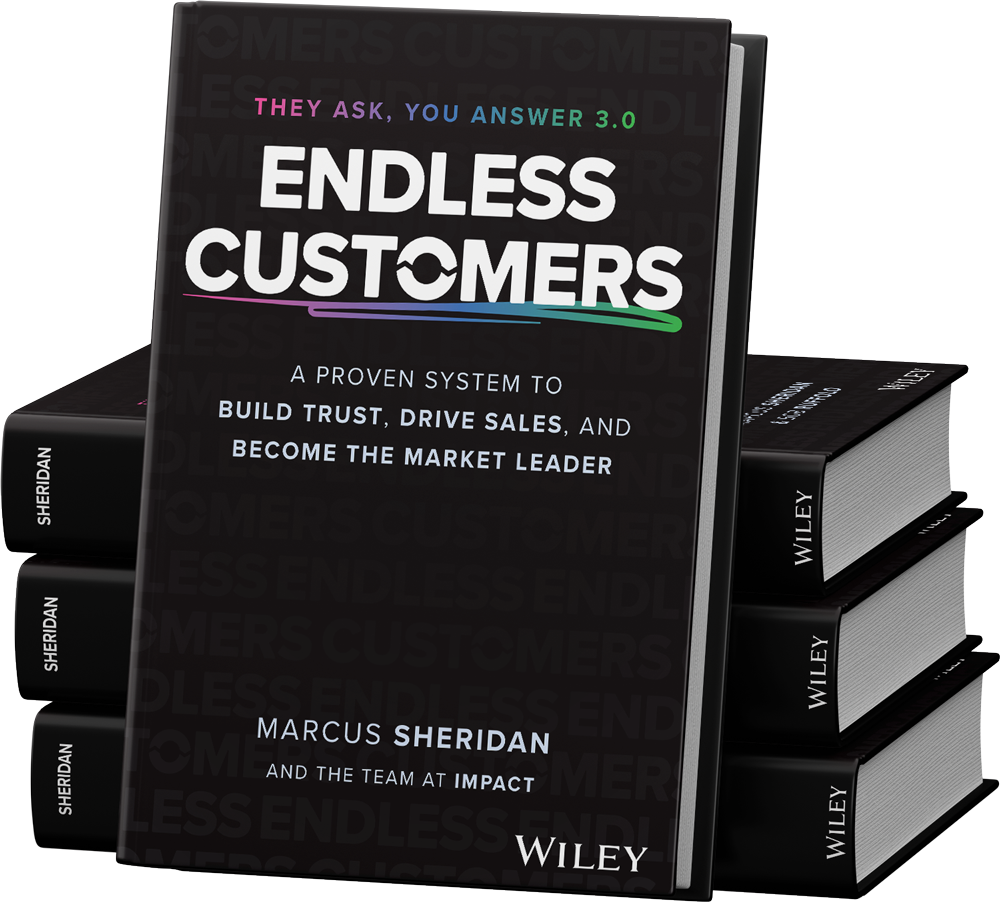
If you need help clarifying the overall message first, start with IMPACT's brand messaging guide. If your team needs a repeatable way to turn buyer questions and customer experiences into content and sales conversations, explore Endless Customers.
Editorial update: October 24, 2026. This guide reflects our current advice.